


The world’s top six smartphone brands are expected to hold their positions in the market next year, even though the overall market has declined for four consecutive quarters and could remain sluggish over the next few quarters, Yuanta Securities Investment Consulting Co (元大投顧) said in a report last week.
Samsung Electronics Co is expected to remain the market leader, with shipments next year increasing 2 percent year-on-year to 300 million units, Yuanta said on Tuesday.
Huawei Technologies Co (華為) is expected to extend its lead over Apple Inc in smartphones, ranking second with shipments growing 12.5 percent to 225 million units, it said.
Among the top six brands, Apple is the only one expected to see shipments decline annually next year, down 4 percent to 203 million units, while Xiaomi Corp (小米), Oppo Mobile Telecommunications Corp (歐珀) and Vivo Communication Technology Co (維沃) would remain in fourth, fifth and sixth respectively, the report showed.
Overall, Yuanta said the global smartphone market is likely to see a continued decline in its growth rate, with 0.5 percent next year, following an estimated 3 percent contraction this year.
“With relatively slow progress on new technological innovations in 2019, not only would the smartphone replacement cycle be prolonged, but content value per smartphone would also be squeezed more,” Yuanta researcher Nicole Tu (塗景婷) said in the report.
Also on Tuesday, International Data Corp (IDC) said in its Worldwide Quarterly Mobile Phone Tracker report that global smartphone shipments are expected to decline by 3 percent to 1.42 billion units this year before returning to growth of 2.6 percent next year, reaching 1.57 billion units in 2022.
“With many of the large global companies focusing on high-end product launches, hoping to draw in consumers looking to upgrade based on specifications and premium devices, we can expect head-to-head competition within this segment during the holiday quarter and into 2019 to be exceptionally high,” IDC senior analyst Sangeetika Srivastava said in a statement.
IDC said the ongoing US-China trade dispute would have the industry on edge, but added that continued developments from emerging markets, mixed with potential applications related to 5G wireless technology and new product form factors — including size, configuration and physical arrangement of a mobile device — would bring the smartphone market back to positive growth from next year to 2022.
Even so, Yuanta said there are growing uncertainties in the market over the near term, citing recent events such as Huawei chief financial officer Meng Wanzhou’s (孟晚舟) arrest in Canada and the ongoing legal dispute between Apple and Qualcomm Inc.
“Huawei would be under pressure if the US government were to ban US vendors from shipping crucial components or software to Huawei,” Tu said. “China’s recent banning of sales of older iPhone would impact Apple, while any limiting of Qualcomm chip sales in China would impact Xiaomi, Vivo and Oppo most.”
Against this backdrop, there are implications for Taiwanese firms in the top brands’ supply chains, but a few leading players — such as Taiwan Semiconductor Manufacturing Co (台積電) and Largan Precision Co (大立光) — could weather the uncertainties more effectively, because they are irreplaceable, providing the most advanced products and services, Tu said.
Furthermore, Samsung appears to be a winner, despite market uncertainties, and would be a boon for some of its supply-chain companies, including fingerprint sensor provider Egis Technology Inc (神盾), as well as heat dissipation module suppliers such as Chaun-Choung Technology Corp (超眾) and Auras Technology Co Ltd (雙鴻), she said.
Shares of contract chipmaker Taiwan Semiconductor Manufacturing Co (TSMC, 台積電) came under pressure yesterday after a report that Apple Inc is looking to shift some orders from the Taiwanese company to Intel Corp. TSMC shares fell NT$55, or 2.4 percent, to close at NT$2,235 on the local main board, Taiwan Stock Exchange data showed. Despite the losses, TSMC is expected to continue to benefit from sound fundamentals, as it maintains a lead over its peers in high-end process development, analysts said. “The selling was a knee-jerk reaction to an Intel-Apple report over the weekend,” Mega International Investment Services Corp (兆豐國際投顧) analyst Alex Huang
Taiwan Semiconductor Manufacturing Co (TSMC, 台積電) is expected to remain Apple Inc’s primary chip manufacturing partner despite reports that Apple could shift some orders to Intel Corp, industry experts said yesterday. The comments came after The Wall Street Journal reported on Friday that Apple and Intel had reached a preliminary agreement following more than a year of negotiations for Intel to manufacture some chips for Apple devices. Taiwan Institute of Economic Research (台灣經濟研究院) economist Arisa Liu (劉佩真) said TSMC’s advanced packaging technologies, including integrated fan-out and chip-on-wafer-on-substrate, remain critical to the performance of Apple’s A-series and M-series chips. She said Intel and Samsung
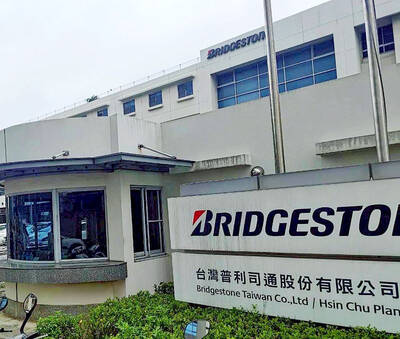
TRANSITION: With the closure, the company would reorganize its Taiwanese unit to a sales and service-focused model, Bridgestone said Bridgestone Corp yesterday announced it would cease manufacturing operations at its tire plant in Hsinchu County’s Hukou Township (湖口), affecting more than 500 workers. Bridgestone Taiwan Co (台灣普利司通) said in a statement that the decision was based on the Tokyo-based tire maker’s adjustments to its global operational strategy and long-term market development considerations. The Taiwanese unit would be reorganized as part of the closure, effective yesterday, and all related production activities would be concluded, the statement said. Under the plan, Bridgestone would continue to deepen its presence in the Taiwanese market, while transitioning to a sales and service-focused business model, it added. The Hsinchu
Taiwan Semiconductor Manufacturing Co (TSMC, 台積電) has approved a capital budget of US$31.28 billion for production expansion to meet long-term development needs during the artificial intelligence (AI) boom. The company’s board meeting yesterday approved the capital appropriation plan for purposes such as the installation of advanced technology capacity and fab construction, the world’s largest contract chipmaker said in a statement. At an earnings conference last month, TSMC forecast that its capital expenditure for this year would be at the higher end of the US$52 billion to US$56 billion range it forecast in January in response to robust demand for 5G, AI and


 RSS
RSS