


Kee Tai Properties Co (基泰建設) has inked a pact with InterContinental Hotels Group (IHG) to operate a new hotel near Taipei Railway Station as the Taipei-based developer seeks to expand into the hospitality business and diversify its income sources.
The hotel would have 183 guestrooms on the fifth to 23rd floors of a mixed-use building on Zhongxiao W Road under the Even Hotel brand, which targets fitness-savvy travelers, Chinese-language media reported this week.
Even Hotel Taipei Main Station would be the group’s 13th property in Taiwan and could open in the third quarter of next year.
The British hospitality company said it is expanding its reach in the local market on belief that demand for foreign luxury hotel brands remains healthy.
It plans to open its first boutique hotel, Kimpton Daan Hotel, near Pacific Sogo Department Store’s (太平洋崇光百貨) most profitable branch on Zhongxiao E Road by the end of this year, IGH said.
In September, the group opened a new property in Hsinchu under the Hotel Indigo brand, and more are in the pipeline, it said.
IHG attributed its optimism to stable growth in demand for business hotel rooms.
Even Hotel aims to set itself apart from rivals by providing for travelers who seek more healthy options away from home, so all guestrooms are to have health equipment and restaurants are to serve healthy food, local media reported.
In the third quarter, Kee Tai posted a net loss attributable to the parent company of NT$55.91 million (US$1.81 million), compared with a net income of NT$57.18 million a year earlier, as the local property market is still struggling to recover from unfavorable policies introduced in recent years.
In the first three quarters, the company reported net income of NT$482,000, down from NT$25.57 million in the same period last year, company data showed.
The company’s revenue reached NT$11.24 million last month, an increase of 3.18 percent from a year earlier. Cumulative revenue in the first 10 months totaled NT$118.54 million, down 57.4 percent from NT$278.27 million a year earlier, data showed.
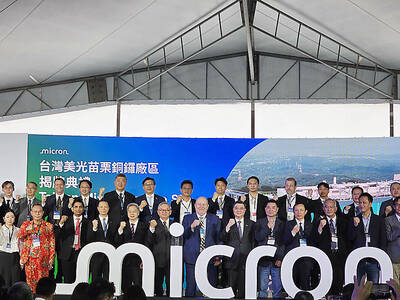
UNPRECEDENTED PACE: Micron Technology has announced plans to expand manufacturing capabilities with the acquisition of a new chip plant in Miaoli Micron Technology Inc unveiled a newly acquired chip plant in Miaoli County yesterday, as the company expands capacity to meet growing demand for advanced DRAM chips, including high-bandwidth memory chips amid the artificial intelligence boom. The plant in Miaoli County’s Tongluo Township (銅鑼), which Micron acquired from Powerchip Semiconductor Manufacturing Corp (力積電) for US$1.8 billion, is expected to make a sizeable capacity contribution to the company from fiscal 2028, the company said in a statement. It would be an extended production site of Micron’s large-scale manufacturing hub in Taichung, the company said. As the global semiconductor industry is racing to reach US$1 trillion
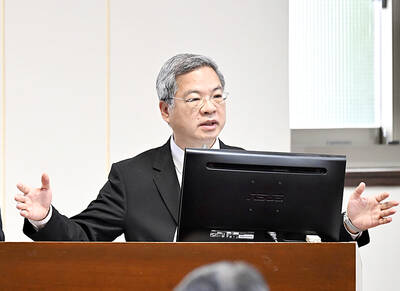
ABOVE LEGAL REQUIREMENT: The Ministry of Economic Affairs is prepared if LNG supply is disrupted, with more than the legal requirement of 11 days of inventory Taiwan has largely secured liquefied natural gas (LNG) supplies through May and arranged about half of June’s supply, Minister of Economic Affairs Kung Ming-hsin (龔明鑫) said yesterday. Since the Middle East conflict began on Feb. 28, Taiwan’s LNG inventories have remained more than 12 days, exceeding the legal requirement of 11 days, indicating no major supply concerns for domestic gas and electricity, Kung said at a meeting of the legislature’s Economics Committee in Taipei. The ministry aims to increase the figure to 14 days by the end of next year, he said. While one or two LNG or crude oil shipments for May

Singapore-based ride-hailing and delivery giant Grab Holdings Ltd has applied for regulatory approval to acquire the Taiwan operations of Germany-based Delivery Hero SE's Foodpanda in a deal valued at about US$600 million. Grab submitted the filing to the Fair Trade Commission on Friday last week, with the transaction subject to regulatory review and approval, the company said in a statement yesterday. Its independent governance structure would help foster a healthy and competitive market in Taiwan if the deal is approved, Grab said. Grab, which is listed on the NASDAQ, said in the filing that US-based Uber Technologies Inc holds about 13 percent of

Taiwan’s food delivery market could undergo a major shift if Singapore-based Grab Holdings Ltd completes its planned acquisition of Delivery Hero SE’s Foodpanda business in Taiwan, industry experts said. Grab on Monday last week announced it would acquire Foodpanda’s Taiwan operations for US$600 million. The deal is expected to be finalized in the second half of this year, with Grab aiming to complete user migration to its platform by the first half of next year. A duopoly between Uber Eats and Foodpanda dominates Taiwan’s delivery market, a structure that has remained intact since the Fair Trade Commission (FTC) blocked Uber Technologies Inc’s


 RSS
RSS