

Taiwan Semiconductor Manufacturing Co (TSMC, 台積電), the world’s largest contract chipmaker, remained No. 1 in the nation in terms of patent applications last quarter, the Intellectual Property Office said.
TSMC filed 303 patent applications during the July-to-September period, up 35 percent from a year earlier, the office said.
Flat-panel maker AU Optronics Corp (友達光電) was second among domestic companies with 107 applications in the three-month period, up 8 percent from a year earlier.
IC designer MediaTek Inc (聯發科) was third with 83, down 14 percent from a year earlier, ahead of PC brand Acer Inc (宏碁) with 82 and the government-sponsored Industrial Technology Research Institute (工研院) with 64.
Realtek Semiconductor Corp (瑞昱), another IC designer, was sixth with 58 applications, followed by iPhone assembler Hon Hai Precision Industry Co (鴻海精密) with 51, smartphone brand HTC Corp (宏達電) with 43, contract notebook computer maker Quanta Computer Inc (廣達) with 36 and contract electronics maker Wistron Corp (緯創) with 35.
US-based chip designer Qualcomm Technologies Inc had the most applications among foreign firms with 234, up 73 percent from a year earlier.
Alibaba Group Services Ltd (阿里巴巴集團服務) was second among foreign companies, filing 132 applications, down 13 percent year-on-year.
Next in line were Japanese memorychip supplier Toshiba Memory Corp with 115 and US-based semiconductor production equipment supplier Applied Materials Inc with 108.
In the third quarter, 11,746 patent applications were filed, up 1 percent from a year earlier, making it the seventh consecutive quarter of year-on-year growth, the data showed.
Patents are categorized into three groups: invention patents, utility model patents and design patents, with invention patents the most important in terms of the creation of technical ideas.

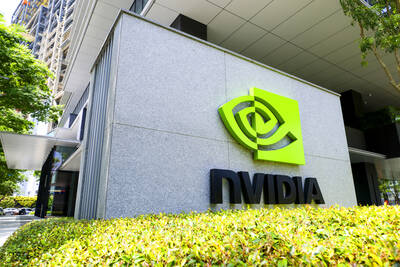
HAND-IN-HAND: Nvidia’s inability to hold the line on prices reflects how much leverage memorychip makers have amid the surge in demand for AI infrastructure Some of Nvidia Corp’s biggest customers have been told that the prices of servers containing its artificial intelligence (AI) chips are going up more than 15 percent in many cases with memory costs soaring. The price hikes would go into effect on systems shipped early next year and impact systems including those with the flagship Vera Rubin and Grace Blackwell chips, people familiar with the process said on condition of anonymity. The increases would depend on the generation of Nvidia chips and the memory configurations, they said. Companies who build the servers under contract for large data center operators such as Microsoft
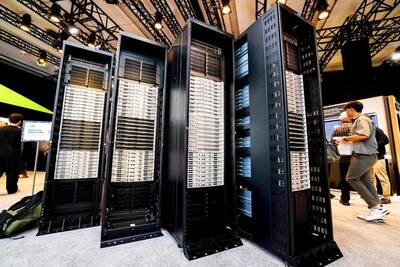
AM Intelligence, an Indian artificial intelligence (AI) infrastructure company, has ordered 9,000 Nvidia Corp Vera Rubin systems, seeking to become one of the first adopters of the advanced computing platform in Asia. Servers equipped with the rack-scale systems are slated to come online next year in southern India, the Hyderabad-based company said in a statement yesterday. Customers include major cloud service providers, AI labs and organizations aiming to develop homegrown Indian AI models, it said. Supplies of high-end Nvidia compute clusters remain tight. Demand from data centers and companies such as Microsoft Corp, Alphabet Inc’s Google and Amazon.com Inc to train AI models

The market debut of artificial intelligence (AI) start-up Anthropic PBC, a chief rival to OpenAI, could break the record set by Space Exploration Technologies Corp (SpaceX), US media have reported. Businessman Elon Musk’s SpaceX went public in June at a value of US$1.77 trillion and raised US$85.7 billion in its blockbuster initial public offering (IPO), the largest in history. Anthropic, maker of the Claude AI models, “expects to match or beat the size” of SpaceX’s deal, Bloomberg reported. The company’s bankers have told potential investors it could seek to raise “more than US$100 billion” in its IPO, which could put the company’s
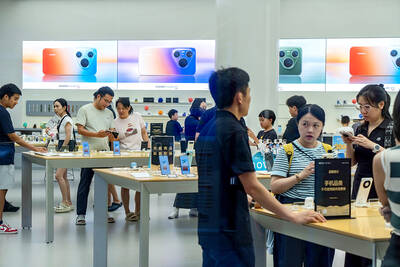
In China’s hilly Guizhou Province, a cluster of European-style buildings complete with clock tower and multi-arched bridge emits a low, permanent hum — a clue to its unexpected identity as tech giant Huawei’s largest data center. The town-like complex is unique in design, but not in its placement. Dozens of data centers have been constructed in the southwestern province in the past few years. They are part of a government strategy that has seen much of the digital infrastructure for breakneck artificial intelligence (AI) development across China’s eastern seaboard established in the country’s less populated, rural west. The build-out is ongoing. China


 RSS
RSS