


The Financial Supervisory Commission (FSC) yesterday said it plans to introduce an adult custodial system through investment trust companies to help the nation’s aging population.
Taiwan has become an “aged society,” meaning that more than 14 percent of its population is older than 65 and is to become a hyper-aged society within eight years, so the FSC began in 2016 to encourage investment firms to make trust funds available to senior citizens with the aim of protecting their assets, FSC Chairman Wellington Koo (顧立雄) said at a seminar held by the Trust Association yesterday in Taipei.
However, while general trust funds are common, accounting for 85 percent of total investments, trust funds for older people are not, remaining below 10 percent, Koo said.
Asked for a growth target, Koo said it is difficult to set a number, but he hopes to boost the number of trust funds for senior citizens by having trust companies add an adult custodial system to their services, adding that he has discussed amending the Family Act (家事事件法) with the Judicial Yuan.
“In the past, society had the concept of people raising children to take care of them in their old age, but that concept appears to have fallen out of fashion,” Koo said.
People should manage their assets before they reach old age, he said.
Older people would benefit from an adult custodial system, Koo said.
That way, if they lacked the necessary mental capacity, their assets would be protected by their designated custodian and supervised by their lawyer, he added.
As of June, 25 trust companies in Taiwan made trust funds available to seniors and the mentally or physically disadvantaged, with the accumulated principal totaling NT$13.6 billion (US$440.84 million), FSC data showed.
Although trust fund for older people are not that popular in Taiwan, older consumers in Japan are embracing the concept, Mitsubishi UFJ Trust and Banking Corp (三菱UFJ 信託銀行) told the seminar.
The bank said that the total amount in education trust funds in Japan surpassed US$1 trillion in 2013, with more than 1 million applications, as older people hope to use part of their money to pay for their grandchildren’s educations.
Compared with younger customers, older people tend to have difficulty making choices, preferring to safeguard their assets, the bank said, adding that seniors also seem to be easily swayed by exaggerated advertising claims, so it is important to offer them the right customized products and services.

Taichung reported the steepest fall in completed home prices among the six special municipalities in the first quarter of this year, data compiled by Taiwan Realty Co (台灣房屋) showed yesterday. From January through last month, the average transaction price for completed homes in Taichung fell 8 percent from a year earlier to NT$299,000 (US$9,483) per ping (3.3m²), said Taiwan Realty, which compiled the data based on the government’s price registration platform. The decline could be attributed to many home buyers choosing relatively affordable used homes to live in themselves, instead of newly built homes in the city’s prime property market, Taiwan Realty
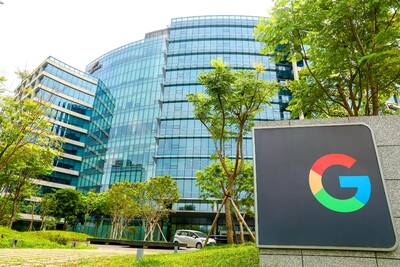
The government yesterday approved applications by Alphabet Inc’s Google to invest NT$27.08 billion (US$859.98 million) in Taiwan, the Ministry of Economic Affairs said in a statement. The Department of Investment Review approved two investments proposed by Google, with much of the funds to be used for data processing and electronic information supply services, as well as inventory procurement businesses in the semiconductor field, the ministry said. It marks the second consecutive year that Google has applied to increase its investment in Taiwan. Google plans to infuse NT$25.34 billion into Charter Investments Ltd (特許投資顧問) through its Singapore-based subsidiary Fructan Holdings Singapore Pte Ltd, and

JET JUICE: The war on Iran’s secondary effects have seen fuel prices skyrocket, knocking flight schedules down to earth in return as airlines struggle with costs Airline passengers should brace for more irritation in the next few months as carriers worldwide cancel flights and ground planes to cope with stratospheric increases in jet-fuel prices. Dutch flag carrier KLM is the latest company to cut its schedule, saying on Thursday that it would scrap 80 return flights at Amsterdam’s Schiphol Airport in the coming month. That puts it in the same league as United Airlines Holdings Inc, Deutsche Lufthansa AG and Cathay Pacific Airways Ltd, which have all pruned itineraries to mitigate costs. Global capacity for next month has been reduced by about 3 percentage points, with all

Micron Technology Inc is a driving force pushing the US Congress to pass legislation that would put new export restrictions on equipment its Chinese competitors use to make their chips, according to people familiar with the matter. A US House of Representatives panel yesterday was to vote on the “MATCH Act,” a bill designed to close gaps in restrictions on chipmaking equipment. It would also pressure foreign companies that sell equipment to Chinese chipmaking facilities to align with export curbs on US companies like Lam Research Corp and Applied Materials Inc. The bill targets facilities operated by China’s ChangXin Memory Technologies Inc


 RSS
RSS