


ENTERTAINMENT
VHQ buys into TV dramas
Singapore-based VHQ Media Holdings Ltd (威馳克媒體) yesterday said it has purchased a 70 percent stake in Beijing Jupiter Cultural Media Inc (木星時代文化傳媒), a deal that is likely contribute to its revenue and earnings this quarter. VHQ, which trades on the Taipei Exchange, said it expects that the extension into TV dramas through the 173.6 million yuan (US$25.1 million) deal would help it leverage its strengths in movie production, TV commercial visual design, special effects, post-production and 3D animation. VHQ said it remains optimistic for this year, as orderbook visibility stretches until next year.
SEMICONDUCTORS
PDC shares up on earnings
Prosperity Dielectrics Co Ltd (PDC, 信昌電子陶瓷) shares yesterday rose 9.91 percent after it reported that net profit increased 322 percent annually in August. The Taoyuan-based company, which supplies chip capacitors, chip resistors, ceramic dielectric powder, semiconductor ceramics and silver paste, said that net profit reached NT$190 million (US$6.15 million) in August, with earnings per share (EPS) of NT$1.11, compared with NT$0.26 in the same month last year. Cumulative net profit totaled NT$372 million for July and August, up 389 percent year-on-year, with EPS of NT$2.16, PDC said in a filing with the Taiwan Stock Exchange.
ELECTRONICS
Parade approves buyback
Parade Technologies Ltd (譜瑞), which specializes in designing and selling high-speed signal transmission interfaces and display chips, yesterday said its board of directors has approved a share buyback scheme and would transfer the repurchased shares to its employees. The company plans to repurchase 500,000 shares on the open market from yesterday to Dec. 11 at NT$282.5 to NT$677 per share, the company said in a filing with the Taiwan Stock Exchange. The repurchased shares would account for 0.63 percent of its total issuance, Parade said. The company’s shares yesterday closed up 8.92 percent at NT$403 in Taipei trading. They have declined 31.58 percent this year. The firm reported sales of NT$7.25 billion in first nine months, down 5.8 percent year-on-year.
ELECTRONICS
Ichia Q3 earnings strong
Handset keypad maker Ichia Technologies Inc (毅嘉科技) on Thursday released unaudited operating results for last quarter showing pretax profit of NT$93 million, the highest for the period in four years. Shipments, product prices, yield rates and operating efficiency improved last quarter from the second quarter, the company said. From January through last month, cumulative pretax profit totaled NT$59 million, the company said in a statement. In the first nine months, consolidated revenue grew 1.68 percent annually to NT$5.34 billion, with gross margin of 6 percent and operating losses of NT$7 million, Ichia said.
ENERGY
Tatung OKs solar plant
Home appliance supplier Tatung Co (大同) on Thursday said its board of directors voted to invest in a 133 megawatt (MW) solar power plant in Tainan’s Cigu District (七股), in addition to a 120MW solar plant in the area that the board approved earlier. Overall, Tatung said it plans to install 253MW of solar capacity in Tainan, as it strives to enhance its market share in solar power plants and assure long-term revenue and profit stability, the company said in a statement. Tatung has been aggressively inviting large-scale financial investors to participate in the investment, it added.


Taiwanese firms have increased investment in the Philippines in recent years as Manila’s ties with Washington deepen and global supply chains continue to shift away from China, an expert at the Chung-Hua Institution for Economic Research (CIER, 中華經濟研究院) said yesterday. The Philippines had not been among Taiwanese investors’ top choices in Southeast Asia, CIER Taiwan ASEAN Studies Center director Kristy Hsu (徐遵慈) said at a seminar in Taipei. However, Taiwan’s investment in the country has grown significantly since the COVID-19 pandemic, reaching US $257 million last year, a high in recent years, she said. Although Taiwan’s total investment in the Philippines still lags

Intel Corp regards Taiwan Semiconductor Manufacturing Co (TSMC, 台積電) as a longstanding partner, as the US chipmaker would continue outsourcing production of advanced chips to TSMC, Intel chief executive officer Lip-Bu Tan (陳立武) said yesterday. “I don’t look at people as competitors. I look at the collaboration... Nvidia is also, you know, a good friend,” Tan told a news conference following his keynote speech at the Computex trade show in Taipei. “It’s a very trusted partnership for us... We are a big, top customer for them, and we’re going to continue doing that,” he said, referring to TSMC, the world’s largest foundry

Hon Hai Precision Industry Co (鴻海精密) yesterday said it would work with US chipmaker Intel Corp to jointly develop and deploy next-generation artificial intelligence (AI) infrastructure and intelligent computing platforms in a move to capture booming demand for AI computing systems. Hon Hai, also known as Foxconn Technology Group (富士康), said in a statement that the partnership would combine its global manufacturing scale, system integration expertise and AI data center deployment capabilities with Intel’s strengths in processor architecture, silicon technologies and software ecosystem. The companies said they plan to work on equipment used in AI data centers, including server racks powered by
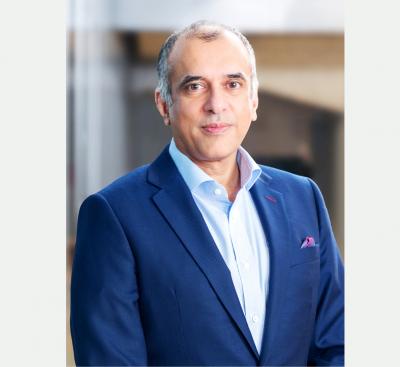
HSBC Holdings PLC is deepening its commitment to Taiwan as the economy emerges as one of the bank’s fastest-growing markets globally, driven by an artificial intelligence (AI) investment boom, expanding cross-border trade, and rising wealth creation. “The advantage that Taiwan has is a growth story linked to the semiconductor and broader AI industries, strong underlying corporate performance, and wealth creation,” said Surendra Rosha, HSBC’s co-chief executive for Asia and the Middle East, in an exclusive interview with the Taipei Times on June 2, during this year’s HSBC Taiwan Conference. That combination has helped HSBC cement its position as the most profitable international


 RSS
RSS