


Motech Industries Inc (茂迪) yesterday said it plans to eliminate more than 300 contract jobs soon to reduce costs and would not rule out cutting full-time positions, as the solar cell maker struggles to ride out a severe slump in the industry.
The workforce reduction started when Motech shut down a solar wafer production line in June — affecting 160 employees — to stem losses, as market demand weakened when solar installations in China began to slow in June.
“To quickly respond to market changes, the company will adjust personnel based on customer orders and required production capacity. The company’s goal is to streamline operations,” Tainan-based Motech said in a filing with the Taiwan Stock Exchange yesterday.
Motech plans to scale down operations to improve competitiveness and financial performance in a depressed market, the company said.
“Foreign contract employees will be affected by the workforce adjustment, as they mostly supplement existing personnel,” it said.
Shares in Motech plunged 1.87 percent to NT$9.45 in Taipei trading yesterday after the company disclosed the job cuts.
The company reported that cumulative losses in the first half of the year widened to NT$3.14 billion (US$101.93 million), or NT$5.84 per share, compared with losses of NT$1.7 billion in the same period last year.
Motech has been in the red since 2014.
TrendForce Corp (集邦科技) yesterday forecast Taiwan’s solar installation market would expand at an annual compound growth rate of 303 percent to 4 gigawatts by 2025, with an estimated 850 to 920 megawatts installed this year.
Strong growth is expected on the back of the government’s green energy policy, which encourages the installation of solar panels on the roofs of farm buildings and in fallow fields.
Neo Solar Power Energy Corp (新日光能源) became the nation’s biggest solar module supplier by module capacity in the first half of the year, outranking AU Optronics Corp (AUO, 友達光電), TrendForce added.
Newly established Taiwan Solar Energy Corp (元晶太陽能) and Taiwan Solar Module Manufacturing Co (TSMMC, 台灣太陽能模組製造) are expected to rank second and third respectively in the second half of the year thanks to increased production, while AUO should fall to fourth place, TrendForce said.
TSMMC, a joint venture between Motech and Giga Solar Materials Corp (碩禾), was formed in April.

Elon Musk’s lieutenants have reached out to chip industry suppliers, including Applied Materials Inc, Tokyo Electron Ltd and Lam Research Corp, for his envisioned Terafab, early steps in an audacious and likely arduous attempt to break into the production of cutting-edge chips. Staff working for the joint venture between Tesla Inc and Space Exploration Technologies Corp (SpaceX) have sought price quotes and delivery times for an array of chipmaking gear, people familiar with the matter said. In past weeks, they’ve contacted makers of photomasks, substrates, etchers, depositors, cleaning devices, testers and other tools, according to the people, who asked not to

The EU and US are nearing an agreement to coordinate on producing and securing critical minerals, part of a push to break reliance on Chinese supplies. The potential deal would create incentives, such as minimum prices, that could advantage non-Chinese suppliers, according to a draft of an “action plan” seen by Bloomberg. The EU and US would also cooperate on standards, investments and joint projects, as well as coordinate on any supply disruptions by countries like China. The two sides are additionally seeking other “like-minded partners” to join a multicountry accord to help create these new critical mineral supply chains, which feed into

Japan approved ¥631.5 billion (US$3.97 billion) in additional subsidies to hasten Rapidus Corp’s entry into the high-stakes artificial intelligence (AI) chipmaking arena, ramping up support for a project widely regarded as a long shot. The capital is intended to bankroll Rapidus’ work for information technology firm Fujitsu Ltd, one of the initial customers that Tokyo hopes would get the signature endeavor off the ground. The new money raises the fees and investments that the government is injecting into the start-up to ¥2.6 trillion by the end of the current fiscal year to March next year, the Japanese Ministry of Economy, Trade and
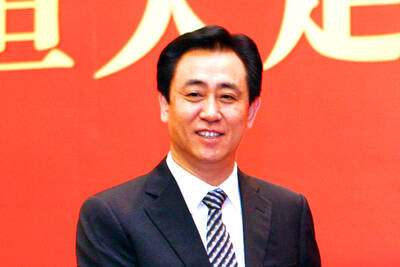
The founder of Chinese property giant Evergrande Group (恆大集團) has pleaded guilty to charges of fraud and bribery, a court said yesterday, the latest blow for what was once the country’s leading developer. Evergrande’s rise was propelled by decades of rapid urbanization and rising living standards, but in 2020, its access to credit dramatically narrowed when the government introduced curbs on excessive borrowing and speculation. The company defaulted in 2021 after struggling to repay creditors. Founder Xu Jiayin (許家印), 67, known as Hui Ka Yan in Cantonese, was reportedly held by police in 2023, with Evergrande saying he had been subjected to


 RSS
RSS