


The Industrial Technology Research Institute (ITRI, 工研院) is showcasing smart-living technologies at the IFA electronics fair in Berlin, which opened on Friday, the institute said in a statement.
The ITRI exhibits at IFA, the largest trade show for consumer electronics and home appliances in Europe, which runs through Wednesday, include an intelligent vision system (IVS) for companion robots, pesticide residue detection technology, a UV drinking water sterilizer and Genki Bot, a non-invasive sleep-aid system.
They are being displayed at IFA Next, considered to be a global innovation hub for researchers, industry professionals and startups to exchange ideas, the institute said.
The IVS for companion robot, which attracted enormous excitement when it was shown at the Consumer Electronics Show (CES) in Las Vegas, Nevada, in January, has proved to be the focus of attention at IFA as it plays chess with visitors and hands out gifts.
With its 3D vision recognition and deep learning abilities, the IVS robot perceives objects based on their size, shape, color and location, and learns from experience, the institute said.
The ITRI’s pesticide residue detection technology detects pesticide residue as the user washes fruit and vegetables and notifies them when residues fall within a safe range, it said.
A CES 2018 Innovation Awards honoree, the technology features micro-optical spectrum detection and a dynamic degradative algorithm, the institute said.
Its water sterilizer is the world’s first intelligent UV direct sterilizer, and disinfects household drinking water by killing 99.9 percent of bacteria such as E coli, it said.
The sterilizer is about 30 percent smaller than traditional UV sterilizing systems and features an instant on/off function, it said.
The UVC LEDs on the sterilizer are activated automatically only when water flow is detected, which cuts power usage by over 50 percent, it said.
The technology can be integrated with water filter systems and is capable of connecting with Internet of Things networks to manage the safety of direct drinking water, the institute said.
Genki Bot learns and optimizes the sleep environment for individual users.
Through interaction between the device and users, the AI algorithms enable Genki Bot to recommend the best environmental parameters, such as songs, sounds and lighting.
It can also measure temperature and humidity and detect carbon dioxide levels, making it a multi-functional household device for smart healthcare, the institute said.
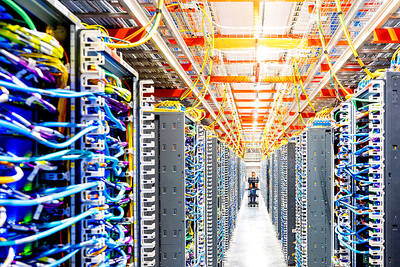
AI SPLURGE: The four major US tech companies have lost more than US$950 billion in value since releasing earnings and outlooks, while equipment makers were gaining Four of the biggest US technology companies together have forecast capital expenditures that would reach about US$650 billion this year — a flood of cash earmarked for new data centers and all the gear within them. The spending planned by Alphabet Inc, Amazon.com Inc, Meta Platforms Inc and Microsoft Corp, all in pursuit of dominance in the still-nascent market for artificial intelligence (AI) tools, is a boom without a parallel this century. Each of the companies’ estimates for this year is expected either near or surpass their budgets for the past three years combined. They would set a high-watermark for capital spending
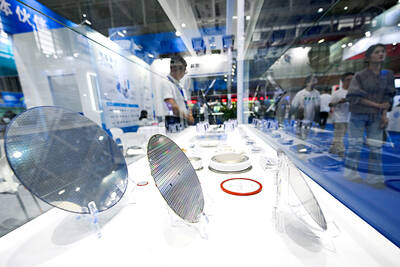
China’s top chipmaker has warned that breakaway spending on artificial intelligence (AI) chips is bringing forward years of future demand, raising the risk that some data centers could sit idle. “Companies would love to build 10 years’ worth of data center capacity within one or two years,” Semiconductor Manufacturing International Corp (SMIC, 中芯) cochief executive officer Zhao Haijun (趙海軍) said yesterday on a call with analysts. “As for what exactly these data centers will do, that hasn’t been fully thought through.” Moody’s Ratings projects that AI-related infrastructure investment would exceed US$3 trillion over the next five years, as developers pour eye-watering sums
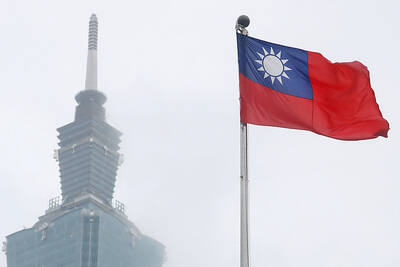
Bank of America Corp nearly doubled its forecast for the nation’s economic growth this year, adding to a slew of upgrades even after a rip-roaring last year propelled by demand for artificial intelligence (AI). The firm lifted its projection to 8 percent from 4.5 percent on “relentless global demand” for the hardware that Taiwanese companies make, according to a note dated yesterday by analysts including Xiaoqing Pi (皮曉青). Taiwan’s GDP expanded 8.63 percent last year, the fastest pace since 2010. The increase “reflects our sustained optimism over Taiwan’s technology driven expansion and is reinforced by several recent developments,” including a more stable currency,
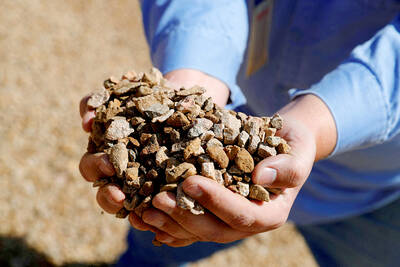
COLLABORATION: Taiwan and the US could jointly find solutions to weaknesses in supply chain resilience for critical materials, focusing on mining and initial refinement Taiwan is likely to purchase rare earths from the US in the future, and is also in talks with Australia and Canada to strengthen global rare earth supply chain security, Minister of Economic Affairs Kung Ming-hsin (龔明鑫) said yesterday. Taiwan and the US last month concluded the sixth Economic Prosperity Partnership Dialogue, during which both sides signed a joint statement endorsing the principles of the Pax Silica Declaration, pledging to deepen cooperation in areas including critical minerals. At the time, Kung said the two sides would establish working groups to advance cooperation in areas including artificial intelligence, digital infrastructure, critical materials and


 RSS
RSS