


Export orders last month unexpectedly bounced back 8 percent year-on-year, thanks to growing demand for semiconductors and electronics components ahead of Apple Inc’s launch of its new iPhones, the Ministry of Economic Affairs said yesterday.
That easily exceeded the ministry’s estimates last month that export orders that month would grow by between 0.7 percent and 3.3 percent.
Export orders jumped to US$41.8 billion, from US$38.72 billion, getting back on a growth track after dipping 0.1 percent in June, ministry statistics showed.
Orders from China and the US grew the fastest, at 12.5 percent and 8.4 percent to US$11.74 billion and US$10.95 billion respectively, setting a July record, the ministry said.
“The growth was propelled by new product launches, new smartphones in particular, later this year,” Department of Statistics Director-General Lin Lee-jen (林麗貞) said. “And not just one particular brand’s launches.”
TECHNOLOGIES
Taiwanese companies play a crucial role in Apple’s supply chain, supplying components, such as processors and camera lenses, and assembling iPhones in China.
Emerging technologies including artificial intelligence, facial and fingerprint recognition, and Internet-of-Things applications also boosted demand for chips, passive components and memory chips, Lin said.
An uptick in LCD panel prices helped slow a contraction in optoelectronic goods to a 6.2 percent fall in exports last month, from a 13 percent fall in June, Lin said.
The ministry forecast that last month’s growth momentum would extend into this month and next month.
Local manufacturers expect export orders of between US$41.8 billion and US$42.8 billion this month, representing an annual expansion of 2.5 to 4.95 percent, Lin said.
ANNUAL PEAK
Growth should be even stronger in September, when export orders traditionally hit their annual peak, boding well for full-year export order performance, Lin said.
“This year’s figure will be higher than last year, supported by seasonal demand in the second half,” Lin said.
The ministry recorded 6.8 percent year-on-year growth in export orders to US$280.24 billion in the first seven months of the year, she said.
This year’s figure should surpass last year’s record-high orders of US$492.8 billion, Lin added.
In addition to electronic products, steel and petrochemical products showed an upward trend as global crude oil prices rose, Lin said.
Cryptocurrency-related demand for computer components saw a recovery as well, she added.
Brent crude oil prices soared more than 38 percent to US$71.47 per barrel during the January-July period, ministry data showed.

Taichung reported the steepest fall in completed home prices among the six special municipalities in the first quarter of this year, data compiled by Taiwan Realty Co (台灣房屋) showed yesterday. From January through last month, the average transaction price for completed homes in Taichung fell 8 percent from a year earlier to NT$299,000 (US$9,483) per ping (3.3m²), said Taiwan Realty, which compiled the data based on the government’s price registration platform. The decline could be attributed to many home buyers choosing relatively affordable used homes to live in themselves, instead of newly built homes in the city’s prime property market, Taiwan Realty
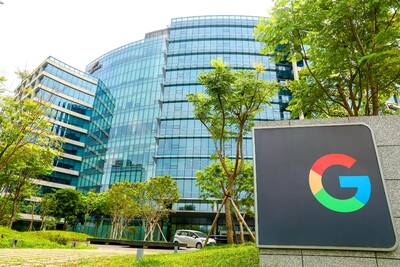
The government yesterday approved applications by Alphabet Inc’s Google to invest NT$27.08 billion (US$859.98 million) in Taiwan, the Ministry of Economic Affairs said in a statement. The Department of Investment Review approved two investments proposed by Google, with much of the funds to be used for data processing and electronic information supply services, as well as inventory procurement businesses in the semiconductor field, the ministry said. It marks the second consecutive year that Google has applied to increase its investment in Taiwan. Google plans to infuse NT$25.34 billion into Charter Investments Ltd (特許投資顧問) through its Singapore-based subsidiary Fructan Holdings Singapore Pte Ltd, and

Micron Technology Inc is a driving force pushing the US Congress to pass legislation that would put new export restrictions on equipment its Chinese competitors use to make their chips, according to people familiar with the matter. A US House of Representatives panel yesterday was to vote on the “MATCH Act,” a bill designed to close gaps in restrictions on chipmaking equipment. It would also pressure foreign companies that sell equipment to Chinese chipmaking facilities to align with export curbs on US companies like Lam Research Corp and Applied Materials Inc. The bill targets facilities operated by China’s ChangXin Memory Technologies Inc

Singapore-based ride-hailing and delivery giant Grab Holdings’ planned acquisition of Foodpanda’s Taiwan operations has yet to enter the formal review stage, as regulators await supplementary documents, the Fair Trade Commission (FTC) said yesterday. Acting FTC Chairman Chen Chih-min (陳志民) told the legislature’s Economics Committee that although Grab submitted its application on March 27, the case has not been officially accepted because required materials remain incomplete. Once the filing is finalized, the FTC would launch a formal probe into the deal, focusing on issues such as cross-shareholding and potential restrictions on market competition, Chen told lawmakers. Grab last month announced that it would acquire


 RSS
RSS