


Line Corp, creator of the Line messaging app, yesterday announced plans to set up a preparation office for Line Financial Taiwan Corp (台灣連線金融科技), which is seeking to team up with local lenders to create a digital bank.
Line regional chief Liu I-cheng (劉奕成) announced the plans at a news conference in Taipei, one day after the technology firm agreed to sell a 30 percent stake to two Taiwanese lenders.
“We aim to join hands with local financial institutions to set up Line Bank, a Web-only bank that will offer new financial services and products,” Liu said.
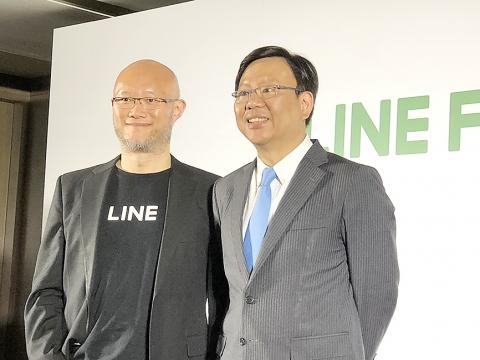
Photo: CNA
Line Financial would not own more than 50 percent of Line Bank and will limit the number of partners to five in keeping with local regulations, he said.
The bank is to take deposits, provide loans, and sell mutual funds and insurance policies, but will not issue credit cards, launch new financial products or establish its own securities units, he said.
The Financial Supervisory Commission (FSC) has indicated room for two Internet-only lenders in the nation and is drafting rules on their requirements and operations so interested parties can file applications later this year and start services by the end of next year.
Existing Line Pay partners might not necessarily have priority to be major shareholders of Line Bank, although they might be more familiar with Line products, Liu said.
Line Pay in August 2015 entered the local e-payment market and now has 3 million users, making it the most popular e-payment platform.
The company’s board on Wednesday approved plans to sell a 19.9 percent stake to Taipei Fubon Commercial Bank (台北富邦銀行) for NT$3.16 billion (US$103.4 million) and a 10 percent stake to Union Bank of Taiwan (聯邦銀行) for NT$1.58 billion. The share sales need regulatory approval.
Line Pay reportedly sought unsuccessfully to sell stakes to Cathay United Bank (國泰世華), CTBC Bank (中信銀行), Taishin International Bank (台新銀行) and E.Sun Commercial Bank (玉山銀行) at much higher prices.
Line Financial is to hire 150 people in fields such as legal compliance, risk management, financial technology and anti-money laundering, Liu said.
In related news, video game developer Soft-World International Corp (智冠) yesterday said its payment arm, Pay2Go Technology Corp (智付寶), has gained regulatory approval to merge with ezPay Taiwan Co (台灣電子支付) through a share swap scheme.
According to the plan, a share in Pay2Go is to be converted to one ezPay Taiwan share and the latter firm will cease to exist, Soft-World said, adding that the company will be called ezPay (簡單付).

Shares of contract chipmaker Taiwan Semiconductor Manufacturing Co (TSMC, 台積電) came under pressure yesterday after a report that Apple Inc is looking to shift some orders from the Taiwanese company to Intel Corp. TSMC shares fell NT$55, or 2.4 percent, to close at NT$2,235 on the local main board, Taiwan Stock Exchange data showed. Despite the losses, TSMC is expected to continue to benefit from sound fundamentals, as it maintains a lead over its peers in high-end process development, analysts said. “The selling was a knee-jerk reaction to an Intel-Apple report over the weekend,” Mega International Investment Services Corp (兆豐國際投顧) analyst Alex Huang
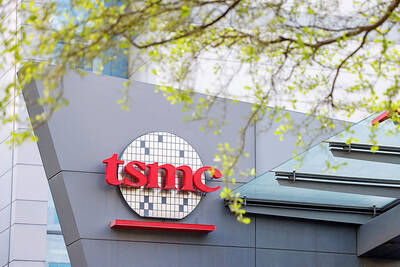
Taiwan Semiconductor Manufacturing Co (TSMC, 台積電) is expected to remain Apple Inc’s primary chip manufacturing partner despite reports that Apple could shift some orders to Intel Corp, industry experts said yesterday. The comments came after The Wall Street Journal reported on Friday that Apple and Intel had reached a preliminary agreement following more than a year of negotiations for Intel to manufacture some chips for Apple devices. Taiwan Institute of Economic Research (台灣經濟研究院) economist Arisa Liu (劉佩真) said TSMC’s advanced packaging technologies, including integrated fan-out and chip-on-wafer-on-substrate, remain critical to the performance of Apple’s A-series and M-series chips. She said Intel and Samsung
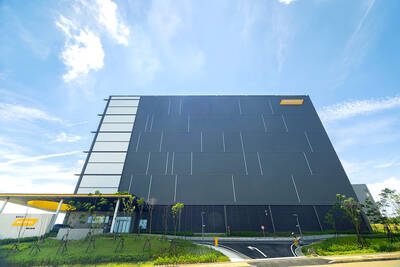
POWER BUILDUP: Powered by Nvidia’s B200 Blackwell chips, the data center would support MediaTek’s computing power demand and business growth, the company said Smartphone chip designer MediaTek Inc (聯發科) yesterday launched a new artificial intelligence (AI) data center with a maximum capacity of 45 megawatts to meet its rising demand for computing power required to develop new advanced chips for AI applications. The company has completed the first-phase computing power buildup at the data center in Miaoli County’s Tongluo Township (銅鑼), providing 15 megawatts of capacity to support its research and development (R&D) capabilities, despite an industrywide shortage of key components, MediaTek said. Supply constraints have plagued a wide range of key components, including memory chips, solid-state drives, power supply units and central
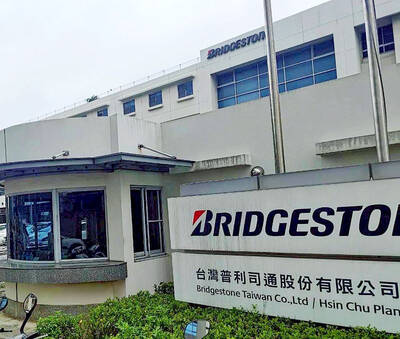
TRANSITION: With the closure, the company would reorganize its Taiwanese unit to a sales and service-focused model, Bridgestone said Bridgestone Corp yesterday announced it would cease manufacturing operations at its tire plant in Hsinchu County’s Hukou Township (湖口), affecting more than 500 workers. Bridgestone Taiwan Co (台灣普利司通) said in a statement that the decision was based on the Tokyo-based tire maker’s adjustments to its global operational strategy and long-term market development considerations. The Taiwanese unit would be reorganized as part of the closure, effective yesterday, and all related production activities would be concluded, the statement said. Under the plan, Bridgestone would continue to deepen its presence in the Taiwanese market, while transitioning to a sales and service-focused business model, it added. The Hsinchu


 RSS
RSS