


Touchpanel supplier TPK Holding Co (宸鴻) yesterday said it expects to post its first operating loss in two years this quarter, as customers are reducing shipments of older-generation products ahead of new product launches in the second half of this year.
Revenue is projected to plunge about 20 percent this quarter, compared with NT$20.85 billion (US$701 million) during the first three months of this year.
“The second quarter will be the trough this year. Our clients have released their outlook for the next two quarters and we are basically following their business pattern,” TPK chief strategist Freddie Liu (劉詩亮) told investors. “Clients are adjusting [downward] during the product transition period... There have been drastic changes in [client] orders lately.”
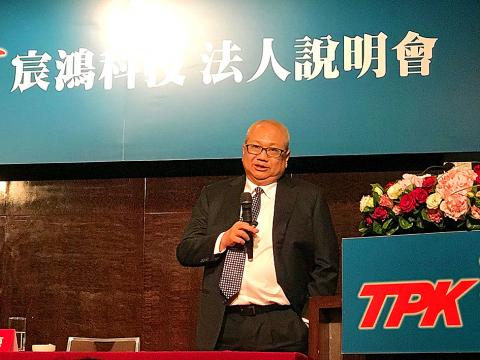
Photo: Chen Mei-ying, Taipei Times
TPK now expects its factory utilization to trend down further from last quarter and anticipates an operating loss this quarter, he said.
However, it expects a significant rebound in the second half, when customers begin shipping new products in August, he added.
TPK is expected to return to Apple Inc’s iPhone supply chain by assembling touch modules for a lower-priced model, sharing orders with local rival General Interface Solution (GIS) Holding Ltd (業成), IHS Markit said last month.
To cope with clients’ new demand, TPK plans to boost capital expenditure by 62 percent to NT$7.5 billion this year.
It would be challenging for the company to stay profitable, as the new LCD touch module assembly business has a lower average selling price, it said.
First-quarter operating profit grew 85 percent year-on-year to NT$223 million from NT$120 million, but dropped 69 percent quarter-on-quarter from NT$718 million due to seasonal weakness and fewer working days.
Net profit sank to NT$68 million from NT$616 million a year ago, when it booked a major disposal gain, and NT$591 million a quarter ago.
Earnings per share contracted to NT$0.17 last quarter, compared with NT$1.78 a year earlier and NT$1.53 in the previous quarter.
Touch module shipments fell 26 percent to 35.7 million units last quarter, from 48.5 million units in the fourth quarter last year.
Talking about the company’s long-term development plans, CEO H.H. Chiang (江懷海) said that TPK aims to become the touch module supplier for the world’s first bendable smartphones, no matter which brand first offers such devices.
Chiang, who took the company’s helm seven months ago, expressed confidence in the company’s ability, citing its leadership in the new silver nanowire technology, which could replace rigid indium–tin-oxide (ITO) film and metal mesh currently used in smartphones and tablet sensors.
TPK’s silver nanowire technology is suitable for flexible OLED displays and bendable or rollable handsets, given its stretchable transparent conductive film.
Panasonic Corp has adopted its silver nanowire technology for a notebook computer, TPK said.
TPK expects the new-generation silver nanowire technology to be commercial in the first half of next year.

SECOND-RATE: Models distilled from US products do not perform the same as the original and undo measures that ensure the systems are neutral, the US’ cable said The US Department of State has ordered a global push to bring attention to what it said are widespread efforts by Chinese companies, including artificial intelligence (AI) start-up DeepSeek (深度求索), to steal intellectual property from US AI labs, according to a diplomatic cable. The cable, dated Friday and sent to diplomatic and consular posts around the world, instructs diplomatic staff to speak to their foreign counterparts about “concerns over adversaries’ extraction and distillation of US AI models.” Distillation is the process of training smaller AI models using output from larger, more expensive ones to lower the costs of training a powerful new

Singapore-based ride-hailing and delivery giant Grab Holdings’ planned acquisition of Foodpanda’s Taiwan operations has yet to enter the formal review stage, as regulators await supplementary documents, the Fair Trade Commission (FTC) said yesterday. Acting FTC Chairman Chen Chih-min (陳志民) told the legislature’s Economics Committee that although Grab submitted its application on March 27, the case has not been officially accepted because required materials remain incomplete. Once the filing is finalized, the FTC would launch a formal probe into the deal, focusing on issues such as cross-shareholding and potential restrictions on market competition, Chen told lawmakers. Grab last month announced that it would acquire
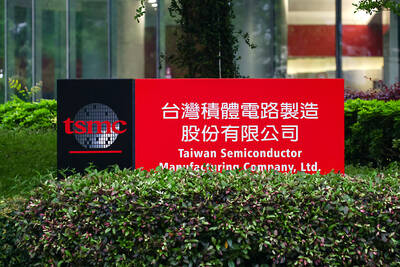
Shares of Taiwan Semiconductor Manufacturing Co (TSMC, 台積電) have repeatedly hit new highs, but an equity analyst said the stock’s valuation remains within a reasonable range and any pullback would likely be technical. The contract chipmaker’s historical price-to-earnings (P/E) ratio has ranged between 20 and 30, Cathay Futures Consultant Co (國泰證期) analyst Tsai Ming-han (蔡明翰) told Central News Agency. With market consensus projecting that TSMC would post earnings per share of about NT$100 (US$3.17) this year, supported by strong global demand for artificial intelligence (AI) applications, and the stock currently trading at a P/E ratio of below 25, Tsai said the valuation
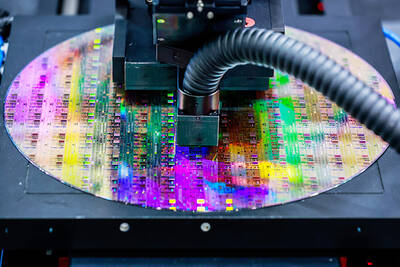
The artificial intelligence (AI) boom has triggered a seismic reshuffling of global equity markets, with Taiwan and South Korea muscling past European nations one by one. With its stock market now valued at nearly US$4.3 trillion, Taiwan surpassed the UK, Europe’s biggest market, earlier this month, data compiled by Bloomberg showed. South Korea is about US$140 billion away from doing the same. The tech-heavy Asian markets have shot past Germany and France in the past seven months. The shift is largely down to massive gains in shares of three companies that provide essential hardware for AI: Taiwan Semiconductor Manufacturing Co (TSMC, 台積電),


 RSS
RSS