


The nation’s official manufacturing purchasing managers’ index (PMI) fell to 50.4 last month, marginally above the neutral mark and down 8.6 points from January due to Lunar New Year holiday disruptions that would not likely evolve into an economic turnaround, the Chung-Hua Institution for Economic Research (CIER, 中華經濟研究院) said yesterday.
The economic bellwether, which aims to gauge the health of the local manufacturing industry, had expanded for 24 consecutive months as a stable global economy continues to benefit Taiwanese suppliers of electronic components, machinery tools and chemical products, the CIER report said.
“We stay cautiously optimistic about the domestic economy in light of the resilient PMI data,” CIER president Wu Chung-shu (吳中書) said.
PMI figures above 50 indicate business improvement, while values below the threshold suggest contraction.
Fewer working days last month — 13 versus 18 a year earlier — accounted for a drastic fall in the sub-index of new business from 60.9 to 44.1, the report found.
Most sectors saw a retreat in new business, except firms engaged in the supply of chemicals, biotechnology and medical products, as well as electronic components and machinery equipment, the report said.
The industrial output sub-index shrank from 61.2 to 37 as most firms suspended operations between Feb. 15 and Feb. 20 for the Lunar New Year.
The sub-index on new export orders also fell from 59.1 to 48.4.
However, manufacturers generally raised staffing levels, although at a slower pace, with the employment measure falling to 51.4 from 53.2 the previous month.
A positive business outlook allowed firms to increase their personnel, Wu said.
The sub-index on the six-month business outlook held steady at 65.7 as firms in all sectors voiced plans to add extra employees, the report said.
The nation could emerge unscathed from US President Donald Trump’s plan to impose hefty tariffs on steel and aluminum imports because the two product categories make up for only a tiny share of Taiwanese exports, Wu said.
The global economy holds a much greater sway on local PMI movements, he said.
However, inflationary pressures remained, as the sub-index on raw material prices fell to 74.9 from 79.2 the previous month, the report showed.
A separate report on the non-manufacturing index also reported a slowdown last month as it fell to 50.7 from 55.9 the previous month.
Hospitality, financial services and telecommunications providers reported a pickup in business, while retailers, wholesalers and property brokers experienced a decline, it said.
Most service-oriented companies are upbeat about their businesses, with the six-month outlook index rising from 55.0 to 57.3, the report showed.
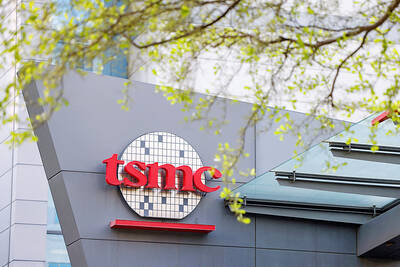
Taiwan Semiconductor Manufacturing Co (TSMC, 台積電) yesterday reported record revenue of NT$416.975 billion (US$13.17 billion) for last month, putting the world’s largest contract chipmaker on track to set a record for quarterly revenue. Last month’s figure surpassed March’s record NT$415.19 billion and represented increases of 1.5 percent from April and 30.1 percent from a year earlier. For the first five months of the year, TSMC generated NT$1.96 trillion in revenue, up 30 percent year-on-year, it said in a statement. TSMC has forecast second-quarter revenue of between US$39 billion and US$40.2 billion, representing sequential growth of about 10 percent and year-on-year growth of about

Infineon Technologies AG is preparing to open its largest single investment, a 5 billion euro (US$5.8 billion) semiconductor factory built with the help of EU subsidies, as the bloc seeks to boost chip production. The power chip fab, which is an extension of the German company’s Dresden campus, is scheduled to open on July 2, Infineon chief operating officer Alexander Gorski said this week at the site. The project is a major recipient of EU Chips Act funds, receiving about 1 billion euros in subsidies. The new plant represents a rare success for the bloc’s flagship semiconductor law, which was drawn up during
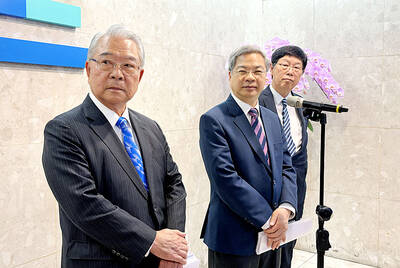
PATENT PROBE: US lawmakers called for a ban on imports of chips made by TSMC if they are found to infringe on US patents, with a preliminary ruling expected soon Minister of Economic Affairs Kung Ming-hsin (龔明鑫) yesterday expressed confidence in Taiwan Semiconductor Manufacturing Co’s (TSMC, 台積電) compliance with patent regulations after reports linked the company to a patent infringement lawsuit in the US. US Representative Ryan Zinke, and US senators Tim Sheehy, Roger Marshall and Bernie Moreno urged the US International Trade Commission in a May 22 letter to ban imports of chips made by TSMC if they are found to infringe on US patents, Axios reported on Wednesday. An administrative law judge is expected to issue a preliminary ruling this month, with the commission potentially making a final decision in
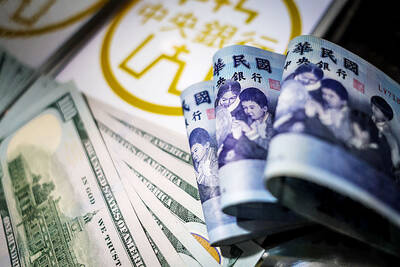
Taiwan remained the sixth-largest net creditor nation in the world last year, despite a fall of more than 10 percent in its net international investment position (NIIP) over the year, the central bank said yesterday. The NIIP is the difference between a country’s external financial assets and its external financial liabilities. Taiwan’s external financial assets hit US$3.27 trillion at the end of last year, up US$275.75 billion or 9.2 percent from a year earlier, the central bank said in its annual NIIP report. The growth largely reflected an increase in holdings of overseas marketable securities by residents in Taiwan, as well as a


 RSS
RSS