


The Financial Supervisory Commission (FSC) yesterday meted out penalties to CTBC Financial Holding Co (中信金控) for providing total bail money of NT$100 million (US$3.33 million) to a number of employees, but mostly to a major shareholder, who were charged with embezzlement in June last year.
The commission fined the company NT$10 million and suspended company president Daniel Wu (吳一揆) and chief compliance officer Aaron King (金延華) for six months and three months, respectively.
By providing the bail money without verifying the innocence of the defendants, the company acted against the interests of its stakeholders and violated compliance and internal control rules, the commission said.
More than NT$90 million of the bail money was earmarked for Jeffrey Koo Jr (辜仲諒), a major shareholder and scion of the company’s founders.
NOT ELIGIBLE
Koo, who has been embroiled in a series of investigations and court cases, has distanced himself from the company since 2006 and was not an employee of CTBC Financial when he was released on bail last year, and therefore was not eligible to make use of the company’s resources, the commission said.
The court cases against Koo were the results of actions conducted in his personal capacity and were unrelated to the company, it added.
“While CTBC Financial is a generally well-run company, it has repeatedly faltered in upholding corporate governance standards on matters involving its major shareholder,” FSC Chairman Wellington Koo (顧立雄) told a news conference in Taipei.
This was not the first time that CTBC Financial had provided bail money for the major shareholder, Wellington Koo said, adding that he hopes that the company will not repeat the infraction.
The commission said that the incident reflects shortcomings in the company’s compliance protocols and that as CTBC Financial had numerous run-ins with the law in the past, it should be no stranger to the pitfalls of providing bail money to its employees.
FAILURE
However, instead of letting the incident be handled by its legal and compliance departments, the company failed to uphold corporate governance standards by letting its administrative office report the matter to the board of directors, it said.
Furthermore, the company’s president was found to have provided inadequate information to the board of directors and had misled them into giving their approval to furnish the bail money, the commission said.
The recently appointed commission chairman has said that he aims to improve corporate governance in the financial sector through the separation of ownership and management.

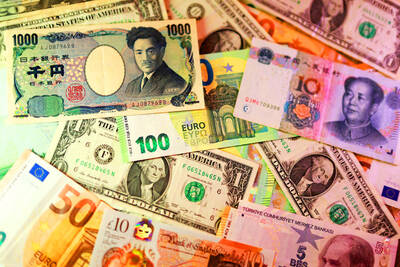
Taiwan’s foreign exchange reserves fell below the US$600 billion mark at the end of last month, with the central bank reporting a total of US$596.89 billion — a decline of US$8.6 billion from February — ending a three-month streak of increases. The central bank attributed the drop to a combination of factors such as outflows by foreign institutional investors, currency fluctuations and its own market interventions. “The large-scale outflows disrupted the balance of supply and demand in the foreign exchange market, prompting the central bank to intervene repeatedly by selling US dollars to stabilize the local currency,” Department of Foreign

Intel Corp is joining Elon Musk’s long-shot effort to develop semiconductors for Tesla Inc, Space Exploration Technologies Corp and xAI, marking a surprising twist in the chipmaker’s comeback bid. Intel would help the Terafab project “refactor” the technology in a chip factory, the company said on Tuesday in a post on X, Musk’s social media platform. That is a stage in the development process that typically helps make chips more powerful or reliable. The chipmaker’s shares jumped 4.2 percent to US$52.91 in New York trading on Tuesday. The Terafab project is a grand plan by Musk to eventually manufacture his own chips for
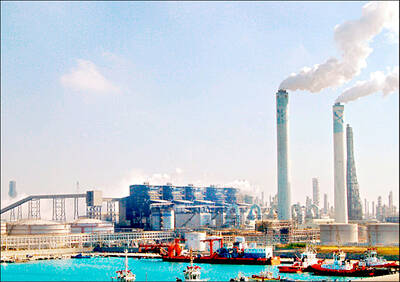
Taiwan Power Co (Taipower, 台電) yesterday said it plans to resume operations at two coal-fired power generators for three months to boost security of electricity supply as liquefied natural gas (LNG) supply risks are running high due to the Middle East conflict. The two coal-fired power generators are at Mailiao Power Plant in Yunlin County’s Mailiao Township (麥寮). The plant, operated by Formosa Plastics Group (台塑集團), supplied electricity to Taipower’s power grid until the end of last year. Taipower’s decision came about one month after Minister of Economic Affairs Kung Ming-hsin (龔明鑫) on March 10 said that the nation had no imminent
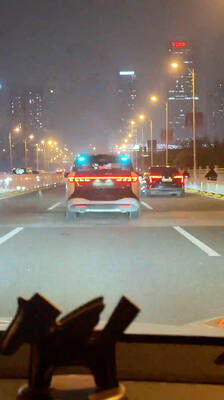
Some robotaxi passengers were left stranded in the middle of fast-moving traffic in a major Chinese city after their driverless vehicles stopped running, according to police and media reports on Wednesday. A preliminary investigation indicates more than 100 robotaxis came to a halt because of a “system malfunction,” police in the city of Wuhan said in a statement, without elaborating. No injuries were reported. One passenger told Chinese media that their robotaxi stopped after turning a corner. An instruction on a screen read: “Driving system malfunction. Staff are expected to arrive in 5 minutes.” After no one showed up, the passenger pushed


 RSS
RSS