


Yuanta-Polaris Research Institute (元大寶華綜經院) yesterday raised its forecast for GDP growth this year from the 2.1 percent it predicted three months ago to 2.25 percent, as exports have performed better amid the launches of next-generation devices by international technology giants.
“Despite fading low-base benefits, exports have maintained a sturdy pickup this year and the trend could be sustained amid an improving global economy,” Yuanta-Polaris president Liang Kuo-yuan (梁國源) told a news conference in Taipei.
The institute now expects outbound shipments to increase 5.48 percent for the whole of this year, up from the 4.89 percent growth it previously predicted.
The improving global economy would lend support to the sales of consumer electronics in the buildup to Christmas in the West and the Lunar New Year in the East, Liang said.
However, it is still too early to pass judgement on the new iPhone models, Liang said.
The new iPhones have drawn lackluster responses since their launch two weeks ago and many analysts have speculated that the new smartphones might not create as big a splash as their predecessors.
That has cast a shadow over the nation’s economic scene, as major Taiwanese technology firms supply chips, camera lenses, casings and other critical components for the phones to Apple Inc.
It is better to wait until the iPhone X hits the shelves because new features always spur demand among loyal iPhone fans, Liang said, adding that he is wary of the nation’s heavy reliance on a few sectors and products.
The acceleration in exports failed to extend to the domestic front, as retail sales underperformed in the first eight months, driving the institute to trim its projection for private consumption from 1.98 percent growth to 1.94 percent growth for this year.
Hotels, department stores, gift shops and bus companies continued to take a hit from the nosedive in the number of Chinese tourists visiting Taiwan.
Furthermore, private investment might dip into negative territory with a 0.18 decline this year, from the 2.9 percent growth the institute forecast last quarter, the institute said.
Imports of capital equipment, mostly intended for technology advancement and capacity expansion, slumped in the past few months and could remain slack for the rest of the year, Liang said.
Leading semiconductor firms have already spent the bulk of their capital expenditure this year, limiting room for spending in the remaining months of the year, he said.
Domestic demand could receive a boost from the government’s Forward-looking Infrastructure Development Program and a 3 percent pay raise for public-sector employees, Liang said, adding that companies in different sectors have announced plans to follow suite next year.
However, most firms are raising one-off bonuses rather than take-home wages, Liang said.
“About 80 percent of firms have not increased wages since 2001,” he said.
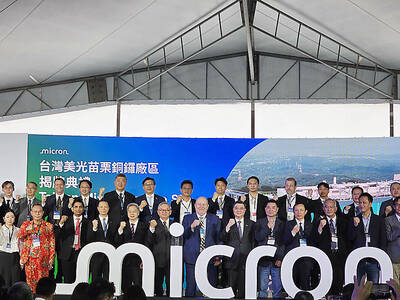
UNPRECEDENTED PACE: Micron Technology has announced plans to expand manufacturing capabilities with the acquisition of a new chip plant in Miaoli Micron Technology Inc unveiled a newly acquired chip plant in Miaoli County yesterday, as the company expands capacity to meet growing demand for advanced DRAM chips, including high-bandwidth memory chips amid the artificial intelligence boom. The plant in Miaoli County’s Tongluo Township (銅鑼), which Micron acquired from Powerchip Semiconductor Manufacturing Corp (力積電) for US$1.8 billion, is expected to make a sizeable capacity contribution to the company from fiscal 2028, the company said in a statement. It would be an extended production site of Micron’s large-scale manufacturing hub in Taichung, the company said. As the global semiconductor industry is racing to reach US$1 trillion

Singapore-based ride-hailing and delivery giant Grab Holdings Ltd has applied for regulatory approval to acquire the Taiwan operations of Germany-based Delivery Hero SE's Foodpanda in a deal valued at about US$600 million. Grab submitted the filing to the Fair Trade Commission on Friday last week, with the transaction subject to regulatory review and approval, the company said in a statement yesterday. Its independent governance structure would help foster a healthy and competitive market in Taiwan if the deal is approved, Grab said. Grab, which is listed on the NASDAQ, said in the filing that US-based Uber Technologies Inc holds about 13 percent of
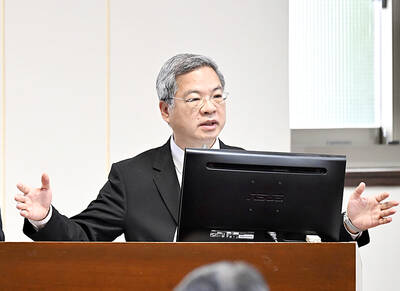
ABOVE LEGAL REQUIREMENT: The Ministry of Economic Affairs is prepared if LNG supply is disrupted, with more than the legal requirement of 11 days of inventory Taiwan has largely secured liquefied natural gas (LNG) supplies through May and arranged about half of June’s supply, Minister of Economic Affairs Kung Ming-hsin (龔明鑫) said yesterday. Since the Middle East conflict began on Feb. 28, Taiwan’s LNG inventories have remained more than 12 days, exceeding the legal requirement of 11 days, indicating no major supply concerns for domestic gas and electricity, Kung said at a meeting of the legislature’s Economics Committee in Taipei. The ministry aims to increase the figure to 14 days by the end of next year, he said. While one or two LNG or crude oil shipments for May

Taiwan’s food delivery market could undergo a major shift if Singapore-based Grab Holdings Ltd completes its planned acquisition of Delivery Hero SE’s Foodpanda business in Taiwan, industry experts said. Grab on Monday last week announced it would acquire Foodpanda’s Taiwan operations for US$600 million. The deal is expected to be finalized in the second half of this year, with Grab aiming to complete user migration to its platform by the first half of next year. A duopoly between Uber Eats and Foodpanda dominates Taiwan’s delivery market, a structure that has remained intact since the Fair Trade Commission (FTC) blocked Uber Technologies Inc’s


 RSS
RSS