


JPMorgan Chase & Co chief executive officer Jamie Dimon said he would fire any employee trading bitcoin for being “stupid.”
The cryptocurrency “won’t end well,” he told an investor conference in New York on Tuesday, predicting it would eventually blow up.
“It’s a fraud” and “worse than tulip bulbs,” Dimon said.
If a JPMorgan trader began trading in bitcoin, he said: “I’d fire them in a second. For two reasons: It’s against our rules, and they’re stupid. And both are dangerous.”
Bitcoin has soared in recent months, spurred by greater acceptance of the blockchain technology that underpins the exchange method and optimism that faster transaction times could encourage broader use of the cryptocurrency.
Prices have climbed more than fourfold this year — a run that has drawn debate over whether that is a bubble.
Bitcoin initially slipped after Dimon’s remarks. It was down as much as 2.7 percent before recovering. Last week, it slumped after reports that China plans to ban trading of virtual currencies on domestic exchanges, dealing another blow to the US$150 billion cryptocurrency market.
Tulips are a reference to the mania that swept Holland in the 17th century, when speculators drove up prices of virtually worthless tulip bulbs to exorbitant levels.
In the case of bitcoin, Dimon said he was skeptical that authorities would allow a currency to exist without state oversight, especially if something goes wrong.
“Someone’s going to get killed and then the government’s going to come down,” he said. “You just saw in China, governments like to control their money supply.”
Dimon differentiated between the bitcoin currency and the underlying blockchain technology, which he said can be useful.
Still, he said banks’ application of blockchain “won’t be overnight.”
The bank chief said he would not short bitcoin because there is no telling how high it will go before it collapses.
He said the best argument he had heard is that it can be useful to people in places with no other options — so long as the supply of coins does not surge.
“If you were in Venezuela or Ecuador, or North Korea or a bunch of parts like that, or if you were a drug dealer, a murderer, stuff like that, you are better off doing it in bitcoin than US dollars,” he said. “So there may be a market for that, but it’d be a limited market.”
To be sure, Dimon later noted that his daughter purchased some bitcoin.
“It’s interesting that somebody with that high profile of the establishment is out there with that bold statement,” DoubleLine Capital chief investment officer Jeffrey Gundlach said in a webcast on Tuesday after Dimon’s remarks.
Gundlach said he did not have a view on bitcoin, but that he was concerned it could be more vulnerable to manipulation than enthusiasts admit.
“Maybe I’m just too old, but I’m going to let this mania go on without me, ” Gundlach said.
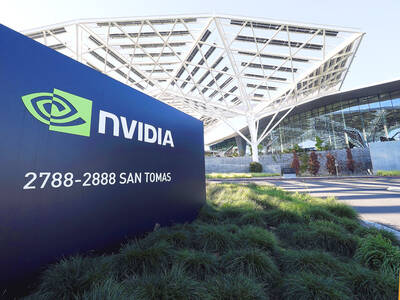
CHIP RACE: Three years of overbroad export controls drove foreign competitors to pursue their own AI chips, and ‘cost US taxpayers billions of dollars,’ Nvidia said China has figured out the US strategy for allowing it to buy Nvidia Corp’s H200s and is rejecting the artificial intelligence (AI) chip in favor of domestically developed semiconductors, White House AI adviser David Sacks said, citing news reports. US President Donald Trump on Monday said that he would allow shipments of Nvidia’s H200 chips to China, part of an administration effort backed by Sacks to challenge Chinese tech champions such as Huawei Technologies Co (華為) by bringing US competition to their home market. On Friday, Sacks signaled that he was uncertain about whether that approach would work. “They’re rejecting our chips,” Sacks
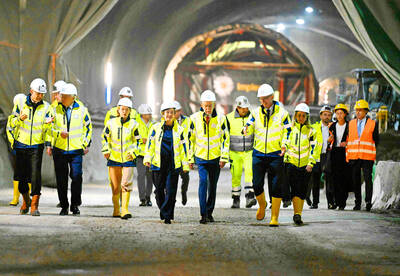
It is challenging to build infrastructure in much of Europe. Constrained budgets and polarized politics tend to undermine long-term projects, forcing officials to react to emergencies rather than plan for the future. Not in Austria. Today, the country is to officially open its Koralmbahn tunnel, the 5.9 billion euro (US$6.9 billion) centerpiece of a groundbreaking new railway that will eventually run from Poland’s Baltic coast to the Adriatic Sea, transforming travel within Austria and positioning the Alpine nation at the forefront of logistics in Europe. “It is Austria’s biggest socio-economic experiment in over a century,” said Eric Kirschner, an economist at Graz-based Joanneum

BUBBLE? Only a handful of companies are seeing rapid revenue growth and higher valuations, and it is not enough to call the AI trend a transformation, an analyst said Artificial intelligence (AI) is entering a more challenging phase next year as companies move beyond experimentation and begin demanding clear financial returns from a technology that has delivered big gains to only a small group of early adopters, PricewaterhouseCoopers (PwC) Taiwan said yesterday. Most organizations have been able to justify AI investments through cost recovery or modest efficiency gains, but few have achieved meaningful revenue growth or long-term competitive advantage, the consultancy said in its 2026 AI Business Predictions report. This growing performance gap is forcing executives to reconsider how AI is deployed across their organizations, it said. “Many companies
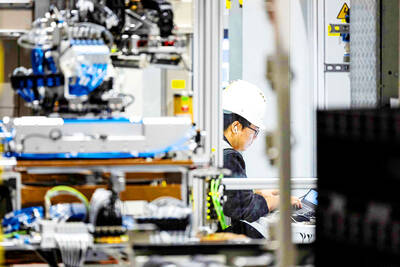
France is developing domestic production of electric vehicle (EV) batteries with an eye on industrial independence, but Asian experts are proving key in launching operations. In the Verkor factory outside the northern city of Dunkirk, which was inaugurated on Thursday, foreign specialists, notably from South Korea and Malaysia, are training the local staff. Verkor is the third battery gigafactory to open in northern France in a region that has become known as “Battery Valley.” At the Automotive Energy Supply Corp (AESC) factory near the city of Douai, where production has been under way for several months, Chinese engineers and technicians supervise French recruits. “They


 RSS
RSS