


Premier William Lai (賴清德) yesterday urged Taiwan Power Co (Taipower, 台電) to be alert and prepare properly for potential power supply disruptions that might be caused by Typhoon Talim, in a bid to prevent nationwide blackouts.
“We could have avoided the Aug. 15 nationwide blackouts if Taipower, CPC Corp, Taiwan [CPC, 台灣中油] and privately owned power plants had communicated and coordinated well,” Lai told a news conference at Taipower’s headquarters in Taipei.
It was his first visit to the state-run utility since being sworn in as premier on Friday last week.
The Cabinet will work closely with Taipower to ensure the safety and stability of the power supply while the nation transforms its energy structure, Lai said.
As a state-run power supplier, Taipower plays a major role in supporting the nation’s economic growth, he said.
“The public and industries will lose faith in the government if Taiwan faces power rationing or outages from time to time,” Lai said.
Taipower should inspect and maintain the condition of infrastructure for the supply of electricity, such as transmission towers and lines nationwide, on a regular basis, he said.
“I know it is easy to neglect the details when such inspections become routine... I hope Taipower officials will pay more attention to such work,” Lai said.
Regardless of if Taipower is initiating annual maintenance of existing power plants, extending their operating life or building new facilities, the state-run company complete its work on schedule, he said.
Taipower chairman Chu Wen-chen (朱文成) said the nation’s power supply is expected to grow slightly next year, as many of the utility’s new generators became operational over the past month.
Trials of the new generators, such as a new ultra-supercritical power generator at a coal-fired power plant in Kaohsiung’s Dalin Township (大林), have been smooth so far, he added.
However, he called on the public to conserve energy as much as possible.
“It will be a problem if the pace of power demand growth is faster than Taipower’s installation of new generators,” Chu said.
In related news, Lai said the Executive Yuan has not discussed a potential candidate to take over as Taipower chairman.
Chu has performed well, Lai said, adding that he hopes Chu will continue to lead the state-run utility after he turns 65, the legal retirement age, in November.
Lai’s remarks followed a report by the Chinese-language United Daily News, which said former vice premier Lin Hsi-yao (林錫耀) is expected to take over after Chu’s retirement.

SECOND-RATE: Models distilled from US products do not perform the same as the original and undo measures that ensure the systems are neutral, the US’ cable said The US Department of State has ordered a global push to bring attention to what it said are widespread efforts by Chinese companies, including artificial intelligence (AI) start-up DeepSeek (深度求索), to steal intellectual property from US AI labs, according to a diplomatic cable. The cable, dated Friday and sent to diplomatic and consular posts around the world, instructs diplomatic staff to speak to their foreign counterparts about “concerns over adversaries’ extraction and distillation of US AI models.” Distillation is the process of training smaller AI models using output from larger, more expensive ones to lower the costs of training a powerful new
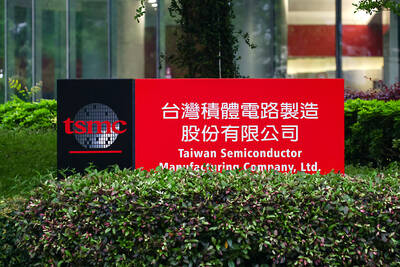
Shares of Taiwan Semiconductor Manufacturing Co (TSMC, 台積電) have repeatedly hit new highs, but an equity analyst said the stock’s valuation remains within a reasonable range and any pullback would likely be technical. The contract chipmaker’s historical price-to-earnings (P/E) ratio has ranged between 20 and 30, Cathay Futures Consultant Co (國泰證期) analyst Tsai Ming-han (蔡明翰) told Central News Agency. With market consensus projecting that TSMC would post earnings per share of about NT$100 (US$3.17) this year, supported by strong global demand for artificial intelligence (AI) applications, and the stock currently trading at a P/E ratio of below 25, Tsai said the valuation
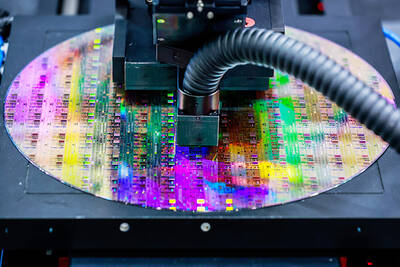
The artificial intelligence (AI) boom has triggered a seismic reshuffling of global equity markets, with Taiwan and South Korea muscling past European nations one by one. With its stock market now valued at nearly US$4.3 trillion, Taiwan surpassed the UK, Europe’s biggest market, earlier this month, data compiled by Bloomberg showed. South Korea is about US$140 billion away from doing the same. The tech-heavy Asian markets have shot past Germany and France in the past seven months. The shift is largely down to massive gains in shares of three companies that provide essential hardware for AI: Taiwan Semiconductor Manufacturing Co (TSMC, 台積電),
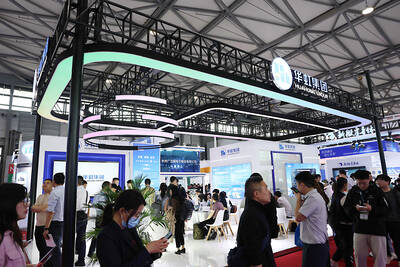
The US Department of Commerce last week ordered multiple chip equipment companies to halt shipments of certain tools to China’s second-largest chipmaker, Hua Hong Semiconductor Ltd (華虹半導體), its latest action to slow the country’s development of advanced chips, two people familiar with the matter said. The department sent letters to at least a handful of companies informing them of restrictions on tools and other materials destined for two Hua Hong facilities US officials believe make China’s most sophisticated chips, the people said. Top US chip equipment companies Lam Research Corp, Applied Materials Inc and KLA Corp, each of which has significant


 RSS
RSS