


Inflationary pressure emanating from the factory to the world is proving more resilient than economists have anticipated.
China’s producer-price inflation (PPI) last month accelerated to 6.3 percent from a year earlier, exceeding all but one of 38 estimates in Bloomberg’s survey of economists.
That data released on Saturday followed 5.5 percent readings in the prior three months and was unexpected for analysts, who have been forecasting more moderation in pricing pressures.
The surprise strength gives support for global inflation spanning from metals to fuel and shows the effects of resilient domestic demand and reduced supplies of some commodities.
China’s authorities have been closing mills and smelters to cut excessive industrial capacity and help curb pollution, in turn straining production of metals such as aluminum and steel.
“The key driver has likely come from the supply side,” such as production cuts in response to intensified environmental enforcement in recent months, Robin Xing (邢自強), chief China economist at Morgan Stanley in Hong Kong, wrote in a note.
The bank last week raised its PPI forecast for this year from 4.5 percent to 5.5 percent, citing stricter anti-pollution measures.
Global metal prices soared last month as China’s demand held up on robust investment and construction amid government reforms that may crimp supplies. That market strength underpins worldwide inflation, and helps ease debt burdens on raw-material producers.
China’s environmental campaign has intensified this year. Inspections that began in Hebei Province, which surrounds Beijing and is the biggest steel-producing province, have been extended to several more cities and provinces and led to the closures of some businesses and factories.
Aluminum Corp of China (中國鋁業), the nation’s top state-owned smelter of the metal, pledged this month to cut capacity during the winter to curb emissions.
Aluminum prices have has surged this year, making it one of the best-performing commodities, on expectations for supply cuts and resilient demand from property and infrastructure. That is boosting producer inflation.
“While cyclical demand remained resilient, the ‘rationed’ output volume amid stricter environmental inspections may have led to stronger inflationary pressure in August,” Liu Wenqi (劉雯琪), an analyst at China International Capital Corp (CICC, 中國國際金融) in Beijing, wrote in a report.
Another underpinning comes from infrastructure investment, which is often used to buffer growth amid downward economic pressure. The share of spending used for road, rail and other infrastructure this year has surpassed levels during the global financial crisis, according to a Bloomberg Intelligence analysis.
“August’s price data show China’s reflation story remains intact,” Tom Orlik, chief Asia economist at Bloomberg Intelligence in Beijing, wrote in a report on Saturday.
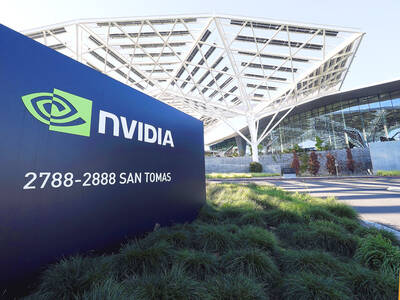
CHIP RACE: Three years of overbroad export controls drove foreign competitors to pursue their own AI chips, and ‘cost US taxpayers billions of dollars,’ Nvidia said China has figured out the US strategy for allowing it to buy Nvidia Corp’s H200s and is rejecting the artificial intelligence (AI) chip in favor of domestically developed semiconductors, White House AI adviser David Sacks said, citing news reports. US President Donald Trump on Monday said that he would allow shipments of Nvidia’s H200 chips to China, part of an administration effort backed by Sacks to challenge Chinese tech champions such as Huawei Technologies Co (華為) by bringing US competition to their home market. On Friday, Sacks signaled that he was uncertain about whether that approach would work. “They’re rejecting our chips,” Sacks
Taiwan’s long-term economic competitiveness will hinge not only on national champions like Taiwan Semiconductor Manufacturing Co. (TSMC, 台積電) but also on the widespread adoption of artificial intelligence (AI) and other emerging technologies, a US-based scholar has said. At a lecture in Taipei on Tuesday, Jeffrey Ding, assistant professor of political science at the George Washington University and author of "Technology and the Rise of Great Powers," argued that historical experience shows that general-purpose technologies (GPTs) — such as electricity, computers and now AI — shape long-term economic advantages through their diffusion across the broader economy. "What really matters is not who pioneers

BUBBLE? Only a handful of companies are seeing rapid revenue growth and higher valuations, and it is not enough to call the AI trend a transformation, an analyst said Artificial intelligence (AI) is entering a more challenging phase next year as companies move beyond experimentation and begin demanding clear financial returns from a technology that has delivered big gains to only a small group of early adopters, PricewaterhouseCoopers (PwC) Taiwan said yesterday. Most organizations have been able to justify AI investments through cost recovery or modest efficiency gains, but few have achieved meaningful revenue growth or long-term competitive advantage, the consultancy said in its 2026 AI Business Predictions report. This growing performance gap is forcing executives to reconsider how AI is deployed across their organizations, it said. “Many companies
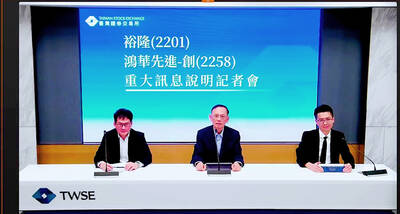
TAIWAN VALUE CHAIN: Foxtron is to fully own Luxgen following the transaction and it plans to launch a new electric model, the Foxtron Bria, in Taiwan next year Yulon Motor Co (裕隆汽車) yesterday said that its board of directors approved the disposal of its electric vehicle (EV) unit, Luxgen Motor Co (納智捷汽車), to Foxtron Vehicle Technologies Co (鴻華先進) for NT$787.6 million (US$24.98 million). Foxtron, a half-half joint venture between Yulon affiliate Hua-Chuang Automobile Information Technical Center Co (華創車電) and Hon Hai Precision Industry Co (鴻海精密), expects to wrap up the deal in the first quarter of next year. Foxtron would fully own Luxgen following the transaction, including five car distributing companies, outlets and all employees. The deal is subject to the approval of the Fair Trade Commission, Foxtron said. “Foxtron will be


 RSS
RSS