


Taipei Computer Association (TCA, 台北市電腦公會) chairman Tung Tzu-hsien (童子賢) yesterday voiced optimism about the outlook of the global smartphone industry for the rest of the year on the back of major international companies’ launches of new flagship handsets.
“Contract electronics manufacturers are very busy getting their funds, key technologies and production ready, as many big smartphone clients are gearing up to introduce their newest products this fall,” the Pegatron Corp (和碩) chairman told reporters on the sidelines of the World Congress on Information Technology (WCIT) opening ceremony in Taipei.
Samsung Electronics Co launched its new generation of the Note series on Aug. 23 and Apple Inc is scheduled to unveil its 10th-anniversary iPhones today in the US, the most important iPhones in years.

Photo: Huang, Pei-chun, Taipei Times
Pegatron, Hon Hai Precision Industry Co (鴻海精密) and Wistron Corp (緯創) assemble iPhones for the US company.
Tung declined to comment on his company’s biggest client because Pegatron is not allowed to directly mention anything related to Apple.
However, he did say that he foresees a smartphone company unveiling a 10th-anniversary product that would feature functions and technologies that would surprise and attract consumers.
Tung said there are market rumors about the new product’s technologies, such as iris scanning, facial-recognition, the relocation of a fingerprint reader and the removal of the home button.
“I cannot confirm whether these speculations are true or not, but I can say innovative technologies, which could largely improve user interface, are very important to stimulate end demand in the markets,” he said.
Tung said there is no need to worry about whether possible constrained supplies of key components for new technologies would disrupt the smooth rollout of new handset shipments, as long as the potential market demand remains intact.
“It is not serious if the arrival of the peak season is late by a month or not. Contract manufacturers, including Pegatron, are all experienced and can flexibly adjust their production and labor force,” he said.
Meanwhile, Pegatron yesterday posted an annual revenue growth of 7.89 percent to NT$89.12 billion (US$2.97 billion) for last month, according to its filing with the Taiwan Stock Exchange.
Last month’s result increased the company’s accumulative revenue by 2.49 percent annually to NT$662.66 billion for the first eight months of this year, the filing showed.
SECOND-RATE: Models distilled from US products do not perform the same as the original and undo measures that ensure the systems are neutral, the US’ cable said The US Department of State has ordered a global push to bring attention to what it said are widespread efforts by Chinese companies, including artificial intelligence (AI) start-up DeepSeek (深度求索), to steal intellectual property from US AI labs, according to a diplomatic cable. The cable, dated Friday and sent to diplomatic and consular posts around the world, instructs diplomatic staff to speak to their foreign counterparts about “concerns over adversaries’ extraction and distillation of US AI models.” Distillation is the process of training smaller AI models using output from larger, more expensive ones to lower the costs of training a powerful new

Singapore-based ride-hailing and delivery giant Grab Holdings’ planned acquisition of Foodpanda’s Taiwan operations has yet to enter the formal review stage, as regulators await supplementary documents, the Fair Trade Commission (FTC) said yesterday. Acting FTC Chairman Chen Chih-min (陳志民) told the legislature’s Economics Committee that although Grab submitted its application on March 27, the case has not been officially accepted because required materials remain incomplete. Once the filing is finalized, the FTC would launch a formal probe into the deal, focusing on issues such as cross-shareholding and potential restrictions on market competition, Chen told lawmakers. Grab last month announced that it would acquire
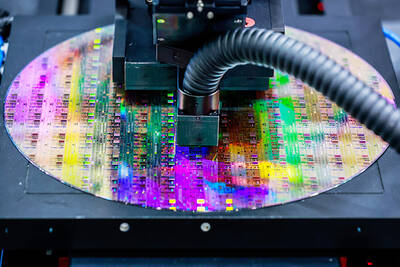
The artificial intelligence (AI) boom has triggered a seismic reshuffling of global equity markets, with Taiwan and South Korea muscling past European nations one by one. With its stock market now valued at nearly US$4.3 trillion, Taiwan surpassed the UK, Europe’s biggest market, earlier this month, data compiled by Bloomberg showed. South Korea is about US$140 billion away from doing the same. The tech-heavy Asian markets have shot past Germany and France in the past seven months. The shift is largely down to massive gains in shares of three companies that provide essential hardware for AI: Taiwan Semiconductor Manufacturing Co (TSMC, 台積電),
Shares of Taiwan Semiconductor Manufacturing Co (TSMC, 台積電) have repeatedly hit new highs, but an equity analyst said the stock’s valuation remains within a reasonable range and any pullback would likely be technical. The contract chipmaker’s historical price-to-earnings (P/E) ratio has ranged between 20 and 30, Cathay Futures Consultant Co (國泰證期) analyst Tsai Ming-han (蔡明翰) told Central News Agency. With market consensus projecting that TSMC would post earnings per share of about NT$100 (US$3.17) this year, supported by strong global demand for artificial intelligence (AI) applications, and the stock currently trading at a P/E ratio of below 25, Tsai said the valuation


 RSS
RSS