


The unemployment rate rose to 3.74 percent last month, ending two months of decline, as new graduates and part-time workers entered the job market, the Directorate-General of Budget, Accounting and Statistics (DGBAS) said yesterday.
The number of unemployed — 440,000 people — might climb higher this month and beyond until the summer vacation comes to an end, the agency said.
“The nation’s jobless population increased by 9,000 last month as first-time job seekers picked up by an equal number, but fewer people quit or lost jobs to business closures and downsizing,” DGBAS Deputy Director Pan Ning-hsin (潘寧馨) told a news conference.
The unemployment rate gained 0.08 percentage points compared with May, but slid 0.18 percentage points from a year earlier, the DGBAS report showed.
The lagging economic indicator after seasonal adjustments came in at 3.78 percent, the lowest in 22 months, Pan said, attributing the retreat to an improving domestic economy.
A stable job market is critical to consumer spending and overall domestic demand as the nation’s export-focused economy has showed signs of a slowdown.
The unemployment rate for people with a bachelor’s degree or higher was 4.58 percent, while the rate for people with a junior college education was 4.02 percent, the agency said.
“That is because a skills mismatch hit young people with university diplomas the hardest,” Pan said.
The jobless rate also edged up to 3.73 percent among people with a high-school education and rose to 2.92 percent among people with a junior-high school education, the report found.
By demographic breakdown, the unemployment rates were 11.91 percent for people aged 15 to 24; 6.54 percent for the 25-to-29 age bracket; and 3.9 percent for the 25-to-44 group.
People aged 45 and 64 are the most stable, with a jobless rate of 1.98 percent, the report showed.
For the first six months of the year, the unemployment rate averaged 3.75 percent, it said.
An improving economy helped raise the average monthly wage — including take-home salaries, bonuses, overtime pay and other forms of compensation — to NT$48,848 in May, up 10.12 percent from April, thanks to Dragon Boat Festival bonuses, Pan said.
Many Taiwanese companies distribute bonuses three times a year: the Lunar New Year, the Dragon Boat Festival and the Mid-Autumn Festival.
Regular take-home wages averaged NT$39,883 in May, a 0.14 percent increase from April, the agency’s wage report said, after taking out volatile compensations.
For the first five months of the year, the average take-home wage rose 1.56 percent to a record NT$39,707, it said.
The real increase stood at 0.95 percent as inflation weakened purchasing ability by 0.6 percent during the same period, it said.
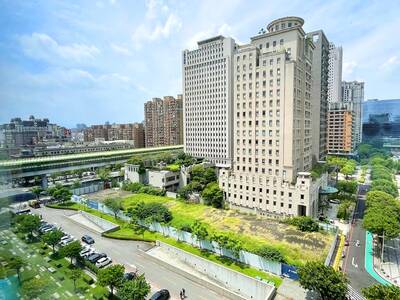
Taichung reported the steepest fall in completed home prices among the six special municipalities in the first quarter of this year, data compiled by Taiwan Realty Co (台灣房屋) showed yesterday. From January through last month, the average transaction price for completed homes in Taichung fell 8 percent from a year earlier to NT$299,000 (US$9,483) per ping (3.3m²), said Taiwan Realty, which compiled the data based on the government’s price registration platform. The decline could be attributed to many home buyers choosing relatively affordable used homes to live in themselves, instead of newly built homes in the city’s prime property market, Taiwan Realty
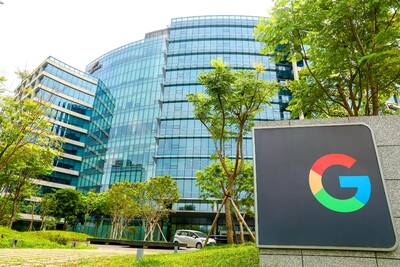
The government yesterday approved applications by Alphabet Inc’s Google to invest NT$27.08 billion (US$859.98 million) in Taiwan, the Ministry of Economic Affairs said in a statement. The Department of Investment Review approved two investments proposed by Google, with much of the funds to be used for data processing and electronic information supply services, as well as inventory procurement businesses in the semiconductor field, the ministry said. It marks the second consecutive year that Google has applied to increase its investment in Taiwan. Google plans to infuse NT$25.34 billion into Charter Investments Ltd (特許投資顧問) through its Singapore-based subsidiary Fructan Holdings Singapore Pte Ltd, and

JET JUICE: The war on Iran’s secondary effects have seen fuel prices skyrocket, knocking flight schedules down to earth in return as airlines struggle with costs Airline passengers should brace for more irritation in the next few months as carriers worldwide cancel flights and ground planes to cope with stratospheric increases in jet-fuel prices. Dutch flag carrier KLM is the latest company to cut its schedule, saying on Thursday that it would scrap 80 return flights at Amsterdam’s Schiphol Airport in the coming month. That puts it in the same league as United Airlines Holdings Inc, Deutsche Lufthansa AG and Cathay Pacific Airways Ltd, which have all pruned itineraries to mitigate costs. Global capacity for next month has been reduced by about 3 percentage points, with all

The US said it plans to help build a first-of-its-kind industrial hub in the Philippines to boost production of inputs crucial to US supply chains. The 4,000-acre hub is intended to be “a purpose-built platform for allied manufacturing” and “an investment acceleration hub where the specific industrial activities are shaped by market demand,” the US Department of State said on Thursday. The project — touted as an “economic security zone” — would be within the Luzon Economic Corridor, a flagship economic project backed by the US and Japan on the main Philippine island. The project was also described as “the first artificial intelligence


 RSS
RSS