


The Ministry of Economic Affairs yesterday came under fire from lawmakers for failing to introduce an amendment to the Mining Act (礦業法) as they began a review of proposed revisions prompted by a public outcry over the mining industry’s effect on the environment.
“Lawmakers have been talking about amending the law since February and yet the ministry failed to send an amendment. It is so lazy,” Democratic Progressive Party (DPP) Legislator Gao Jyh-peng (高志鵬), co-convenor of the Economics Committee, told a meeting of the Legislative Yuan committee.
Vice Minister of Economic Affairs Yang Wei-fu (楊偉甫) said the ministry’s draft amendment is undergoing a 60-day public notice and so could not be sent to the Legislative Yuan yet.
The committee is to review a bill submitted by lawmakers article-by-article today and tomorrow, including a ceiling on the amount that can be mined, the extension length of mining rights and how to retroactively impose new regulations on companies.
The lawmakers are facing mounting pressure from the public to revise the law, triggered by protests over a 20-year extension given to Asia Cement Corp’s (亞泥) mining rights in eastern Taiwan.
The revision of the act would cover the operations of more than 250 quarries, the development of the nation’s cement industry, which generates NT$27 billion (US$889 million) in annual production value, and the interests of Aborigines whose traditional territories are within the scope of the quarries.
The act also involves long-term national land planning and utilization.
DPP Legislator Hsiao Bi-khim (蕭美琴) proposed that when a company plans to apply for mining rights for a new or existing quarry, it must submit detailed plans for environmental restoration and labor placement in preparation for when it stops operations at the quarry.
The ministry should conduct strategic environmental assessments every five years to evaluate each quarry’s reserves, the supply and demand in domestic and international markets and environmental restoration efforts at quarries to provide updated information on the entire mining industry, not just cement companies, Hsiao said.
Lawmakers proposed that firms obtain approval from Aboriginal communities in accordance with Article 21 of the Indigenous Peoples Basic Law’s (原住民族基本法) when the scope of a quarry is within Aboriginal territory.
An environmental impact assessment (EIA) is to be a requirement when applying for new or extended mining rights, the draft amendments states. For firms that have already received approval, such as Asia Cement, an EIA would have to be conducted once the amendment takes effect.
If the amendment passes, companies such as Asia Cement could see the government strip them of mining rights if their operations fail to pass an EIA, Yang said.
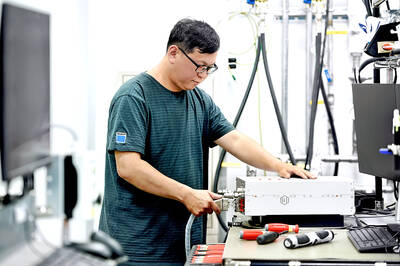
SEMICONDUCTORS: The German laser and plasma generator company will expand its local services as its specialized offerings support Taiwan’s semiconductor industries Trumpf SE + Co KG, a global leader in supplying laser technology and plasma generators used in chip production, is expanding its investments in Taiwan in an effort to deeply integrate into the global semiconductor supply chain in the pursuit of growth. The company, headquartered in Ditzingen, Germany, has invested significantly in a newly inaugurated regional technical center for plasma generators in Taoyuan, its latest expansion in Taiwan after being engaged in various industries for more than 25 years. The center, the first of its kind Trumpf built outside Germany, aims to serve customers from Taiwan, Japan, Southeast Asia and South Korea,
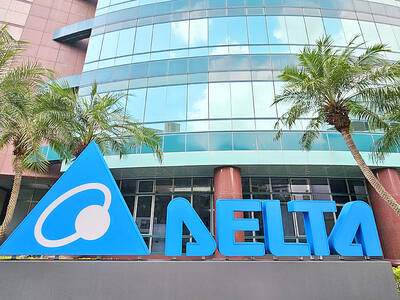
POWERING UP: PSUs for AI servers made up about 50% of Delta’s total server PSU revenue during the first three quarters of last year, the company said Power supply and electronic components maker Delta Electronics Inc (台達電) reported record-high revenue of NT$161.61 billion (US$5.11 billion) for last quarter and said it remains positive about this quarter. Last quarter’s figure was up 7.6 percent from the previous quarter and 41.51 percent higher than a year earlier, and largely in line with Yuanta Securities Investment Consulting Co’s (元大投顧) forecast of NT$160 billion. Delta’s annual revenue last year rose 31.76 percent year-on-year to NT$554.89 billion, also a record high for the company. Its strong performance reflected continued demand for high-performance power solutions and advanced liquid-cooling products used in artificial intelligence (AI) data centers,

Gasoline and diesel prices at domestic fuel stations are to fall NT$0.2 per liter this week, down for a second consecutive week, CPC Corp, Taiwan (台灣中油) and Formosa Petrochemical Corp (台塑石化) announced yesterday. Effective today, gasoline prices at CPC and Formosa stations are to drop to NT$26.4, NT$27.9 and NT$29.9 per liter for 92, 95 and 98-octane unleaded gasoline respectively, the companies said in separate statements. The price of premium diesel is to fall to NT$24.8 per liter at CPC stations and NT$24.6 at Formosa pumps, they said. The price adjustments came even as international crude oil prices rose last week, as traders

SIZE MATTERS: TSMC started phasing out 8-inch wafer production last year, while Samsung is more aggressively retiring 8-inch capacity, TrendForce said Chipmakers are expected to raise prices of 8-inch wafers by up to 20 percent this year on concern over supply constraints as major contract chipmakers Taiwan Semiconductor Manufacturing Co (TSMC, 台積電) and Samsung Electronics Co gradually retire less advanced wafer capacity, TrendForce Corp (集邦科技) said yesterday. It is the first significant across-the-board price hike since a global semiconductor correction in 2023, the Taipei-based market researcher said in a report. Global 8-inch wafer capacity slid 0.3 percent year-on-year last year, although 8-inch wafer prices still hovered at relatively stable levels throughout the year, TrendForce said. The downward trend is expected to continue this year,


 RSS
RSS