


Urban land prices continued to fall as the local property market remained in the doldrums, with Taipei prices falling at the steepest rate, statistics released on Saturday by the Ministry of the Interior showed.
The urban land price index, an important measure of the local property market, fell 0.49 percent during the period from Oct. 1 last year to March 31 from the previous half-year, data from the ministry’s second semi-annual report showed.
An earlier report said that urban land prices dropped 0.35 percent from April 1 to Sept. 30 last year.
The latest drop was the steepest since 2010, the ministry said, adding that Taipei, the most closely watched property market in the nation, suffered the largest fall of 1.53 percent.
In response, the Taipei City Government said that the city has plenty of old buildings that are in districts that fail to impress home buyers due to their relatively inconvenient transportation and a lack of infrastructure, which dragged prices down at a faster rate.
Meanwhile, land prices in New Taipei City fell 0.30 percent during the six-month period, while a 0.48 percent fall was recorded in Taoyuan and Taichung posted a 0.22 percent drop.
However, Tainan and Kaohsiung bucked the trend, registering 0.90 percent and 0.30 percent increases respectively, the ministry said.
Lienchiang County recorded the second-largest fall of 1.35 percent, while Kinmen County enjoyed the largest increase of 1.36 percent ,ahead of Taitung County (1.32 percent) and Yilan County (1.18 percent), the data showed.
Commenting on the report, the Kinmen County Government said that the increase in land prices reflected the county’s efforts to develop its tourism industry, which has created jobs and energized business, which has in turn boosted the property market.
The total number of land transactions during the period was 239,240, up 2.47 percent from six months ago, but down 8.25 percent from a year earlier, the ministry said.
Meanwhile, another ministry report showed that the ratio of home mortgages to household income was 38.04 percent in the first quarter, meaning that salaried workers had to use nearly 40 percent of their earnings to repay home loans.
However, the latest ratio was 0.30 percentage points lower than that from the fourth quarter last year.
On average, home prices were 9.24 times the average salary, the data showed, meaning that to afford a home, people would have to refrain from spending any of their annual income for more than nine years.
This indicates that home ownership remains out of reach for many Taiwanese.

POWERING UP: PSUs for AI servers made up about 50% of Delta’s total server PSU revenue during the first three quarters of last year, the company said Power supply and electronic components maker Delta Electronics Inc (台達電) reported record-high revenue of NT$161.61 billion (US$5.11 billion) for last quarter and said it remains positive about this quarter. Last quarter’s figure was up 7.6 percent from the previous quarter and 41.51 percent higher than a year earlier, and largely in line with Yuanta Securities Investment Consulting Co’s (元大投顧) forecast of NT$160 billion. Delta’s annual revenue last year rose 31.76 percent year-on-year to NT$554.89 billion, also a record high for the company. Its strong performance reflected continued demand for high-performance power solutions and advanced liquid-cooling products used in artificial intelligence (AI) data centers,

SIZE MATTERS: TSMC started phasing out 8-inch wafer production last year, while Samsung is more aggressively retiring 8-inch capacity, TrendForce said Chipmakers are expected to raise prices of 8-inch wafers by up to 20 percent this year on concern over supply constraints as major contract chipmakers Taiwan Semiconductor Manufacturing Co (TSMC, 台積電) and Samsung Electronics Co gradually retire less advanced wafer capacity, TrendForce Corp (集邦科技) said yesterday. It is the first significant across-the-board price hike since a global semiconductor correction in 2023, the Taipei-based market researcher said in a report. Global 8-inch wafer capacity slid 0.3 percent year-on-year last year, although 8-inch wafer prices still hovered at relatively stable levels throughout the year, TrendForce said. The downward trend is expected to continue this year,
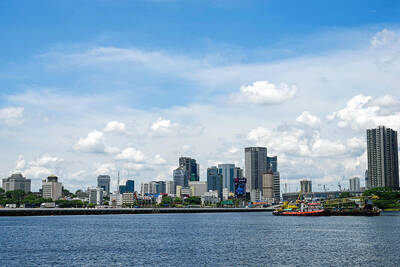
Vincent Wei led fellow Singaporean farmers around an empty Malaysian plot, laying out plans for a greenhouse and rows of leafy vegetables. What he pitched was not just space for crops, but a lifeline for growers struggling to make ends meet in a city-state with high prices and little vacant land. The future agriculture hub is part of a joint special economic zone launched last year by the two neighbors, expected to cost US$123 million and produce 10,000 tonnes of fresh produce annually. It is attracting Singaporean farmers with promises of cheaper land, labor and energy just over the border.

US actor Matthew McConaughey has filed recordings of his image and voice with US patent authorities to protect them from unauthorized usage by artificial intelligence (AI) platforms, a representative said earlier this week. Several video clips and audio recordings were registered by the commercial arm of the Just Keep Livin’ Foundation, a non-profit created by the Oscar-winning actor and his wife, Camila, according to the US Patent and Trademark Office database. Many artists are increasingly concerned about the uncontrolled use of their image via generative AI since the rollout of ChatGPT and other AI-powered tools. Several US states have adopted


 RSS
RSS