


Taiwanese PC vendor Acer Inc (宏碁) plans to focus on developing gaming PCs and commercial virtual-reality (VR) applications in the next few years, a top executive said yesterday.
“The priority of Acer’s corporate transformation is clear. We want to gradually shift our focus from PCs to gaming PCs, commercial VR and artificial intelligence [AI] in the coming years,” Acer chief executive officer Jason Chen (陳俊聖) told reporters at the company’s booth at the Computex Taipei fair in the Taipei Nangang Exhibition Center.
It is important for Acer to build stronger computing power and accumulate experience before taking the next step, Chen said, adding that gaming is a fast-growing business for the company.
The firm has been allocating research and development (R&D) resources on increasing the performance of its gaming products — such as raising the quality of cooling systems — in a bid to increase its popularity among gamers.
SHIPMENTS RISE
The company did not disclose revenue figures for its gaming products, but said that its shipments of of gaming PCs last year jumped an annual 64 percent.
Despite the strong growth momentum, Chen said Acer expects the gaming industry to reach its peak three years from now, so the company is entering the commercial VR field in search of new growth drivers.
“We decided to focus on commercial use, deploying a business-to-business model, as soon as we entered the VR industry, because we think that VR equipment and technology are too expensive for consumers at the moment,” Chen said.
It is unreasonable to expect consumers to spend “millions of dollars” on buying VR equipment for their homes, but US$12 for a ticket to watch a VR film at a theater is an acceptable price, Chen said.
COMMERCIAL CLIENTS
Acer is targeting commercial clients such as movie theater operators and interior designers, he said, adding that the company is also seeking to team up with international VR content providers.
Acer plans to develop its AI business further down the line, Chen said, adding that it has made “a little” progress in the field so far.
“We do not have a clear business model to share at the moment,” he said.
Acer’s booth at Computex is divided into three large areas, one of which showcases the company’s Predator gaming products, which include monitors, desktops and notebooks.
Acer set up a box office at the booth to demonstrate VR film-watching solutions, developed in collaboration with IMAX Corp and Starbreeze AB.
The company also has a section displaying its Build Your Own Cloud applications.
AI TALENT: No financial details were released about the deal, in which top Groq executives, including its CEO, would join Nvidia to help advance the technology Nvidia Corp has agreed to a licensing deal with artificial intelligence (AI) start-up Groq, furthering its investments in companies connected to the AI boom and gaining the right to add a new type of technology to its products. The world’s largest publicly traded company has paid for the right to use Groq’s technology and is to integrate its chip design into future products. Some of the start-up’s executives are leaving to join Nvidia to help with that effort, the companies said. Groq would continue as an independent company with a new chief executive, it said on Wednesday in a post on its Web

RESPONSE: The Japanese Ministry of Finance might have to intervene in the currency markets should the yen keep weakening toward the 160 level against the US dollar Japan’s chief currency official yesterday sent a warning on recent foreign exchange moves, after the yen weakened against the US dollar following Friday last week’s Bank of Japan (BOJ) decision. “We’re seeing one-directional, sudden moves especially after last week’s monetary policy meeting, so I’m deeply concerned,” Japanese Vice Finance Minister for International Affairs Atsushi Mimura told reporters. “We’d like to take appropriate responses against excessive moves.” The central bank on Friday raised its benchmark interest rate to the highest in 30 years, but Bank of Japan Governor Kazuo Ueda chose to keep his options open rather than bolster the yen,

Even as the US is embarked on a bitter rivalry with China over the deployment of artificial intelligence (AI), Chinese technology is quietly making inroads into the US market. Despite considerable geopolitical tensions, Chinese open-source AI models are winning over a growing number of programmers and companies in the US. These are different from the closed generative AI models that have become household names — ChatGPT-maker OpenAI or Google’s Gemini — whose inner workings are fiercely protected. In contrast, “open” models offered by many Chinese rivals, from Alibaba (阿里巴巴) to DeepSeek (深度求索), allow programmers to customize parts of the software to suit their
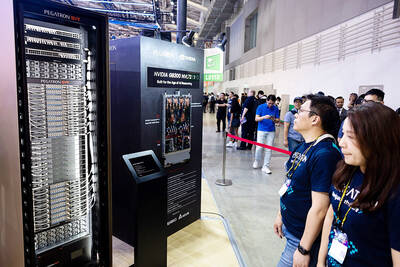
Global server shipments are expected to surge to 15 million units next year, from 4 million units this year, with artificial intelligence (AI) servers accounting for about 30 percent, driven by massive capital spending by major cloud service providers, the Market Intelligence and Consulting Institute (MIC) said on Thursday last week. Major cloud service providers — including Google’s parent company Alphabet Inc, Microsoft Corp, Amazon.com Inc and Meta Platforms Inc — are projected to budget US$450 million for capital expenditure next year, up from US$400 million this year, MIC ICT [information and communications technology] Industry Research Center director Edward Lin


 RSS
RSS