


The production value of Taiwan’s integrated circuit (IC) industry is estimated to grow at a quarterly rate of 0.4 percent to NT$573.9 billion (US$19 billion) this quarter, but the figure would remain 4.6 percent lower than the same period last year, the Industrial Technology Research Institute’s Industrial Economics and Knowledge Center (IEK) said last week.
The IEK said the output growth momentum for the IC industry would likely see a substantial recovery next quarter at the earliest, with production value reaching NT$696.3 billion, up 21.3 percent quarter-on-quarter and 5.6 percent year-over-year.
The IC industry covers chip design, manufacturing, packaging and testing, with the manufacturing segment accounting for more than 50 percent of the industry’s total production value.
Given the continued weakness among local manufacturers, output of the manufacturing segment is forecast to fall by 6.4 percent sequentially to NT$300.4 billion this quarter, after an 11 percent decline in the first quarter, the center said.
The cautious forecast came after Taiwan Semiconductor Manufacturing Co (台積電), the world’s largest contract chipmaker, said last month that slow season effects will continue to impact its shipments at a time of inventory adjustments so its consolidated sales for the three-month period could fall 8 to 9 percent from the first quarter.
Smaller United Microelectronics Corp (聯電) also said sales for the second quarter are likely to stay flat from the first quarter.
However, the output of the design segment, the second largest sub-segment in the local IC business, is expected to grow 10.2 percent quarter-on-quarter to NT$154 billion this quarter, the IEK said.
MediaTek Inc (聯發科), the largest IC design house in the nation, has said that it expects its consolidated sales for the second quarter will grow by up to 8 percent from a quarter earlier.
The IEK said the output of the packaging segment is expected to rise 7.8 percent sequentially to NT$83 billion in the second quarter, while that of the testing segment will likely rise 8 percent to NT$36.5 billion.
In the first quarter, the production value of the nation’s IC sector totaled NT$571.4 billion, down 11.3 percent quarterly, but up 5 percent annually.
The manufacturing segment contributed NT$320.8 billion in output and the design segment generated NT$139.8 billion in production value.
The IEK said the production value of the packaging and testing segments hit NT$77 billion and NT$33.8 billion respectively in the first quarter.

AI TALENT: No financial details were released about the deal, in which top Groq executives, including its CEO, would join Nvidia to help advance the technology Nvidia Corp has agreed to a licensing deal with artificial intelligence (AI) start-up Groq, furthering its investments in companies connected to the AI boom and gaining the right to add a new type of technology to its products. The world’s largest publicly traded company has paid for the right to use Groq’s technology and is to integrate its chip design into future products. Some of the start-up’s executives are leaving to join Nvidia to help with that effort, the companies said. Groq would continue as an independent company with a new chief executive, it said on Wednesday in a post on its Web
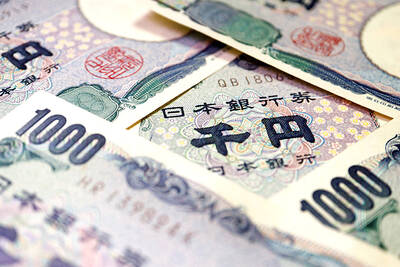
RESPONSE: The Japanese Ministry of Finance might have to intervene in the currency markets should the yen keep weakening toward the 160 level against the US dollar Japan’s chief currency official yesterday sent a warning on recent foreign exchange moves, after the yen weakened against the US dollar following Friday last week’s Bank of Japan (BOJ) decision. “We’re seeing one-directional, sudden moves especially after last week’s monetary policy meeting, so I’m deeply concerned,” Japanese Vice Finance Minister for International Affairs Atsushi Mimura told reporters. “We’d like to take appropriate responses against excessive moves.” The central bank on Friday raised its benchmark interest rate to the highest in 30 years, but Bank of Japan Governor Kazuo Ueda chose to keep his options open rather than bolster the yen,
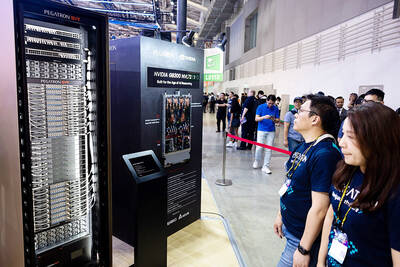
Global server shipments are expected to surge to 15 million units next year, from 4 million units this year, with artificial intelligence (AI) servers accounting for about 30 percent, driven by massive capital spending by major cloud service providers, the Market Intelligence and Consulting Institute (MIC) said on Thursday last week. Major cloud service providers — including Google’s parent company Alphabet Inc, Microsoft Corp, Amazon.com Inc and Meta Platforms Inc — are projected to budget US$450 million for capital expenditure next year, up from US$400 million this year, MIC ICT [information and communications technology] Industry Research Center director Edward Lin

Even as the US is embarked on a bitter rivalry with China over the deployment of artificial intelligence (AI), Chinese technology is quietly making inroads into the US market. Despite considerable geopolitical tensions, Chinese open-source AI models are winning over a growing number of programmers and companies in the US. These are different from the closed generative AI models that have become household names — ChatGPT-maker OpenAI or Google’s Gemini — whose inner workings are fiercely protected. In contrast, “open” models offered by many Chinese rivals, from Alibaba (阿里巴巴) to DeepSeek (深度求索), allow programmers to customize parts of the software to suit their


 RSS
RSS