


Taipei Times (TT): What does the government’s “new southbound policy” aim to achieve?
Chiou Jiunn-rong (邱俊榮): It aims to help local firms cut dependence on China and take advantage of the rapid economic growth in Southeast and South Asia. Most Taiwanese firms focus on producing intermediate goods and services between industries for resale or for the production of other goods.
Under the policy, we should see those nations as both production bases and end markets.
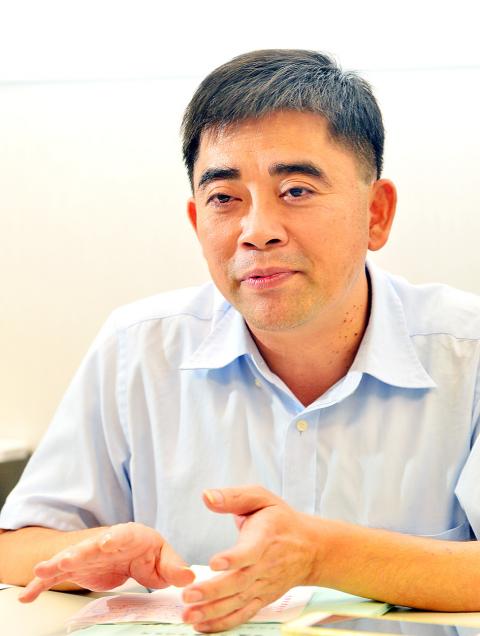
Photo: Wang Yi-Sung, Taipei Times
Under the former Chinese Nationalist Party (KMT) administration, local manufacturers were encouraged to produce whatever the Chinese market needed, namely low-priced petrochemical, auto parts and other upstream products. The cross-strait's Economic Cooperation Framework Agreement (ECFA ) focused on a few sectors and misallocated the nation’s resources as seen in the early harvest list.
Under the policy, firms would provide clients total solutions by selling a combination of hardware devices and software applications, or a combination of products and their supporting services.
For example, firms that sell LED street lighting devices should also help clients install sensors and analyze traffic flows. Bikemakers might help export Taipei’s popular bicycle rental system. Such a business model would allow the nation to restructure its export-oriented economy to encompass more than product sales.
TT: Is the “new southbound policy” wanting in clarity and concrete details?
Chiou: I have heard such complaints. The government either has not drawn up detailed plans or it deliberately remains vague to avoid obstruction from China.
Beijing has thwarted Taiwan’s efforts to ink memorandums of understanding with trading partners.
In my view, the government had better be cautious and stay ambiguous so that China does not know its moves.
TT: Does Taiwan have sufficient resources, capital and talent to expand in all 18 markets, including Australia?
Chiou: While the more, the better, I do not think Taiwanese firms can have meaningful expansion in all 18 nations. Personally, I think India and Indonesia should suffice as main targets.
Malaysia might have barriers to entry due to its political loyalty to China. Bilateral civilian exchanges have been very limited.
Thailand has shown rapid economic progress over the past few years, but it is close to Japan.
Average income levels remain wanting in Vietnam.
The Philippines has good potential in building into a domestic market, but it might keep Taiwan at a distance to pursue a friendly relationship with China. In the long run, the Philippines remains worthy of seeking industrial and economic cooperation.
Politically, Southeast Asian nations are not as mature as Taiwan in terms of democratic development. A change in administration often means a shake-up in policy direction and backroom wrangling is common.
The government should help conduct surveys and gather business intelligence in an effort to guide Taiwanese investors in the region.
Generally, local firms know little about ASEAN due to the pro-China policy of the former administration.
TT: Why do you recommend Indonesia?
Chiou: Taiwan should forge close trade ties with geographically close nations as all other countries have done. Of the ASEAN markets, Indonesia is least concerned about the “one-China” constraint and shows the most interest in the policy. It has a large population, rich natural resources and an industry with room for complimentary growth between Taiwan and Indonesia.
Indonesia is surrounded by the ocean and is ideal for developing the aquaculture industry. Taiwan could export its expertise in this field. Some local firms have made inroads there.
The solar industry could also play a role by helping Indonesia’s aquafarmers use the alternative energy source. Taiwan has a competitive edge in solar energy development and supply.
In addition, Taiwan could compete for contracts to upgrade Indonesia’s railway and highway systems, expand its port capacity and enhance other infrastructure.
Indonesia talked about setting aside an islet for Taiwanese firms to develop when former president Chen Shui-bian (陳水扁) was in power.
TT: How can Taiwan and India build each other up?
Chiou: Cooperation between India and Taiwan would take on the traditional investment-driven pattern. India also has a large population and has shown a robust economic performance over the past few years. Indian Prime Minister Narendra Modi is trying to attract foreign investment and capital, and has relaxed regulatory hurdles to speed up the process.
Taiwan and India might join forces in tapping e-commerce and Internet of Things (IoT) businesses. Software applications are dominating the IoT era, explaining why Facebook Inc and Alphabet Inc’s Google are such a huge success.
Taiwan is lagging in the area, because it has assigned too much importance to the development and production of hardware and hence the pursuit of productivity enhancement. It will take some time to cast off the mentality.
India has the world’s largest pool of software talent. Hon Hai Precision Industry Co (鴻海精密) and Pegatron Corp (和碩) have announced plans to set up plants in India to better serve their customers. The large companies can help smaller Taiwanese firms gain a foothold in India.
While government assistance is not needed for big companies to expand their territory, medium and small-sized enterprises depend heavily on government assistance due to their lack of financial resources.
TT: How can local governments and non-governmental institutions help advance the policy?
Chiou: Local administrators in Taoyuan, Taichung, Tainan and Kaohsiung have taken business representatives with them to ASEAN members in a bid to secure orders.
For example, Taichung plans to promote the export of machinery tools to capitalize on the trend of “smart” production. The industry can limit exports to low-end technology to ease concerns about an industry exodus. Taiwan’s machinery tools compete with rivals from Japan and Italy.
Cities in southern Taiwan plan to sell processed agricultural products to the region, because the nation enjoys advantages in terms of food processing technology.
The policy does not seek to outsource pollution to Southeast Asia or elsewhere. The practice has proved impractical and expensive as evidenced by the heavy fine imposed by Vietnam on the Formosa Plastics Group (台塑集團) steel mill in central Vietnam.
Southeast Asian nations generally are skeptical of foreign firms, especially from Taiwan, due to the “one China” policy and concerns that they are seeking to exploit their low land and labor costs. We need to spend time building trust with local people and to develop a new and sustainable business model.
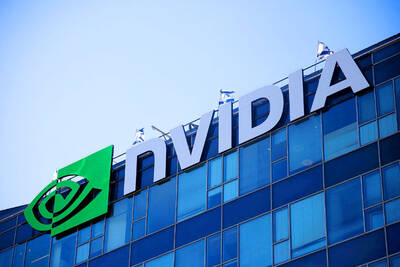
AI TALENT: No financial details were released about the deal, in which top Groq executives, including its CEO, would join Nvidia to help advance the technology Nvidia Corp has agreed to a licensing deal with artificial intelligence (AI) start-up Groq, furthering its investments in companies connected to the AI boom and gaining the right to add a new type of technology to its products. The world’s largest publicly traded company has paid for the right to use Groq’s technology and is to integrate its chip design into future products. Some of the start-up’s executives are leaving to join Nvidia to help with that effort, the companies said. Groq would continue as an independent company with a new chief executive, it said on Wednesday in a post on its Web
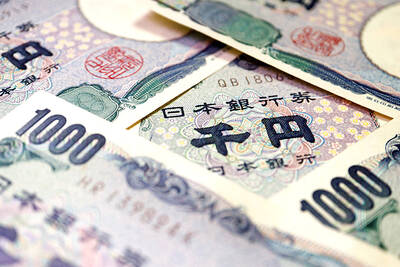
RESPONSE: The Japanese Ministry of Finance might have to intervene in the currency markets should the yen keep weakening toward the 160 level against the US dollar Japan’s chief currency official yesterday sent a warning on recent foreign exchange moves, after the yen weakened against the US dollar following Friday last week’s Bank of Japan (BOJ) decision. “We’re seeing one-directional, sudden moves especially after last week’s monetary policy meeting, so I’m deeply concerned,” Japanese Vice Finance Minister for International Affairs Atsushi Mimura told reporters. “We’d like to take appropriate responses against excessive moves.” The central bank on Friday raised its benchmark interest rate to the highest in 30 years, but Bank of Japan Governor Kazuo Ueda chose to keep his options open rather than bolster the yen,

Global server shipments are expected to surge to 15 million units next year, from 4 million units this year, with artificial intelligence (AI) servers accounting for about 30 percent, driven by massive capital spending by major cloud service providers, the Market Intelligence and Consulting Institute (MIC) said on Thursday last week. Major cloud service providers — including Google’s parent company Alphabet Inc, Microsoft Corp, Amazon.com Inc and Meta Platforms Inc — are projected to budget US$450 million for capital expenditure next year, up from US$400 million this year, MIC ICT [information and communications technology] Industry Research Center director Edward Lin
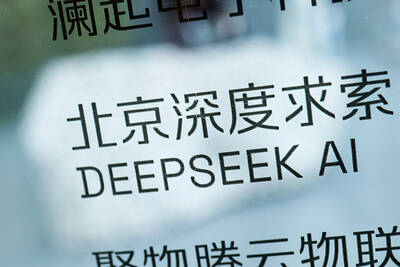
Even as the US is embarked on a bitter rivalry with China over the deployment of artificial intelligence (AI), Chinese technology is quietly making inroads into the US market. Despite considerable geopolitical tensions, Chinese open-source AI models are winning over a growing number of programmers and companies in the US. These are different from the closed generative AI models that have become household names — ChatGPT-maker OpenAI or Google’s Gemini — whose inner workings are fiercely protected. In contrast, “open” models offered by many Chinese rivals, from Alibaba (阿里巴巴) to DeepSeek (深度求索), allow programmers to customize parts of the software to suit their


 RSS
RSS