

The Executive Yuan yesterday approved a draft act to allow fintech businesses to test their services and exempt them from legal restrictions for up to 18 months, a move expected to boost the nation’s fintech innovations.
The bill is now awaiting approval by the legislature.
The draft act would set up a “regulatory sandbox,” which would provide fintech businesses with an environment that allows them to experiment with new financial products and services through legal exemptions, with a few exceptions.
Businesses expected to apply for the program include providers of digital insurance services, peer-to-peer lending, blockchain technology, identification verification technology, big data analytics, third-party payment systems and backend management systems, Financial Supervisory Commission Vice Chairman Cheng Cheng-mount (鄭貞茂) said.
Businesses will be allowed to test their innovations in the “sandbox” for one year with an extension period of six months, Cheng said.
To qualify, services and technologies should either improve the efficiency of financial services, lower operating cost or enhance consumer rights, he said.
Authorities would review the experiments and help develop business opportunities for promising innovations, or revise regulatory frameworks to accommodate new forms of financial services, he added.
The proposed “sandbox” protections do not exempt companies from money-laundering and consumer protection laws, and fintech businesses, especially providers of international third-party payment service, have to make sure that their operations are in full compliance with those laws, Cheng said.
Start-ups interested in providing foreign-exchange services should seek permission from the central bank, Cheng added.
“Innovative financial technologies could be a major driver of the financial industry, as well as other sectors, and Taiwan cannot afford to fall behind other countries in the development of financial technology, or it would risk its competitiveness and overall industrial development,” Premier Lin Chuan (林全) said.
Lin asked the commission to communicate with legislators to ensure a swift passage of the draft act.

BOOMING BUSINESS: Memory supply constraints would be even more severe in 2027 and 2028, prompting customers to sign long-term supply agreements, Micron said Micron Memory Taiwan Co (台灣美光) yesterday said it is accelerating memorychip capacity expansion amid growing artificial intelligence (AI)-driven demand, with its accumulated investment in Taiwan reaching NT$1.6 trillion (US$50.2 billion) as of June. The company’s investment in Taiwan has surged over the past four years, with recent spending equaling the total invested over the past 25 years, Micron Taiwan chairman Donghui Lu (盧東暉) told a media briefing in Taipei. “The launch of ChatGPT and the outbreak of COVID triggered increasing demand for memory chips. Since then, demand has gathered pace rapidly, with only a brief pause in 2023 when a major downturn”
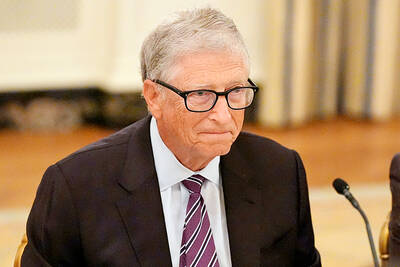
Artificial intelligence (AI) requires safeguards that go beyond self-regulation, Microsoft Corp cofounder Bill Gates said in an interview that aired on Sunday, calling for legislation to be passed in US Congress. “You need law enforcement and the politicians to get into the discussion about what safeguards and monitoring look like,” Gates said in a taped interview on NBC’s Meet the Press program. “And that has to be a required thing.” A sudden groundswell has risen in favor of federal intervention after OpenAI in July said that an autonomous AI agent went rogue during a security test and hacked into another company, subverting

Apple Inc is set to sell about 6 million units of the iPhone Duo this year, Counterpoint Research said, offering the first estimate for how the company’s inaugural foldable device would fare. The figure, more typical of the niche foldable segment than Apple’s usual smartphone sales, is contingent on how well the company ramps up production of the new hardware, Counterpoint senior analyst Ivan Lam (林科宇) said. Priced at US$1,999 and set for a release this month, the iPhone Duo sits atop the Apple lineup and carries industry wide hopes for stoking greater interest and sales of foldables. Market researcher IDC Corp
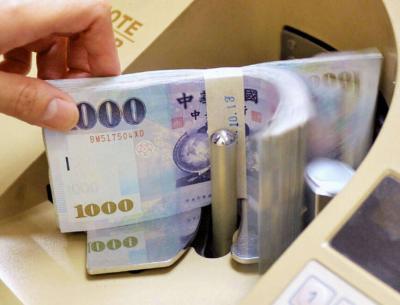
Taiwan ranked fifth worldwide in net financial assets per capita at the end of last year, averaging 164,470 euros (US$186,219), a report released this week by Germany-based Allianz Research said. Taiwan's ranking remained unchanged from the previous year, trailing only the US, Switzerland, Denmark and Singapore, Allianz’s Global Wealth Report said. In the report, Allianz assessed household assets and liabilities in nearly 60 countries, finding that global household wealth reached a record high last year, while the rise of artificial intelligence and market gains made asset ownership increasingly important in determining who benefits from wealth creation. Global financial assets reached a record 268.4


 RSS
RSS