


Austria is seeking ways to make digital services like Alphabet Inc’s Google or Facebook Inc pay taxes for transactions with the nation’s Internet users, trying to plug gaps in a tax system still designed for brick-and-mortar business.
The most ambitious part of the plan targets the business models of Twitter Inc, Google or Facebook: The tacit pact under which searching, liking, posting and tweeting remains free as long as users let the companies feed usage data into algorithms that help tailor advertising to the most likely buyers.
That arrangement is a form of bartering, and a value-added tax could be imposed on such transactions just as the levies are extended in other parts of the economy, said Andreas Schieder, the parliamentary head of Austrian Chancellor Christian Kern’s Social Democrats, which govern in a coalition with the conservative People’s Party.
“The business transaction that’s going on here is that users are paying with their personal data,” Schieder told journalists. “The business model of those Internet companies is based on massive revenues that are generated with the help of those data.”
Raising more taxes from digital businesses is part of a broader plan to amend the nation’s corporate tax code. The package also includes closing loopholes that allow “aggressive tax planning” and corporate tax avoidance, which cost the nation as much as 1.5 billion euros (US$1.6 billion) a year, about a fifth of its annual corporate tax revenue, Schieder said.
The Social Democrats’ plan has two other elements targeted at Internet companies: It would extend tax on advertising revenue to digital formats, and it would tax purely digital services that are acquired by Austrian customers from companies with no physical presence in the country.
Schieder said the Organization for Economic Co-operation and Development (OECD) has made proposals for calculating and implementing such taxes, especially in its Base Erosion and Profit Shifting project.
“We need a new approach to make sure that taxes are paid where revenue and profit is made,” Schieder said. “The OECD has made practical suggestions how to define digital establishments for tax purposes.”
The proposals would need the agreement of conservative Austrian Minister of Finance Hans Joerg Schelling.
The goal to raise tax revenue from digital companies and to tax international companies “more efficiently” is part of the government’s policy update agreed in January.
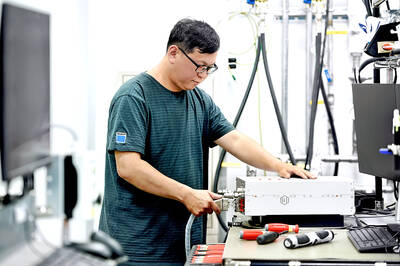
SEMICONDUCTORS: The German laser and plasma generator company will expand its local services as its specialized offerings support Taiwan’s semiconductor industries Trumpf SE + Co KG, a global leader in supplying laser technology and plasma generators used in chip production, is expanding its investments in Taiwan in an effort to deeply integrate into the global semiconductor supply chain in the pursuit of growth. The company, headquartered in Ditzingen, Germany, has invested significantly in a newly inaugurated regional technical center for plasma generators in Taoyuan, its latest expansion in Taiwan after being engaged in various industries for more than 25 years. The center, the first of its kind Trumpf built outside Germany, aims to serve customers from Taiwan, Japan, Southeast Asia and South Korea,

Gasoline and diesel prices at domestic fuel stations are to fall NT$0.2 per liter this week, down for a second consecutive week, CPC Corp, Taiwan (台灣中油) and Formosa Petrochemical Corp (台塑石化) announced yesterday. Effective today, gasoline prices at CPC and Formosa stations are to drop to NT$26.4, NT$27.9 and NT$29.9 per liter for 92, 95 and 98-octane unleaded gasoline respectively, the companies said in separate statements. The price of premium diesel is to fall to NT$24.8 per liter at CPC stations and NT$24.6 at Formosa pumps, they said. The price adjustments came even as international crude oil prices rose last week, as traders
POWERING UP: PSUs for AI servers made up about 50% of Delta’s total server PSU revenue during the first three quarters of last year, the company said Power supply and electronic components maker Delta Electronics Inc (台達電) reported record-high revenue of NT$161.61 billion (US$5.11 billion) for last quarter and said it remains positive about this quarter. Last quarter’s figure was up 7.6 percent from the previous quarter and 41.51 percent higher than a year earlier, and largely in line with Yuanta Securities Investment Consulting Co’s (元大投顧) forecast of NT$160 billion. Delta’s annual revenue last year rose 31.76 percent year-on-year to NT$554.89 billion, also a record high for the company. Its strong performance reflected continued demand for high-performance power solutions and advanced liquid-cooling products used in artificial intelligence (AI) data centers,
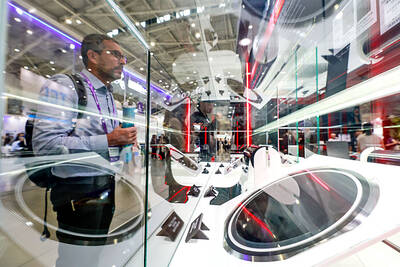
SIZE MATTERS: TSMC started phasing out 8-inch wafer production last year, while Samsung is more aggressively retiring 8-inch capacity, TrendForce said Chipmakers are expected to raise prices of 8-inch wafers by up to 20 percent this year on concern over supply constraints as major contract chipmakers Taiwan Semiconductor Manufacturing Co (TSMC, 台積電) and Samsung Electronics Co gradually retire less advanced wafer capacity, TrendForce Corp (集邦科技) said yesterday. It is the first significant across-the-board price hike since a global semiconductor correction in 2023, the Taipei-based market researcher said in a report. Global 8-inch wafer capacity slid 0.3 percent year-on-year last year, although 8-inch wafer prices still hovered at relatively stable levels throughout the year, TrendForce said. The downward trend is expected to continue this year,


 RSS
RSS