


Asian shares rose to the highest level since July 2015, following US stocks’ climb to record highs after US President Donald Trump said he plans to overhaul business taxes.
Stocks advanced in nearly all Asia-Pacific markets following Trump’s pledge that a “phenomenal” plan to overhaul business taxes will be released within weeks.
The MSCI Asia Pacific Index on Friday rose 0.9 percent to 143.88 in a rally led by shares of consumer discretionary companies. The index stood at 142.08 last week.
Japanese auto-related stocks were among the biggest boosts to the gauge, as a weaker yen improved the outlook for exporters.
Taiwanese shares on Friday rose to close above the 9,600-point mark on the back of strong buying in large-cap stocks in both electronics and non-high-tech sectors, as investors took cues from a record high posted by the Dow Jones Industrial Average, dealers said.
The weighted index on the Taiwan Stock Exchange ended up 75.41 points, or 0.79 percent, at 9,665.59, rising 2.2 percent from last week’s 9,455.56 points.
“The market’s getting some breathing space after declines in the 10-year [US] Treasury yield and an apparent softening of Donald Trump’s rhetoric around tariffs on Chinese imports,” Hong Kong-based Principal Global Investors fund manager Binay Chandgothia said. “The market has adjusted to the possibility that interest rates may not shoot up, which in an environment of higher global growth, should support Asian equities.”
“Ever since his victory in November [last year], global stock markets have been steered by actions and rhetoric emanating from the new [US] commander-in-chief,” KGI Securities’ Nicholas Teo said. “The trigger event of last night’s [Thursday night’s] jump clearly shows the willingness of the markets to give the man lots of slack, extending Mr Trump more time to execute his election promises.”
Japan’s TOPIX closed 2.2 percent higher and Nikkei 225 rose 2.5 percent, both gaining the most in five weeks.
Hong Kong’s Hang Seng Chinese Enterprises Index advanced 0.5 percent in its fifth day of gains and the Hang Seng Index gained 0.2 percent.
Shanghai Composite rose 0.4 percent, Australia’s S&P/ASX 200 added 1 percent and South Korea’s KOSPI rose 0.5 percent.
Singapore’s Straits Times Index and FTSE Bursa Malaysia KLCI both rose 0.7 percent and Jakarta Composite Index added 0.4 percent.
Additional reporting by CNA and Reuters


The domestic unit of the Chinese-owned, Dutch-headquartered chipmaker Nexperia BV will soon be able to produce semiconductors locally within China, according to two company sources. Nexperia is at the center of a global tug-of-war over critical semiconductor technology, with a Dutch court in February ordering a probe into alleged mismanagement at the company. The geopolitical tussle has disrupted supply chains, with some carmakers reportedly forced to cut production due to chip shortages. Local production would allow Nexperia’s domestic arm, Nexperia Semiconductors (China) Ltd (安世半導體中國), to bypass restrictions in place since October on the supply of silicon wafers — etched with tiny components to
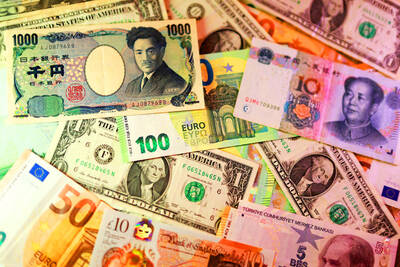
Taiwan’s foreign exchange reserves fell below the US$600 billion mark at the end of last month, with the central bank reporting a total of US$596.89 billion — a decline of US$8.6 billion from February — ending a three-month streak of increases. The central bank attributed the drop to a combination of factors such as outflows by foreign institutional investors, currency fluctuations and its own market interventions. “The large-scale outflows disrupted the balance of supply and demand in the foreign exchange market, prompting the central bank to intervene repeatedly by selling US dollars to stabilize the local currency,” Department of Foreign

Taiwan is open to joining a global liquefied natural gas (LNG) program if one is created, but on the condition that countries provide delivery even in a scenario where there is a conflict with China, an energy department official said yesterday. While Taiwan’s priority is to have enough LNG at home, the nation is open to exploring potential strategic reserves in other countries such as Japan or South Korea, Energy Administration Deputy Director-General Chen Chung-hsien (陳崇憲) said. While the LNG market does not have a global reserve for emergencies like that of oil, the concept has been raised a few times —
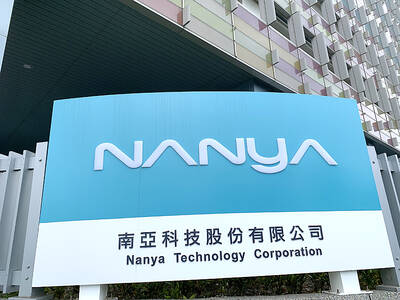
AI-FUELED DEMAND: The company has been benefiting from the skyrocketing prices for DRAM chips amid the AI frenzy, especially its core product — DDR4 DRAM chips DRAM chipmaker Nanya Technology Corp (南亞科技) yesterday reported that its revenue for the first quarter surged 582.91 percent to NT$49.09 billion (US$1.54 billion) from NT$7.19 billion a year earlier, as the supply crunch caused chip price spikes. Last quarter’s figure is the highest on record. On a quarterly basis, revenue jumped 63.14 percent from NT$30.09 billion, the company said. In January, Nanya Technology expected global DRAM supply scarcity to continue through the first half of 2028, thanks to strong demand for artificial intelligence (AI) applications. Market researcher TrendForce Corp (集邦科技) forecast prices of standard DRAM chips would rise between 58 percent and 63


 RSS
RSS