


The global memorychip industry is heading into what has been dubbed an ultra-super-cycle, as the challenge of making chips smaller yet more efficient has created supply bottlenecks, while there is soaring demand for data storage — from smartphones and artificial intelligence to autonomous driving and the Internet of Things.
Chipmakers and analysts predict the price rally — the average price of benchmark memory chips rose 26 to 31 percent last year — will continue this year as supplies remain tight.
“We expect an ultra-super-cycle instead of just a super-cycle in the 2017 DRAM industry,” said CW Chung, an analyst at Nomura Securities Co, referring to memory chips used in smartphones and computers for short-term data processing and storage.
That has left gadget makers scurrying to secure stable supplies, and distributors reporting shipment delays, while chipmakers enjoy bumper earnings.
“As of the end of the fourth quarter, our DRAM inventory in particular has gotten tight compared to the previous period after we actively responded to demand,” said Chun Se-won, a senior vice president at Samsung Electronics Co.
Samsung, the world’s biggest memorychip maker, this week reported record quarterly operating profit of 4.95 trillion won (US$4.26 billion) at its chip business. The company did not detail its inventory levels, but some analysts reckon its DRAM inventory level fell to less than a week at end-December, from nearer a month a year ago.
BNP Paribas SA estimates the industry-wide inventory of NAND flash memory chips, used for longer-term data storage, is also less than one week.
Toshiba Corp said it is receiving orders beyond its capacity for NAND chips, and SK Hynix Inc, while meeting orders for now, warned that an industry-wide shortage of NAND chips will likely persist this year.
Leading Chinese smartphone makers such as Huawei Technologies Co (華為) and ZTE Corp (中興) declined to comment on chip supplies. Alibaba Group Holding Ltd-backed (阿里巴巴) Meizu Technology Corp (魅族) said it has no problems in its smartphone launch or shipment plans.
“We have a long-term agreement with our suppliers that ... guarantees more than three months of supply at any given moment,” global branding manager Ard Boudeling said.
Distributors, however, say tight supplies mean there are some severe shipping delays.
“So much so that many are active in the secondary market to procure the needed supply, often at large premiums to contract pricing,” said Tobey Gonnerman, executive vice president at US-based component distributor Fusion Worldwide.
He said there are delivery delays of 8-12 weeks for certain chips, and, in some extreme cases, no delivery date confirmations at all.
That is likely to push up prices further, with Nomura predicting global memory chip market revenue will grow 56.7 percent this year to a record US$116 billion.
SK Hynix vice president Sean Kim said customers resisted the price hikes in contract negotiations for the first half, “but ultimately, negotiations were concluded at much higher prices.”
“I think they expected prices wouldn’t fall significantly even in the second half, and decided to build their inventory in advance,” he added.
Samsung appears best placed to benefit from the market cycle given its early and heavy investment in new technology, particularly in 3D NAND chips, which are in demand from high-end storage products used in data servers.
SK Hynix says it is still a year behind Samsung in this technology, but hopes to close the gap this year. Toshiba said it is still months behind Samsung in producing 3D NAND chips.
Samsung expects global NAND chip supply will grow by around 30 percent, while Nomura expects demand to rise by 42 percent.
“They [chipmakers] are now in the enviable position to choose what to make and who to sell to, and raise pricing levels even further,” Gonnerman said. “They seem to have the luxury of choosing where to focus their production, and wherever they choose will result in growing the shortages on other product families.”
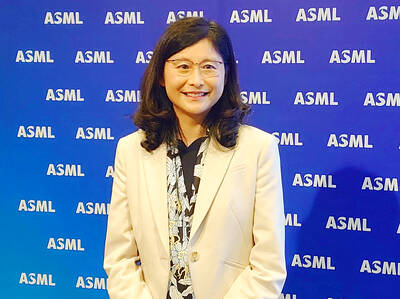
Netherlands-based semiconductor equipment supplier ASML Holding NV yesterday said that it is planning to hire an additional 1,000 people in Taiwan this year in response to growing demand from clients. ASML had previously planned to recruit 600 people this year, but that the plan has been adjusted upward, ASML vice president and ASML Taiwan general manager Grace Wang (汪佳慧) told reporters. ASML has a workforce of more than 4,500 in Taiwan, accounting for about 10 percent of its global total, Wang said. This year’s recruitment campaign would focus on adding people in the customer support, manufacturing and supply chain domains to assist ASML
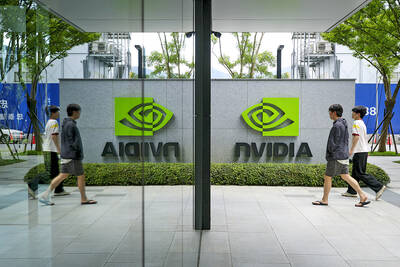
UNDER MICROSCOPE: Taiwan detained three people who allegedly conspired to buy servers in Taiwan and export them using fraudulent documentation, prosecutors said Nvidia Corp chief executive officer Jensen Huang (黃仁勳) on Saturday urged Super Micro Computer Inc to tighten up on compliance after Taiwan detained three people this week for allegedly making fraudulent declarations about artificial intelligence (AI) servers made by its US partner. The development marked the nation’s first crackdown on semiconductor smuggling, which grew after the US slapped restrictions on exports of high-end chips such as Nvidia AI accelerators to China. Nvidia is “rigorous” in explaining regulations to all of its partners, Huang told reporters after arriving in Taipei. “Ultimately Super Micro has to run their own company,” he said in response to

Nvidia Corp yesterday announced that CEO Jensen Huang (黃仁勳) would attend an employee meeting in Taipei tomorrow to celebrate the launch of the company’s Taiwan headquarters project. Huang would attend a gathering at the site of Nvidia’s planned headquarters in Beitou Shilin Technology Park (北投士林科技園區), the company said in a statement. After arriving in Taiwan on Saturday last week, Huang told reporters that he plans to meet with Quanta Computer Inc (廣達) chairman Barry Lam (林百里) and Taiwan Semiconductor Manufacturing Co (TSMC, 台積電) chairman C.C. Wei (魏哲家), and would attend the groundbreaking ceremony for Nvidia’s Taiwan headquarters tomorrow. Nvidia has not yet applied

Huawei Technologies Co (華為) said it has come up with a new pathway to shorten its gap with industry leader Taiwan Semiconductor Manufacturing Co (TSMC, 台積電), potentially achieving a breakthrough in making advanced semiconductors without cutting-edge equipment. Right now there is about a five-year gap between what TSMC is capable of and what Huawei, together with its manufacturing partner Semiconductor Manufacturing International Corp (中芯), can produce. Huawei is to start making 1.4-nanometer chips by 2031 with its own “LogicFolding” technology, Huawei semiconductor chief He Tingbo (何庭波) said in a rare public appearance during a chip conference yesterday, while TSMC has


 RSS
RSS