


The Legislative Yuan’s Economics Committee yesterday passed a preliminary review of an amendment to the Electricity Act (電業法) that aims to accelerate the development of the “renewable energy” industry and liberalize the electricity industry.
“This is a big step. We hope to complete [passing] the legislation before the [legislature’s] Lunar New Year holiday begins on Jan. 18,” said Democratic Progressive Party (DPP) Legislator Kuan Bi-ling (管碧玲), convener of the committee.
It was the first time in 50 years that an amendment to the act has received preliminary approval.
Previous governments have submitted seven amendments to the act to the legislature in the past decades and none of them passed an initial review by the Economics Committee.
When President Tsai Ing-wen (蔡英文) took office in May, she said her administration planned to completely liberalize the electricity industry to pave the way for “green” energy development and achieve a nuclear-free nation by 2025.
The original amendment proposed splitting 70-year-old state-run Taiwan Power Co (Taipower, 台電) in two and allowing private companies to enter the electricity market, but after four months of protests by the Taipower labor union, which has 700,000 members, the final draft proposed by the Executive Yuan reduced the scale of the reform, allowing only renewable energy companies to enter the market in the first phase, while non-renewable energy firms would still not be permitted to directly sell electricity to users and compete with Taipower.
Kuan said it was a pity that the government could not fully liberalize the industry once and for all.
Even so, the amendment would still help the nation develop a “green” energy industry and provide stable electricity supplies to users, she said.
If the legislature passes the amendment, renewable energy companies would be able to directly sell power to users via Taipower’s distribution network or their own network.
The amendment stipulates that Taipower is to be separated into two firms — an electricity generation firm and a distribution company — between six and nine years after the amendment takes effect.
Taipower could establish a holding company to manage the two firms, the amendment says.
Committee members reached consensus on 92 of the 96 articles in the amendment, with the other four articles pending cross-caucus negotiations within the next 30 days.
The articles needing further discussion include the details of how and when to form a regulatory agency to oversee the electricity industry and set a deadline for removing nuclear waste from Orchid Island (蘭嶼, also known as Lanyu).
Whether to give discounted electricity rates to households that have children under 12 years old, in an attempt to boost the birthrate, is also to be discussed.

Taichung reported the steepest fall in completed home prices among the six special municipalities in the first quarter of this year, data compiled by Taiwan Realty Co (台灣房屋) showed yesterday. From January through last month, the average transaction price for completed homes in Taichung fell 8 percent from a year earlier to NT$299,000 (US$9,483) per ping (3.3m²), said Taiwan Realty, which compiled the data based on the government’s price registration platform. The decline could be attributed to many home buyers choosing relatively affordable used homes to live in themselves, instead of newly built homes in the city’s prime property market, Taiwan Realty
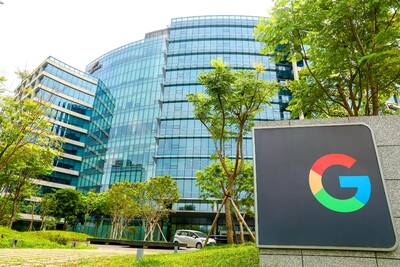
The government yesterday approved applications by Alphabet Inc’s Google to invest NT$27.08 billion (US$859.98 million) in Taiwan, the Ministry of Economic Affairs said in a statement. The Department of Investment Review approved two investments proposed by Google, with much of the funds to be used for data processing and electronic information supply services, as well as inventory procurement businesses in the semiconductor field, the ministry said. It marks the second consecutive year that Google has applied to increase its investment in Taiwan. Google plans to infuse NT$25.34 billion into Charter Investments Ltd (特許投資顧問) through its Singapore-based subsidiary Fructan Holdings Singapore Pte Ltd, and

JET JUICE: The war on Iran’s secondary effects have seen fuel prices skyrocket, knocking flight schedules down to earth in return as airlines struggle with costs Airline passengers should brace for more irritation in the next few months as carriers worldwide cancel flights and ground planes to cope with stratospheric increases in jet-fuel prices. Dutch flag carrier KLM is the latest company to cut its schedule, saying on Thursday that it would scrap 80 return flights at Amsterdam’s Schiphol Airport in the coming month. That puts it in the same league as United Airlines Holdings Inc, Deutsche Lufthansa AG and Cathay Pacific Airways Ltd, which have all pruned itineraries to mitigate costs. Global capacity for next month has been reduced by about 3 percentage points, with all

Micron Technology Inc is a driving force pushing the US Congress to pass legislation that would put new export restrictions on equipment its Chinese competitors use to make their chips, according to people familiar with the matter. A US House of Representatives panel yesterday was to vote on the “MATCH Act,” a bill designed to close gaps in restrictions on chipmaking equipment. It would also pressure foreign companies that sell equipment to Chinese chipmaking facilities to align with export curbs on US companies like Lam Research Corp and Applied Materials Inc. The bill targets facilities operated by China’s ChangXin Memory Technologies Inc


 RSS
RSS