


Greece’s parliament passed a budget of continued austerity, as mandated by the country’s creditors, but which forecasts robust growth for next year.
Greek Prime Minister Alexis Tsipras said it would mark Greece’s “final exit” from its nearly decade-long financial crisis.
The budget adds more than 1 billion euros (US$1.056 billion) in new taxes, mostly indirect taxes on items from phone calls to alcohol. It also cuts spending by more than 1 billion euros.
The budget was backed by the left-dominated ruling coalition and opposed by all other parties. It passed by a vote of 152 to 146 on Saturday.
Despite the continued austerity, Tsipras said that next year would be a “landmark year” with 2.7 percent economic growth.
He underlined that his government achieved a primary surplus this year — excluding debt servicing — more than double the original forecast and defended his decision to give a total of 617 million euros this Christmas to some 1.6 million low-income pensioners, replacing a holiday bonus scrapped by Greece’s bailout creditors.
Tsipras also said that an assessment of Greece’s third bailout program would be completed soon, without additional austerity measures.
However, there are those who believe that the budget’s growth estimate is exaggerated.
The Greek Budget Office has said that the combination of extra taxes and spending cuts will “in the short term” have “a recessionary effect.”
In addition Greek Minister of Finance Euclid Tsakalotos confirmed to parliament that the IMF demands additional measures, including wage and pension cuts, worth 4.5 billion euros starting in 2019, as well as public sector layoffs.
Greek opposition leader Kyriakos Mitsotakis said Tsipras’ handout to the pensioners was a desperate move and that the prime minister was preparing a so-called “heroic exit” through early elections that he is bound to lose.
Tsipras said that electons would take place as scheduled, in 2019.
Taiwan Semiconductor Manufacturing Co (TSMC, 台積電) yesterday reported record revenue of NT$416.975 billion (US$13.17 billion) for last month, putting the world’s largest contract chipmaker on track to set a record for quarterly revenue. Last month’s figure surpassed March’s record NT$415.19 billion and represented increases of 1.5 percent from April and 30.1 percent from a year earlier. For the first five months of the year, TSMC generated NT$1.96 trillion in revenue, up 30 percent year-on-year, it said in a statement. TSMC has forecast second-quarter revenue of between US$39 billion and US$40.2 billion, representing sequential growth of about 10 percent and year-on-year growth of about

Infineon Technologies AG is preparing to open its largest single investment, a 5 billion euro (US$5.8 billion) semiconductor factory built with the help of EU subsidies, as the bloc seeks to boost chip production. The power chip fab, which is an extension of the German company’s Dresden campus, is scheduled to open on July 2, Infineon chief operating officer Alexander Gorski said this week at the site. The project is a major recipient of EU Chips Act funds, receiving about 1 billion euros in subsidies. The new plant represents a rare success for the bloc’s flagship semiconductor law, which was drawn up during
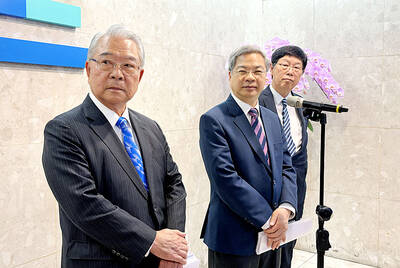
PATENT PROBE: US lawmakers called for a ban on imports of chips made by TSMC if they are found to infringe on US patents, with a preliminary ruling expected soon Minister of Economic Affairs Kung Ming-hsin (龔明鑫) yesterday expressed confidence in Taiwan Semiconductor Manufacturing Co’s (TSMC, 台積電) compliance with patent regulations after reports linked the company to a patent infringement lawsuit in the US. US Representative Ryan Zinke, and US senators Tim Sheehy, Roger Marshall and Bernie Moreno urged the US International Trade Commission in a May 22 letter to ban imports of chips made by TSMC if they are found to infringe on US patents, Axios reported on Wednesday. An administrative law judge is expected to issue a preliminary ruling this month, with the commission potentially making a final decision in
Taiwan remained the sixth-largest net creditor nation in the world last year, despite a fall of more than 10 percent in its net international investment position (NIIP) over the year, the central bank said yesterday. The NIIP is the difference between a country’s external financial assets and its external financial liabilities. Taiwan’s external financial assets hit US$3.27 trillion at the end of last year, up US$275.75 billion or 9.2 percent from a year earlier, the central bank said in its annual NIIP report. The growth largely reflected an increase in holdings of overseas marketable securities by residents in Taiwan, as well as a


 RSS
RSS