


GlobalWafers Co (環球晶圓) has vaulted itself into the position of third-largest silicon wafer supplier in the world after it completed a deal to acquire NASDAQ-listed SunEdison Semiconductor Ltd.
The deal helps GlobalWafers take a 17 percent share of the global silicon wafer market, up from 7 percent, to compete with rivals such as Shin-Etsu Chemical Co Ltd and Sumco Techxiv Corp. Before the deal, GlobalWafers was among the top six silicon wafer firms in the world.
In a statement released on Friday, GlobalWafers said that the acquisition is expected to allow the firm to have “a meaningful expansion of its production capabilities and breadth in product and global customer base, including greater access to [South] Korean and EU as well as SOI (Silicon-on-Insulator) product technologies and capacity.”
GlobalWafers chairwoman and chief executive officer Doris Hsu (徐秀蘭) said in the statement that the company has 17 operation sites strategically located in 10 countries in all regions.
The deal is expected to boost GlobalWafers’ 12-inch silicon wafer annual production to 750,000 units from 200,000, and raise 8-inch silicon wafer production to more than 1 million units from 400,000 a year, the company said.
Shares of GlobalWafers fell 2.03 percent to close at NT$91.7 on Friday on the over-the-counter TPEX market. The stock has risen 18.17 percent so far this year.
Spun off from Sino-American Silicon Products Inc (SAS, 中美晶) in 2011, GlobalWafers provides various wafer products to foundries, integrated device manufacturers and memory makers.
In August, GlobalWafers announced that it would acquire SunEdison for US$683 million or US$12 per share.
The deal came after GlobalWafers in July completed its acquisition of a silicon wafer division of Topsil Semiconductor Materials A/S, a leading manufacturer of float-zone wafers, for 320 million kroner (US$45.9 million).
SunEdison, the fourth-largest silicon wafer supplier globally, owns facilities in research and development, and manufacturing facilities in the US, Europe and Asia. The company’s technology enables the next generation of high-performance semiconductor devices and its 12-inch epitaxial wafers are largely used in advanced logic devices.
GlobalWafers vice president William Chen (陳偉文) said that SunEdison shares will be delisted from the NASDAQ market after the acquisition.
Chen said that SunEdison is planning to move its headquarters to Hsinchu in northern Taiwan, where GlobalWafers is based, to streamline its operations.
After the deal, SunEdison is expected to see its borrowing costs fall, which is expected to strengthen its financial conditions, Chen said, reiterating that GlobalWafers has faith that SunEdison will turn a profit next year on the back of improving operations.
Analysts have said the deal is good for GlobalWafers in terms of a complete product offering, a broader customer base and a meaningful industry consolidation.
However, GlobalWafers’ target of achieving a turnaround at SunEdison within a year appears “challenging,” although not impossible, Yuanta Securities Investment Consulting Co (元大投顧) analyst George Chang (張家麒) said in a note on Monday last week.
“There is room for improvement if industry demand can grow, or if management can quickly turn it around and gain more market share from other big suppliers,” Chang wrote.
Additional reporting by Lisa Wang
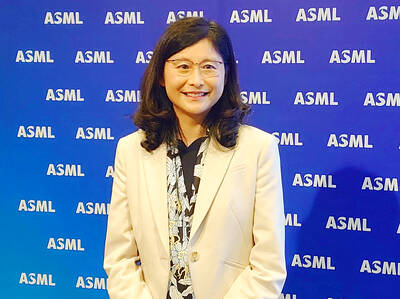
Netherlands-based semiconductor equipment supplier ASML Holding NV yesterday said that it is planning to hire an additional 1,000 people in Taiwan this year in response to growing demand from clients. ASML had previously planned to recruit 600 people this year, but that the plan has been adjusted upward, ASML vice president and ASML Taiwan general manager Grace Wang (汪佳慧) told reporters. ASML has a workforce of more than 4,500 in Taiwan, accounting for about 10 percent of its global total, Wang said. This year’s recruitment campaign would focus on adding people in the customer support, manufacturing and supply chain domains to assist ASML
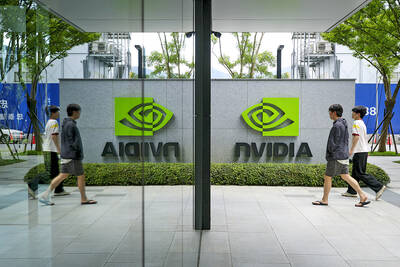
UNDER MICROSCOPE: Taiwan detained three people who allegedly conspired to buy servers in Taiwan and export them using fraudulent documentation, prosecutors said Nvidia Corp chief executive officer Jensen Huang (黃仁勳) on Saturday urged Super Micro Computer Inc to tighten up on compliance after Taiwan detained three people this week for allegedly making fraudulent declarations about artificial intelligence (AI) servers made by its US partner. The development marked the nation’s first crackdown on semiconductor smuggling, which grew after the US slapped restrictions on exports of high-end chips such as Nvidia AI accelerators to China. Nvidia is “rigorous” in explaining regulations to all of its partners, Huang told reporters after arriving in Taipei. “Ultimately Super Micro has to run their own company,” he said in response to

Nvidia Corp yesterday announced that CEO Jensen Huang (黃仁勳) would attend an employee meeting in Taipei tomorrow to celebrate the launch of the company’s Taiwan headquarters project. Huang would attend a gathering at the site of Nvidia’s planned headquarters in Beitou Shilin Technology Park (北投士林科技園區), the company said in a statement. After arriving in Taiwan on Saturday last week, Huang told reporters that he plans to meet with Quanta Computer Inc (廣達) chairman Barry Lam (林百里) and Taiwan Semiconductor Manufacturing Co (TSMC, 台積電) chairman C.C. Wei (魏哲家), and would attend the groundbreaking ceremony for Nvidia’s Taiwan headquarters tomorrow. Nvidia has not yet applied
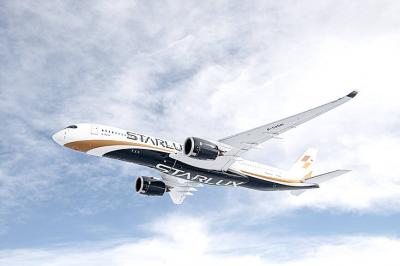
Starlux Airlines Co (星宇航空) today unveiled a long-haul network expansion plan at a shareholders’ meeting in Taipei, including direct flights to Barcelona, Spain, and Zurich, Switzerland, as well as a service connecting Taipei, Sydney and New Zealand. Starlux is to become the first Taiwanese carrier to offer non-stop services to the two European cities, while the inaugural oceanic route is expected to expand transit opportunities within the Australia-New Zealand market, Starlux said. Flight services to Chicago, Dallas, Washington and New York are under evaluation, the airline added. Prior to the shareholders’ meeting, the airline earlier this year announced that it would be


 RSS
RSS