


US president-elect Donald Trump on Thursday warned hat US companies would face “consequences” for outsourcing jobs abroad, as he touted his early success in persuading an air-conditioner maker to keep about 1,000 jobs in the US rather than move them to Mexico.
“Companies are not going to leave the United States anymore without consequences. Not going to happen,” the US Republican said on a visit to a Carrier Corp plant in Indianapolis, Indiana.
Trump, who takes office on Jan. 20, did not say what the consequences would be, but he frequently threatened during the election campaign that his administration would put a 35 percent import tariff on goods made by US manufacturers that moved jobs offshore.
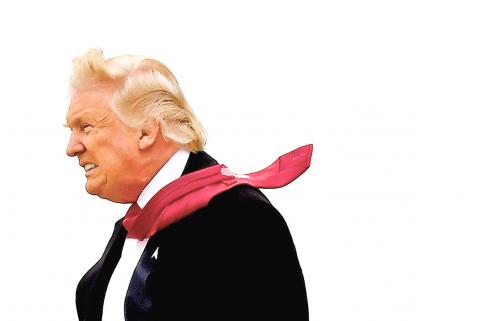
Photo: AFP
It is unclear what steps would have to be taken by US authorities before Trump could retaliate against individual companies shifting jobs abroad.
Trump also did not address whether Carrier’s parent company, United Technologies Corp, would face any consequences for continuing with plans to move 1,300 other Indiana jobs to Mexico.
Trump made keeping jobs in the US one of the main issues of his campaign and frequently pilloried Carrier for planning to move production to Mexico as he appealed to blue-collar voters in the Midwest.
Apparently under pressure from Trump, Carrier announced this week it had agreed to keep more than 1,000 jobs at the plant and at its headquarters, while still planning to move more than 1,000 other US jobs to Mexico.
Trump said his negotiations with the manufacturer were a model for how he would approach other US businesses that are tempted to move jobs overseas to save money.
He pledged to create a healthy environment for business through lower taxes and fewer regulations.
“I just want to let all of the other companies know that we’re going to do great things for business. There’s no reason for them to leave anymore,” Trump said.
If that approach did not work, there would be penalties, Trump warned.
Trump toured the plant in Indianapolis and shook hands with workers on an assembly line. Some workers yelled: “Thank you Mr Trump” and “Thanks Donald” as he greeted them.
Carrier confirmed that Indiana agreed to give the company US$7 million in tax incentives.
A source briefed on the matter said the tax incentives were over 10 years and the company had agreed to invest US$16 million in the state, where Trump’s vice president-elect, Mike Pence, is governor.
Carrier still plans to move 600 jobs from the plant to Mexico, the Wall Street Journal said.
Reuters reported earlier this week that Carrier also still intended to close a factory in Huntington, Indiana, that employs 700 people making controls for heating, cooling and refrigeration and move the jobs to Mexico by 2018.
Despite Trump’s deal, employers elsewhere in Indiana are laying off five times that many workers because of foreign competition.
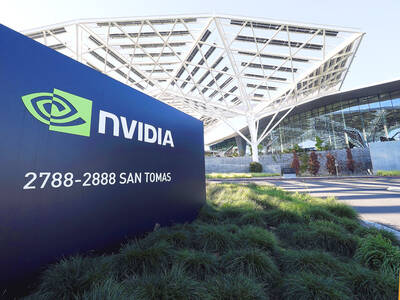
CHIP RACE: Three years of overbroad export controls drove foreign competitors to pursue their own AI chips, and ‘cost US taxpayers billions of dollars,’ Nvidia said China has figured out the US strategy for allowing it to buy Nvidia Corp’s H200s and is rejecting the artificial intelligence (AI) chip in favor of domestically developed semiconductors, White House AI adviser David Sacks said, citing news reports. US President Donald Trump on Monday said that he would allow shipments of Nvidia’s H200 chips to China, part of an administration effort backed by Sacks to challenge Chinese tech champions such as Huawei Technologies Co (華為) by bringing US competition to their home market. On Friday, Sacks signaled that he was uncertain about whether that approach would work. “They’re rejecting our chips,” Sacks
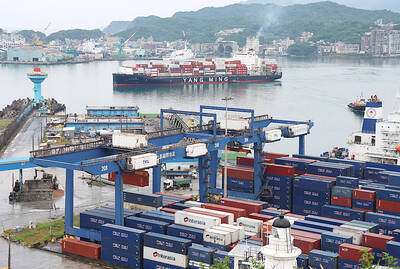
Taiwan’s exports soared 56 percent year-on-year to an all-time high of US$64.05 billion last month, propelled by surging global demand for artificial intelligence (AI), high-performance computing and cloud service infrastructure, the Ministry of Finance said yesterday. Department of Statistics Director-General Beatrice Tsai (蔡美娜) called the figure an unexpected upside surprise, citing a wave of technology orders from overseas customers alongside the usual year-end shopping season for technology products. Growth is likely to remain strong this month, she said, projecting a 40 percent to 45 percent expansion on an annual basis. The outperformance could prompt the Directorate-General of Budget, Accounting and

NATIONAL SECURITY: Intel’s testing of ACM tools despite US government control ‘highlights egregious gaps in US technology protection policies,’ a former official said Chipmaker Intel Corp has tested chipmaking tools this year from a toolmaker with deep roots in China and two overseas units that were targeted by US sanctions, according to two sources with direct knowledge of the matter. Intel, which fended off calls for its CEO’s resignation from US President Donald Trump in August over his alleged ties to China, got the tools from ACM Research Inc, a Fremont, California-based producer of chipmaking equipment. Two of ACM’s units, based in Shanghai and South Korea, were among a number of firms barred last year from receiving US technology over claims they have
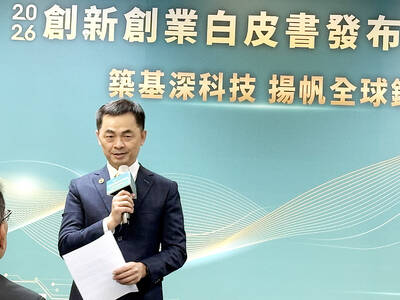
BARRIERS: Gudeng’s chairman said it was unlikely that the US could replicate Taiwan’s science parks in Arizona, given its strict immigration policies and cultural differences Gudeng Precision Industrial Co (家登), which supplies wafer pods to the world’s major semiconductor firms, yesterday said it is in no rush to set up production in the US due to high costs. The company supplies its customers through a warehouse in Arizona jointly operated by TSS Holdings Ltd (德鑫控股), a joint holding of Gudeng and 17 Taiwanese firms in the semiconductor supply chain, including specialty plastic compounds producer Nytex Composites Co (耐特) and automated material handling system supplier Symtek Automation Asia Co (迅得). While the company has long been exploring the feasibility of setting up production in the US to address


 RSS
RSS