


With its oil output at record levels and state coffers running low, Russia has little to lose and much to gain from agreeing a deal with the OPEC cartel on limiting production.
Ahead of an OPEC meeting scheduled for Wednesday in Vienna, Moscow — which is not a member of OEPC — is pushing for an agreement to be finally reached after similar talks in Doha collapsed acrimoniously in the spring.
While OPEC plans to reduce production quotas for its members, Russian President Vladimir Putin last week said that Russia was ready to “freeze production at the level it is at currently.”
“For us to freeze production is no effort at all,” Putin said.
Russian Minister of Energy Alexander Novak on Thursday said that OPEC had asked oil-producing countries that are not members of the cartel to cut production by 500,000 barrels per day.
Russian oil production in recent months has not stopped growing and now exceeds 11 million barrel per day, the highest since the collapse of the Soviet Union.
The potential for further growth is “limited,” Eurasia Group analyst Emily Stromquist said.
A freeze “requires little to no effort on the part of Russian oil companies” while Russia “would benefit immensely from... any deal, however vague, that can help bump oil prices up a few dollars,” Stromquist told reporters.
Russia’s production has grown by about 50 percent since 2000 thanks to the relaunch of Soviet-era oilfields.
In recent years this growth has been sustained by new horizontal drilling methods that prolonged the life of certain oilfields, particularly in western Siberia, as well as by the launch of new projects that were approved when the oil price was higher.
The ruble’s plunge in 2014 has partially offset the effect of the falling oil prices once the sales revenue is converted from dollars into rubles.
Despite Western sanctions on certain types of technology transfers and business partnerships, Russian companies have managed to maintain comfortable sales and are drilling actively.
Oil and gas earnings made up half of the government’s budget revenues during the years of high prices. The fall in prices forced the government to tighten its belt and pushed the budget deficit to almost four percent of GDP this year. It also dangerously drained reserves built up when the price topped US$100 per barrel.
Next year’s budget, which is now being debated by lawmakers, includes new spending cuts on education and even defense. The communists have condemned it as “anti-social” while business circles criticized it as derailing hopes for an economic recovery next year.
The draft budget was based on a barrel costing US$40 and each extra dollar in the oil price will represent 130 billion rubles (US$2 billion)of budget revenues, Alfa Banking Group economist Natalia Orlova said.
In recent days, oil has come close to US$50 per barrel on the London market.
“One could imagine that [a rising price] would push the government to spend more during the election year,” Orlova said, with Putin’s presidential term ending in spring 2018.

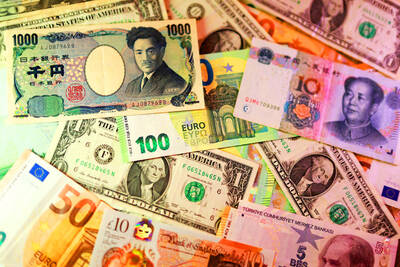
Taiwan’s foreign exchange reserves fell below the US$600 billion mark at the end of last month, with the central bank reporting a total of US$596.89 billion — a decline of US$8.6 billion from February — ending a three-month streak of increases. The central bank attributed the drop to a combination of factors such as outflows by foreign institutional investors, currency fluctuations and its own market interventions. “The large-scale outflows disrupted the balance of supply and demand in the foreign exchange market, prompting the central bank to intervene repeatedly by selling US dollars to stabilize the local currency,” Department of Foreign

Intel Corp is joining Elon Musk’s long-shot effort to develop semiconductors for Tesla Inc, Space Exploration Technologies Corp and xAI, marking a surprising twist in the chipmaker’s comeback bid. Intel would help the Terafab project “refactor” the technology in a chip factory, the company said on Tuesday in a post on X, Musk’s social media platform. That is a stage in the development process that typically helps make chips more powerful or reliable. The chipmaker’s shares jumped 4.2 percent to US$52.91 in New York trading on Tuesday. The Terafab project is a grand plan by Musk to eventually manufacture his own chips for
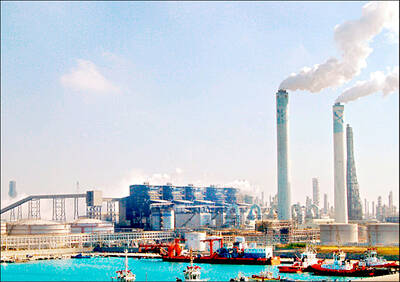
Taiwan Power Co (Taipower, 台電) yesterday said it plans to resume operations at two coal-fired power generators for three months to boost security of electricity supply as liquefied natural gas (LNG) supply risks are running high due to the Middle East conflict. The two coal-fired power generators are at Mailiao Power Plant in Yunlin County’s Mailiao Township (麥寮). The plant, operated by Formosa Plastics Group (台塑集團), supplied electricity to Taipower’s power grid until the end of last year. Taipower’s decision came about one month after Minister of Economic Affairs Kung Ming-hsin (龔明鑫) on March 10 said that the nation had no imminent

Some robotaxi passengers were left stranded in the middle of fast-moving traffic in a major Chinese city after their driverless vehicles stopped running, according to police and media reports on Wednesday. A preliminary investigation indicates more than 100 robotaxis came to a halt because of a “system malfunction,” police in the city of Wuhan said in a statement, without elaborating. No injuries were reported. One passenger told Chinese media that their robotaxi stopped after turning a corner. An instruction on a screen read: “Driving system malfunction. Staff are expected to arrive in 5 minutes.” After no one showed up, the passenger pushed


 RSS
RSS