


Royal Dutch Shell PLC expects to pump out all the fossil fuel reserves listed on its balance sheet, its chief executive officer said, dismissing concerns that production limits in the wake of the Paris climate accord could hit the energy giant’s valuation.
In an interview with Dutch newspaper Het Financieele Dagblad, Ben van Beurden said the issue of “stranded” reserves — deposits in the ground that cannot be used because of carbon emissions limitations — would have no impact on balance sheets.
“The company is valued on producable reserves that we can produce in the next 12 or 13 years,” he said. “We should certainly be able to produce those under any climate outcome. Even if global temperatures can only rise by 2°C.”
The Paris Climate Agreement, which came into force this month, commits almost 200 countries, including China, the US and the EU, to limiting temperature increases to 2°C and weaning the world economy off fossil fuels.
The Anglo-Dutch energy giant, the world’s third-largest by market capitalization, has bet heavily on a lower-carbon future, with investments in wind and renewables capped by the US$50 billion acquisition of British Gas Ltd in February.
Van Beurden was also skeptical that revaluation of reserves after the climate deal could trigger a financial shock, saying that the crude oil price’s collapse from US$120 to US$30 a barrel showed the industry’s ability to weather much larger shocks.
“Each US$10 fall costs us US$5 billion in cash a year,” he said. “The fact that over the coming few decades we are transitioning, in a more or less ordered way, to a low-carbon society is less draconian than what we’ve seen over the past two years.”
He also told the newspaper that there would be no changes to Shell’s dividend policy, even though payouts at the current level outstripped the company’s cash flow.
“[Shareholders] want a stable dividend. We must be seen as reliable,” he said.
Even with crude oil at US$47 per barrel, the company could make adequate investments with current dividend levels, he said, adding that only a slight increase in demand could send prices up again, since even at the peak of US shale production, there was only a 2 percent global surplus.
In related news, Canada will require reduced carbon footprints for all fuels so that the country can achieve a 30 megaton cut in greenhouse gas emissions by 2030, Environment and Climate Change Canada said on Friday.
The government will not mandate specific changes to fuels and will focus just on reducing their emissions, officials said after a government announcement in Toronto.
Precise steps are to be determined after consultations, including with Canada’s provinces and relevant industries, and the government is to release a discussion paper in February next year, according to the environment department.
Canada’s Liberal government ran on a platform to do more for the environment. The country’s new fuel measures would help it meet the emissions reduction targets of the Paris agreement on climate change, which Canada’s parliament ratified last month.
The government’s new measures, the “Clean Fuel Standard,” will aim to reduce fuels’ carbon intensity, a measure of emissions relative to the amount of energy derived, according to the department.
On Monday, Canada announced that it plans to virtually eliminate the use of traditional coal-fired electricity by 2030.
However, data show Canada has little chance of meeting its climate change goals of reducing emissions by 30 percent from 2005 levels by 2030, in part because of booming emissions from the energy sector.

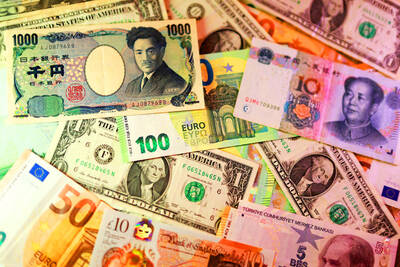
Taiwan’s foreign exchange reserves fell below the US$600 billion mark at the end of last month, with the central bank reporting a total of US$596.89 billion — a decline of US$8.6 billion from February — ending a three-month streak of increases. The central bank attributed the drop to a combination of factors such as outflows by foreign institutional investors, currency fluctuations and its own market interventions. “The large-scale outflows disrupted the balance of supply and demand in the foreign exchange market, prompting the central bank to intervene repeatedly by selling US dollars to stabilize the local currency,” Department of Foreign

Intel Corp is joining Elon Musk’s long-shot effort to develop semiconductors for Tesla Inc, Space Exploration Technologies Corp and xAI, marking a surprising twist in the chipmaker’s comeback bid. Intel would help the Terafab project “refactor” the technology in a chip factory, the company said on Tuesday in a post on X, Musk’s social media platform. That is a stage in the development process that typically helps make chips more powerful or reliable. The chipmaker’s shares jumped 4.2 percent to US$52.91 in New York trading on Tuesday. The Terafab project is a grand plan by Musk to eventually manufacture his own chips for
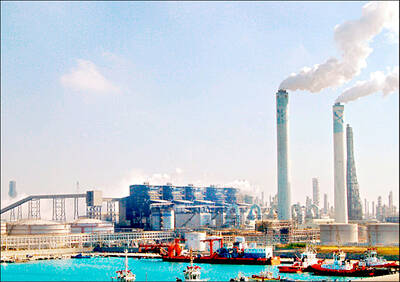
Taiwan Power Co (Taipower, 台電) yesterday said it plans to resume operations at two coal-fired power generators for three months to boost security of electricity supply as liquefied natural gas (LNG) supply risks are running high due to the Middle East conflict. The two coal-fired power generators are at Mailiao Power Plant in Yunlin County’s Mailiao Township (麥寮). The plant, operated by Formosa Plastics Group (台塑集團), supplied electricity to Taipower’s power grid until the end of last year. Taipower’s decision came about one month after Minister of Economic Affairs Kung Ming-hsin (龔明鑫) on March 10 said that the nation had no imminent

Some robotaxi passengers were left stranded in the middle of fast-moving traffic in a major Chinese city after their driverless vehicles stopped running, according to police and media reports on Wednesday. A preliminary investigation indicates more than 100 robotaxis came to a halt because of a “system malfunction,” police in the city of Wuhan said in a statement, without elaborating. No injuries were reported. One passenger told Chinese media that their robotaxi stopped after turning a corner. An instruction on a screen read: “Driving system malfunction. Staff are expected to arrive in 5 minutes.” After no one showed up, the passenger pushed


 RSS
RSS