


Machinery maker Hiwin Technologies Corp (上銀) and Siemens AG yesterday signed a memorandum of understanding, vowing to create a “smart” machinery industry.
Hiwin and Siemens are to work together to integrate machine tools and “smart” controllers in a bid to enhance the value chain of Taichung’s machine tool industry.
“Hiwin hopes to expand cooperation with Siemens further, especially on five-axis machines,” Hiwin chairman Eric Chuo (卓永財) told a news conference in Taichung.
Hiwin’s subsidiary, Luren Precision Co (陸聯精密), has developed a five-axis bevel gears machine combined with Siemens’ controllers, which would give Hiwin access to the high-end machine tools market, Chuo said.
Besides developing more innovative products, the two companies agreed to introduce high-end products to downstream customers in the construction of “smart” factories.
“By partnering with Hiwin, Siemens is moving to bolster the industry’s efficiency and competitiveness,” Siemens Taiwan president Erdal Elver told reporters.
Hiwin’s robotic arms products are to be equipped with Siemens’ control systems and industrial computers, improving efficiency, Siemens said.
“Smart” manufacturing can reduce time costs by 30 percent and the possibility of collision by 90 percent respectively, Siemens data showed.
At the signing ceremony, Taichung Mayor Lin Chia-lung (林佳龍) revealed the city’s plans to improve competitiveness in the sector.
The city government has commissioned the Industrial Technology Research Institute (工研院) to establish a “smart” machinery demonstration site and pilot production lines at Taichung Gateway Park (水湳經貿園區).
The demo site would help precision machinery and aerospace companies in Taichung to move toward Industrie 4.0, the city government said.
The city government is also planning to invest about NT$4.7 billion (US$147.2 million) in a new exhibition center for the machinery industry.
“We also hope to acquire about 300 hectares of land for ‘smart’ machinery,” Lin said, without elaborating.
The Executive Yuan has vowed to make Taichung the global capital of “smart” machinery.
SECOND-RATE: Models distilled from US products do not perform the same as the original and undo measures that ensure the systems are neutral, the US’ cable said The US Department of State has ordered a global push to bring attention to what it said are widespread efforts by Chinese companies, including artificial intelligence (AI) start-up DeepSeek (深度求索), to steal intellectual property from US AI labs, according to a diplomatic cable. The cable, dated Friday and sent to diplomatic and consular posts around the world, instructs diplomatic staff to speak to their foreign counterparts about “concerns over adversaries’ extraction and distillation of US AI models.” Distillation is the process of training smaller AI models using output from larger, more expensive ones to lower the costs of training a powerful new

Singapore-based ride-hailing and delivery giant Grab Holdings’ planned acquisition of Foodpanda’s Taiwan operations has yet to enter the formal review stage, as regulators await supplementary documents, the Fair Trade Commission (FTC) said yesterday. Acting FTC Chairman Chen Chih-min (陳志民) told the legislature’s Economics Committee that although Grab submitted its application on March 27, the case has not been officially accepted because required materials remain incomplete. Once the filing is finalized, the FTC would launch a formal probe into the deal, focusing on issues such as cross-shareholding and potential restrictions on market competition, Chen told lawmakers. Grab last month announced that it would acquire
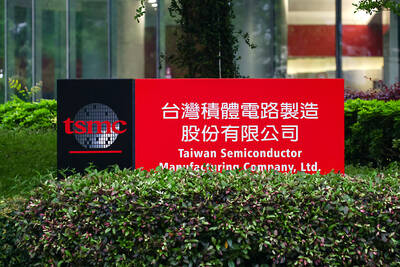
Shares of Taiwan Semiconductor Manufacturing Co (TSMC, 台積電) have repeatedly hit new highs, but an equity analyst said the stock’s valuation remains within a reasonable range and any pullback would likely be technical. The contract chipmaker’s historical price-to-earnings (P/E) ratio has ranged between 20 and 30, Cathay Futures Consultant Co (國泰證期) analyst Tsai Ming-han (蔡明翰) told Central News Agency. With market consensus projecting that TSMC would post earnings per share of about NT$100 (US$3.17) this year, supported by strong global demand for artificial intelligence (AI) applications, and the stock currently trading at a P/E ratio of below 25, Tsai said the valuation
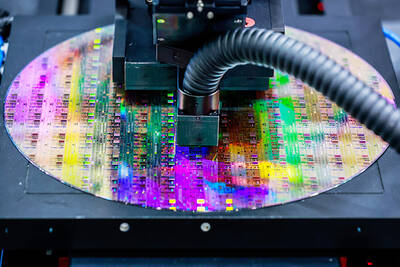
The artificial intelligence (AI) boom has triggered a seismic reshuffling of global equity markets, with Taiwan and South Korea muscling past European nations one by one. With its stock market now valued at nearly US$4.3 trillion, Taiwan surpassed the UK, Europe’s biggest market, earlier this month, data compiled by Bloomberg showed. South Korea is about US$140 billion away from doing the same. The tech-heavy Asian markets have shot past Germany and France in the past seven months. The shift is largely down to massive gains in shares of three companies that provide essential hardware for AI: Taiwan Semiconductor Manufacturing Co (TSMC, 台積電),


 RSS
RSS