


Investors hooked on bonds of companies such as Apple Inc and Oracle Corp might soon have too look for alternatives if a tax proposal from US president-elect Donald Trump becomes reality.
Trump has said he would temporarily slash the tax rate on funds repatriated by US companies from 35 percent to 10 percent, meaning cash-rich firms that according to Bank of America Corp stash an estimated US$860 billion to US$1 trillion abroad might no longer need to turn to the bond market as a cheaper alternative to finance share repurchases.
The effects are to be substantial.
Apple has become the biggest non-financial corporate-bond issuer in the world, as it raised more than US$80 billion in four years to finance share buybacks instead of repatriating the more than US$200 billion of cash it holds overseas.
Oracle sold US$14 billion of bonds in June to partly support shareholders.
Bank of America said it expects that if taxes on overseas cash held by US companies are reduced, bond sales will go down by US$150 billion each year.
“A topic of discussion post the Trump [election] victory is the repatriation of cash and what that does to some of the large tech companies that would refinance or raise money in our market,” said Todd Mahoney, head of fixed-income syndicate for the Americas at UBS Group AG. “That could be a driver of reduced volume.”
Technology and healthcare companies — holders of about 80 percent of all overseas cash — have sold US$136 billion of bonds this year for purposes other than acquisitions, according to data complied by Bloomberg.
Apple has issued almost US$24 billion of bonds this year in the US, largely to buy back equity.
Despite its reliance on the bond market, Apple is sitting on a mountain of funds.
Its overseas cash pile is more than eight times larger than the amount of bonds it sold this year, company filings show.
After the last tax holiday was passed in 2004, non-financial investment grade bond sales plunged by about 30 percent, according to UBS strategists.
Now, though, that market is almost three times larger, according to Bloomberg Barclays index data.
So long as investors are still clamoring for company debt as issuance falls, a smaller supply year might mean yields above treasuries that are already near the lowest in a year might tighten even further.
However, not all bond investors are convinced.
“The market is a lot bigger than it used to be,” said Tom Murphy, a money manager at Columbia Threadneedle Investments in Minneapolis, Minnesota. “If more supply equals wider spreads, spreads should be at infinity.”
The clearest winners in a post-Trump bond market are probably chief financial officers such as Kelly Kramer of Cisco Systems Inc. The world’s largest maker of networking equipment has issued about US$13 billion of bonds this year in part to boost shareholders.
“We’re encouraged that something will happen,” Kramer said on a call to discuss earnings on Wednesday last week.
The company keeps more than US$57 billion of its cash abroad, according to regulatory filings.
“We have many, many scenarios of what we would do when repatriation comes,” Kramer said.

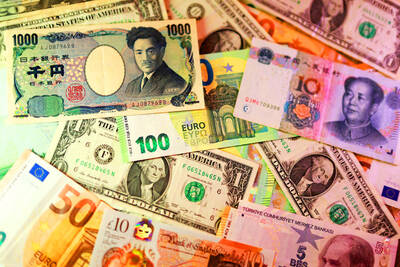
Taiwan’s foreign exchange reserves fell below the US$600 billion mark at the end of last month, with the central bank reporting a total of US$596.89 billion — a decline of US$8.6 billion from February — ending a three-month streak of increases. The central bank attributed the drop to a combination of factors such as outflows by foreign institutional investors, currency fluctuations and its own market interventions. “The large-scale outflows disrupted the balance of supply and demand in the foreign exchange market, prompting the central bank to intervene repeatedly by selling US dollars to stabilize the local currency,” Department of Foreign
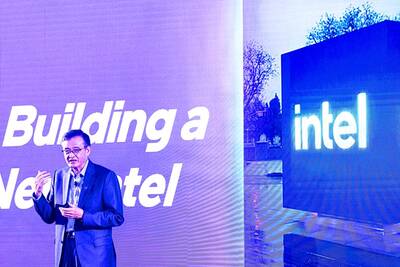
Intel Corp is joining Elon Musk’s long-shot effort to develop semiconductors for Tesla Inc, Space Exploration Technologies Corp and xAI, marking a surprising twist in the chipmaker’s comeback bid. Intel would help the Terafab project “refactor” the technology in a chip factory, the company said on Tuesday in a post on X, Musk’s social media platform. That is a stage in the development process that typically helps make chips more powerful or reliable. The chipmaker’s shares jumped 4.2 percent to US$52.91 in New York trading on Tuesday. The Terafab project is a grand plan by Musk to eventually manufacture his own chips for
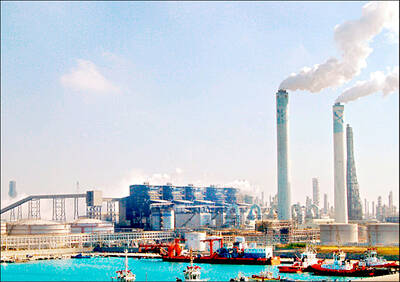
Taiwan Power Co (Taipower, 台電) yesterday said it plans to resume operations at two coal-fired power generators for three months to boost security of electricity supply as liquefied natural gas (LNG) supply risks are running high due to the Middle East conflict. The two coal-fired power generators are at Mailiao Power Plant in Yunlin County’s Mailiao Township (麥寮). The plant, operated by Formosa Plastics Group (台塑集團), supplied electricity to Taipower’s power grid until the end of last year. Taipower’s decision came about one month after Minister of Economic Affairs Kung Ming-hsin (龔明鑫) on March 10 said that the nation had no imminent

Some robotaxi passengers were left stranded in the middle of fast-moving traffic in a major Chinese city after their driverless vehicles stopped running, according to police and media reports on Wednesday. A preliminary investigation indicates more than 100 robotaxis came to a halt because of a “system malfunction,” police in the city of Wuhan said in a statement, without elaborating. No injuries were reported. One passenger told Chinese media that their robotaxi stopped after turning a corner. An instruction on a screen read: “Driving system malfunction. Staff are expected to arrive in 5 minutes.” After no one showed up, the passenger pushed


 RSS
RSS