


Pegatron Corp (和碩) chairman Tung Tzu-hsien (童子賢) yesterday said it would be difficult to follow US president-elect Donald Trump’s campaign promise to move Apple Inc’s iPhone assembly lines to the US, because the US does not have complete supply chains for iPhones.
Tung said making a smartphone is not just about setting up an assembly plant. The company would also have to consider moving all the component suppliers to the US to support handset production.
“It would be a lot easier to move Coca-Cola’s production lines than it is a smartphone’s,” Tung told reporters.
Tung’s remarks came amid growing concerns that the US could become more protectionist, given Trump’s talk of protectionism and demands that US high-tech companies, including Apple, move production to the US.
Analysts have said Trump’s stance could have less effect on the nation’s upstream technology companies in foundry, flat-panel, and chip packaging and testing industries, given their specialized technology, cost effectiveness and geographical differentiation.
While relocation is unlikely to change the competitive landscape for Taiwanese original design manufacturers and electronics manufacturing service (EMS) providers, “relocating production sites would significantly increase costs for EMS companies, such as Hon Hai Precision Industry Co (鴻海) and Pegatron,” analysts at CIMB Securities Ltd wrote in a client note on Sunday last week.
Tung said potential production cost increases is not an issue to Pegatron, as manufacturing costs in China have been climbing due to improved labor wages in the past few years.
However, China is a mature production hub for smartphones compared with the US, he said.
Tung dismissed media reports that Pegatron has declined Apple’s request to evaluate the feasibility of making iPhones in the US, saying that he “has never heard of such request.”
Hon Hai has since June been researching the feasibility of producing iPhones in the US at Apple’s request, the Nikkei Asian Review reported yesterday, citing an industry source.
Tung said Pegatron is watching closely to see whether Trump’s campaign promises are likely to become US policy.
Hon Hai chairman Terry Gou (郭台銘) on Thursday told China’s CCTV that even if production lines moved to the US, he doubts there would be enough people with the know-how or will to do assembly work.
Gou said that only well-trained workers can make smartphones, because the assembly process is more complicated than people assume, adding that the supply chains for these US brands are not in the US, so it is unlikely that assembly jobs would be moved there.
Trump should liberalize the economy instead of embracing protectionism amid an uncertain global economy outlook, Gou said.
Hon Hai serves as an assembler of iPhones and iPads for Apple from its production base in China, where the Taiwanese firm is the biggest employer with about 1 million Chinese workers.

SECOND-RATE: Models distilled from US products do not perform the same as the original and undo measures that ensure the systems are neutral, the US’ cable said The US Department of State has ordered a global push to bring attention to what it said are widespread efforts by Chinese companies, including artificial intelligence (AI) start-up DeepSeek (深度求索), to steal intellectual property from US AI labs, according to a diplomatic cable. The cable, dated Friday and sent to diplomatic and consular posts around the world, instructs diplomatic staff to speak to their foreign counterparts about “concerns over adversaries’ extraction and distillation of US AI models.” Distillation is the process of training smaller AI models using output from larger, more expensive ones to lower the costs of training a powerful new
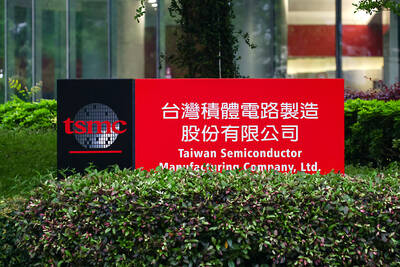
Shares of Taiwan Semiconductor Manufacturing Co (TSMC, 台積電) have repeatedly hit new highs, but an equity analyst said the stock’s valuation remains within a reasonable range and any pullback would likely be technical. The contract chipmaker’s historical price-to-earnings (P/E) ratio has ranged between 20 and 30, Cathay Futures Consultant Co (國泰證期) analyst Tsai Ming-han (蔡明翰) told Central News Agency. With market consensus projecting that TSMC would post earnings per share of about NT$100 (US$3.17) this year, supported by strong global demand for artificial intelligence (AI) applications, and the stock currently trading at a P/E ratio of below 25, Tsai said the valuation
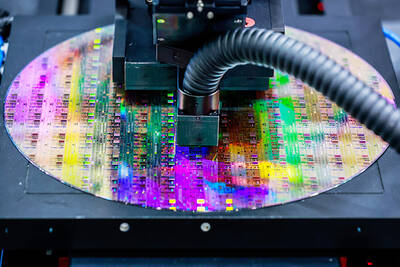
The artificial intelligence (AI) boom has triggered a seismic reshuffling of global equity markets, with Taiwan and South Korea muscling past European nations one by one. With its stock market now valued at nearly US$4.3 trillion, Taiwan surpassed the UK, Europe’s biggest market, earlier this month, data compiled by Bloomberg showed. South Korea is about US$140 billion away from doing the same. The tech-heavy Asian markets have shot past Germany and France in the past seven months. The shift is largely down to massive gains in shares of three companies that provide essential hardware for AI: Taiwan Semiconductor Manufacturing Co (TSMC, 台積電),
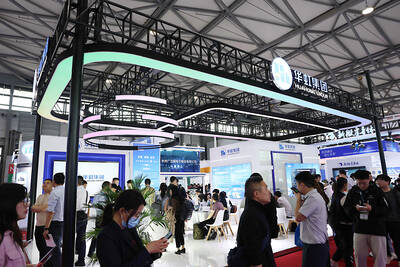
The US Department of Commerce last week ordered multiple chip equipment companies to halt shipments of certain tools to China’s second-largest chipmaker, Hua Hong Semiconductor Ltd (華虹半導體), its latest action to slow the country’s development of advanced chips, two people familiar with the matter said. The department sent letters to at least a handful of companies informing them of restrictions on tools and other materials destined for two Hua Hong facilities US officials believe make China’s most sophisticated chips, the people said. Top US chip equipment companies Lam Research Corp, Applied Materials Inc and KLA Corp, each of which has significant


 RSS
RSS