


Taiwan Cement Corp (台灣水泥), the nation’s largest cement maker, said that by the end of the year it would raise prices of its cement products in China by as much as 7 percent, on the back of recovering demand.
The company’s latest price adjustments for its Chinese customers are scheduled to be announced early this week.
“We are planning to increase cement prices in southern China by 20 yuan [US$2.97] per tonne,” company senior vice president Edward Huang (黃健強) said by telephone on Friday last week.
The 70-year-old company said it is seeing a gradual recovery this year, supported by improving demand from China’s infrastructure and residential property sectors.
Infrastructure spending in China is expected to grow by a double-digit percentage this year from last year, Huang said, adding that demand for residential housing is also improving.
Beijing’s efforts to balance supply and demand in China’s cement industry to curb overcapacity are expected to help lift cement prices next quarter, Huang said.
This year, China is expected to produce more than 2.4 billion tonnes of cement, representing an increase of at least 4 percent from last year’s 2.3 billion tonnes, Taiwan Cement said.
“With the optimistic outlook for the industry, we predict Taiwan Cement’s whole-year shipments [to China] will increase 10 percent annually to 54 million tonnes this year, compared with last year’s 49 million tonnes,” he said.
During the first three quarters of this year, the company shipped 39 million tonnes of cement to China, representing a 10 percent increase compared with the same period last year, the company said.
This quarter, shipments to China are forecast to rise 7 percent annually to 15 million tonnes, due to high seasonal demand from Chinese customers, the company said.
Taiwan Cement, the sixth-largest cement maker operating in China by capacity, runs 22 plants in southern China with a total annual capacity of 65.3 million tonnes, company data showed.
The company said it plans to reach its target capacity of 100 million tonnes per year by merging local companies in China, without giving a time schedule.
In the first half, Taiwan Cement’s net profit dropped 27.2 percent year-on-year to NT$2.22 billion (US$70.01 million), with revenue down 12.4 percent annually to NT$40.6 billion during the same period.
Last year as a whole, Taiwan Cement’s net income plunged 46.7 percent year-on-year to NT$5.78 billion, while sales shrank 20.8 percent to NT$93.68 billion from 2014’s NT$118.33 billion.
The company attributed the declines to falling prices and lower demand in China.
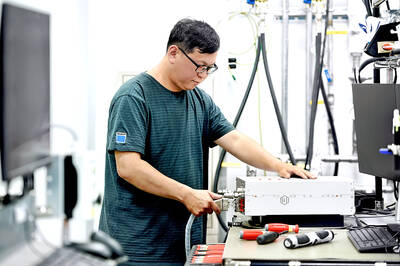
SEMICONDUCTORS: The German laser and plasma generator company will expand its local services as its specialized offerings support Taiwan’s semiconductor industries Trumpf SE + Co KG, a global leader in supplying laser technology and plasma generators used in chip production, is expanding its investments in Taiwan in an effort to deeply integrate into the global semiconductor supply chain in the pursuit of growth. The company, headquartered in Ditzingen, Germany, has invested significantly in a newly inaugurated regional technical center for plasma generators in Taoyuan, its latest expansion in Taiwan after being engaged in various industries for more than 25 years. The center, the first of its kind Trumpf built outside Germany, aims to serve customers from Taiwan, Japan, Southeast Asia and South Korea,

Gasoline and diesel prices at domestic fuel stations are to fall NT$0.2 per liter this week, down for a second consecutive week, CPC Corp, Taiwan (台灣中油) and Formosa Petrochemical Corp (台塑石化) announced yesterday. Effective today, gasoline prices at CPC and Formosa stations are to drop to NT$26.4, NT$27.9 and NT$29.9 per liter for 92, 95 and 98-octane unleaded gasoline respectively, the companies said in separate statements. The price of premium diesel is to fall to NT$24.8 per liter at CPC stations and NT$24.6 at Formosa pumps, they said. The price adjustments came even as international crude oil prices rose last week, as traders
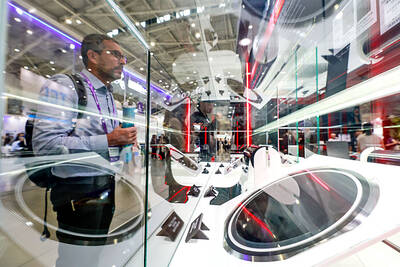
SIZE MATTERS: TSMC started phasing out 8-inch wafer production last year, while Samsung is more aggressively retiring 8-inch capacity, TrendForce said Chipmakers are expected to raise prices of 8-inch wafers by up to 20 percent this year on concern over supply constraints as major contract chipmakers Taiwan Semiconductor Manufacturing Co (TSMC, 台積電) and Samsung Electronics Co gradually retire less advanced wafer capacity, TrendForce Corp (集邦科技) said yesterday. It is the first significant across-the-board price hike since a global semiconductor correction in 2023, the Taipei-based market researcher said in a report. Global 8-inch wafer capacity slid 0.3 percent year-on-year last year, although 8-inch wafer prices still hovered at relatively stable levels throughout the year, TrendForce said. The downward trend is expected to continue this year,
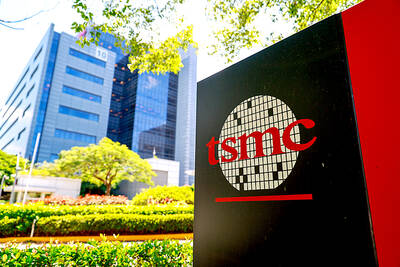
Taiwan Semiconductor Manufacturing Co (TSMC, 台積電), which supplies advanced chips to Nvidia Corp and Apple Inc, yesterday reported NT$1.046 trillion (US$33.1 billion) in revenue for last quarter, driven by constantly strong demand for artificial intelligence (AI) chips, falling in the upper end of its forecast. Based on TSMC’s financial guidance, revenue would expand about 22 percent sequentially to the range from US$32.2 billion to US$33.4 billion during the final quarter of 2024, it told investors in October last year. Last year in total, revenue jumped 31.61 percent to NT$3.81 trillion, compared with NT$2.89 trillion generated in the year before, according to


 RSS
RSS