


Lawmakers yesterday continued to rail against regulators’ lack of oversight in holding a number of companies liable for reparations of massive losses for more than 20,000 investors following the collapse of a tender offer for XPEC Entertainment Inc (樂陞科技).
New Power Party (NPP) Executive Chairman Huang Kuo-chang (黃國昌) targeted missteps by the Financial Supervisory Commission’s (FSC) Securities and Futures Bureau (SFB), and its subsequent conflicting explanations.
The tender offer plan stipulated that Bai Chi Gan Tou Digital Entertainment Co (百尺竿頭) must fulfill its payment obligations by Aug. 19 and complete the transfer of shares by Aug. 26.
However, CTBC Bank Co (中國信託銀行), the depository bank in the deal, announced an extension to the payment due date to Aug. 26.
The bureau said that CTBC Bank had no legal grounds to extend the payment date and that the bureau issued an order to the bank demanding that it return XPEC shares to investors participating in the acquisition.
However, bureau officials could not produce a copy of the order and said that it had only advised the bank to “quickly resolve the dispute.”
If the bureau had ordered the bank to return the shares immediately, the acquisition would be in jeopardy, SFB Deputy Director-General Wang Yung-hsin (王詠心) told the legislature’s Finance Committee, adding that it was still possible for Bai Chi Gan Tou to provide payment within the extended period.
“We were caught in a bind, as at the time we were not able to verify whether Bai Chi Gan Tou would pull out of the deal,” Wang said.
Lawmakers also criticized the lack of progress made by the Securities and Futures Investors Protection Center, especially on the reparations from the assets of XPEC chairman Aaron Hsu (許金龍).
They also raised concerns that there might be no legal basis to seek reparations from the Taipei Exchange, which had placed XPEC shares on restricted trading, which led to greatly diminished liquidity that has made it more difficult for investors to mitigate their losses.
The Taipei Exchange said that the trading restrictions were imposed to decrease risks and that its findings show that the continued tumble in the XPEC share prices was not the result of market manipulation.
After the tender offer was announced, shares of XPEC topped NT$110 in early June. The stock fell by the maximum daily limit to NT$15.8 on the Taipei Exchange yesterday.
The FSC said it has implemented more stringent guidelines for tender offers, with new regulations scheduled to take effect next month.
FSC Acting Chairman Huang Tien-mu (黃天牧) said that the new rules would require the board of directors of a company in a tender deal to improve screening measures of the buyer’s background and the acquisition.
A screening committee of a company targeted by a potential buyer would need to carry out the same prudent examination of any potential buyer in a bid to protect minority shareholders, Huang said.
The new rules would allow the board of directors and the screening committee to come up with a response to the acquisition within 15 days of a proposal, instead of 10 days, the commission said.
The company would then advise its shareholders as to whether they should accept the offer.
In a report submitted to the Legislative Yuan, the commission also said that a company with paid-in capital of NT$2 billion (US$62.97 million) or more should set up an auditing committee from next year, while, starting from 2019, a company whose paid-in capital is NT$5 billion or more should compile a corporate social responsibility report.
The report said that a company should ask its independent directors to take more responsibility for managing a company.
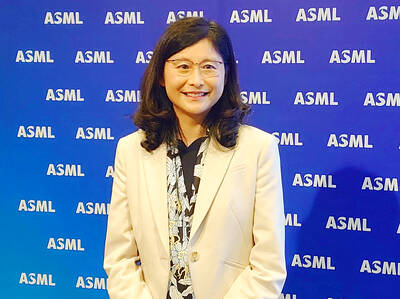
Netherlands-based semiconductor equipment supplier ASML Holding NV yesterday said that it is planning to hire an additional 1,000 people in Taiwan this year in response to growing demand from clients. ASML had previously planned to recruit 600 people this year, but that the plan has been adjusted upward, ASML vice president and ASML Taiwan general manager Grace Wang (汪佳慧) told reporters. ASML has a workforce of more than 4,500 in Taiwan, accounting for about 10 percent of its global total, Wang said. This year’s recruitment campaign would focus on adding people in the customer support, manufacturing and supply chain domains to assist ASML
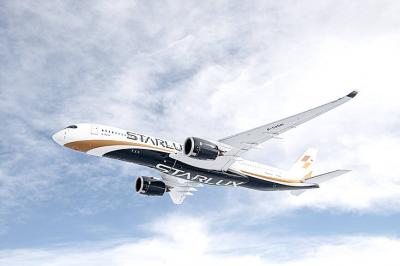
Starlux Airlines Co (星宇航空) today unveiled a long-haul network expansion plan at a shareholders’ meeting in Taipei, including direct flights to Barcelona, Spain, and Zurich, Switzerland, as well as a service connecting Taipei, Sydney and New Zealand. Starlux is to become the first Taiwanese carrier to offer non-stop services to the two European cities, while the inaugural oceanic route is expected to expand transit opportunities within the Australia-New Zealand market, Starlux said. Flight services to Chicago, Dallas, Washington and New York are under evaluation, the airline added. Prior to the shareholders’ meeting, the airline earlier this year announced that it would be
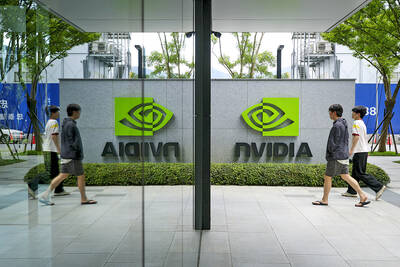
UNDER MICROSCOPE: Taiwan detained three people who allegedly conspired to buy servers in Taiwan and export them using fraudulent documentation, prosecutors said Nvidia Corp chief executive officer Jensen Huang (黃仁勳) on Saturday urged Super Micro Computer Inc to tighten up on compliance after Taiwan detained three people this week for allegedly making fraudulent declarations about artificial intelligence (AI) servers made by its US partner. The development marked the nation’s first crackdown on semiconductor smuggling, which grew after the US slapped restrictions on exports of high-end chips such as Nvidia AI accelerators to China. Nvidia is “rigorous” in explaining regulations to all of its partners, Huang told reporters after arriving in Taipei. “Ultimately Super Micro has to run their own company,” he said in response to

Nvidia Corp yesterday announced that CEO Jensen Huang (黃仁勳) would attend an employee meeting in Taipei tomorrow to celebrate the launch of the company’s Taiwan headquarters project. Huang would attend a gathering at the site of Nvidia’s planned headquarters in Beitou Shilin Technology Park (北投士林科技園區), the company said in a statement. After arriving in Taiwan on Saturday last week, Huang told reporters that he plans to meet with Quanta Computer Inc (廣達) chairman Barry Lam (林百里) and Taiwan Semiconductor Manufacturing Co (TSMC, 台積電) chairman C.C. Wei (魏哲家), and would attend the groundbreaking ceremony for Nvidia’s Taiwan headquarters tomorrow. Nvidia has not yet applied


 RSS
RSS