


The Ministry of Finance yesterday unveiled plans to raise the inheritance, gift and tobacco taxes to finance long-term care services for the nation’s aging population.
The ministry plans to raise inheritance and gift taxes from 10 percent to a range of up to 20 percent, and nearly triple tobacco taxes from NT$11.8 (US$0.37) to NT$31.8 per pack, which it estimated would generate about NT$22 billion in annual tax revenue to sponsor the long-term care services program.
The Ministry of Health and Welfare has proposed an annual budget of NT$17.8 billion to set up community-level facilities to assist 738,000 senior citizens who need daily care.
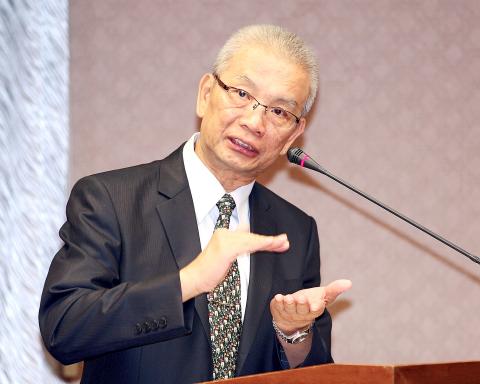
Photo: CNA
“The proposed tax hikes would have a very limited impact on the economy, because only a small number of affluent people would be affected,” Minister of Finance Sheu Yu-jer (許虞哲) told the legislature’s Finance Committee.
Instead of a flat 10 percent, inheritance and gift taxes would be replaced with a three-tier tax system, the ministry said in a report.
While the tax on net inheritances worth less than NT$50 million would remain the same, it would rise to 15 percent for those worth between NT$50 million and NT$100 million, and 20 percent for those valued at more than NT$100 million.
The proposal would also raise the gift tax to 15 percent for those worth between NT$25 million and NT$50 million, and to 20 percent for those valued at more than NT$50 million, the report said.
After factoring in tax-saving plans, the ministry expects the tax increase would affect only 1,610 cases per year, Sheu said.
The minister also downplayed concern that people might move their assets to tax havens overseas, which he said would be costly.
The proposed increases should take effect next year if the legislature gives the go-ahead by the end of this session.
Some lawmakers suggested raising business taxes by 0.5 percentage points to finance the welfare program, but Sheu voiced concern over resistance from the business community given the slow economy at home and abroad.
Other lawmakers said that a steep increase in the tobacco tax might foster a black market for cigarettes and weaken state coffers instead.
The ministry said it would step up its crackdown on illegal tobacco sales, but added that cigarette consumption could drop 20 percent after the tax increase.
The government would welcome a decrease in cigarette consumption, which would be favorable to public health, Sheu said, adding that the planned tobacco tax hike is reasonable.
Currently, taxes and surcharges of tobacco products stand at 48 percent, much lower than the 70 percent level recommended by the WHO, he said.
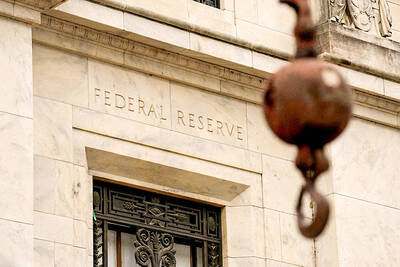
DAMAGE REPORT: Global central banks are assessing war-driven inflation risks as the law of unintended consequences careens around the world, spiking oil prices Central banks from Washington to London and from Jakarta to Taipei are about to make their first assessments of economic damage after more than two weeks of conflict between the US and Iran. Decisions this week encompassing every member of the G7 and eight of the world’s 10 most-traded currency jurisdictions are likely to confirm to investors that the specter of a new inflation shock is already worrying enough to prompt heightened caution. The US Federal Reserve is widely expected to do exactly what everyone anticipated weeks ahead of its March 17-18 policy gathering: hold rates steady. The narrative surrounding that
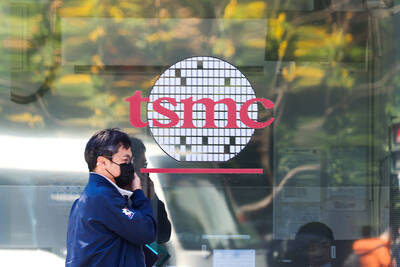
Taiwan Semiconductor Manufacturing Co’s (TSMC, 台積電) share of the global foundry market rose to almost 70 percent last year amid booming demand for artificial intelligence (AI), market information advisory firm TrendForce Corp (集邦科技) said on Thursday. The contract chipmaker posted US$122.54 billion in revenue, up 36.1 percent from a year earlier, accounting for 69.9 percent of the global market, TrendForce said. Its share was up from 64.4 percent in 2024, it said. TSMC’s closest rival, Samsung Electronics, was a distant second, posting US$12.63 billion in sales, down 3.9 percent from a year earlier, for a 7.2 percent share of the global market. In the
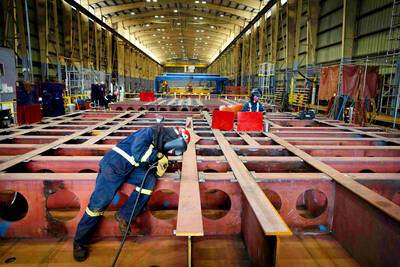
At a massive shipyard in North Vancouver, Canadian workers grind metal beams for a powerful new icebreaker crucial to cementing the country’s presence in the increasingly contested arctic. Icebreakers are specialized, expensive vessels able to navigate in the frozen far north. And “this is the crown jewel,” said Eddie Schehr, vice president of production at the Seaspan shipyard. For Canadian Prime Minister Mark Carney, who heads to Norway next Friday to observe arctic defense drills involving troops from 14 NATO states, Canada’s extreme north has emerged as a strategic priority. “Canada is and forever will be an Arctic nation,” he said ahead of

Chinese entrepreneur Frank Gao used to spend long hours running his social media accounts but now outsources the chore to artificial intelligence (AI) agent tool OpenClaw, which is taking China by storm despite official warnings over cybersecurity. OpenClaw, created in November by an Austrian coder, differs from bots such as ChatGPT because it can execute real-life tasks such as sending e-mails, organizing files or even booking flight tickets. “Since January, I’ve spent hours on the lobster every day,” Gao said in an interview, referring to OpenClaw’s red crustacean mascot. “We’re family.” After downloading OpenClaw, users connect it to artificial intelligence models of their


 RSS
RSS