


Bai Chi Gan Tou Digital Entertainment Co (百尺竿頭) yesterday said it is seeking a settlement with the Securities and Futures Investors Protection Center (SFIPC) over a class-action lawsuit against the company’s withdrawal from its acquisition of XPEC Entertainment Inc (樂陞科技).
The center, which serves as the plaintiff of a class-action on behalf of 5,000 XPEC shareholders, sought unspecified compensation for damages caused by Bai Chi’s cancelation last month of the NT$4.86 billion (US$155 million) deal.
Bai Chi said that it was forced to drop the deal after its major financial supporters decided not to finance the acquisition at the last minute.
“Bai Chi will make every effort to compensate [XPEC] shareholders who participated in the tender offer bid to recover their losses,” the company said in a statement released yesterday. “Bai Chi started an initial negotiation last month with the SFIPC via its lawyers to explore the possibility of a settlement. Bai Chi hopes to settle the case in the short term.”
The Japanese company is negotiating with the SFIPC to reach a substantial settlement, according to the statement. The company is also in talks with potential supporters to get a capital injection, backed by its assets.
XPEC has seen its market value drop by NT$11.46 billion after the tender offer bid collapsed last month. The share price of XPEC on Friday took a nosedive of 69 percent to NT$33.8 on the TPEX, compared with a closing price of NT$105 on May 31.
On May 31, local video game developer XPEC said that the Japanese company launched a tender offer to buy 38 million XPEC shares via private placements for NT$128 per share in cash. The transaction would have boosted Bai Chi chairman Yoshiaki Kashino’s holdings in XPEC to 21.66 percent from 9 percent.
Separately, XPEC on Friday last week said that it planned to sell its non-core assets, including its holdings in honey cake maker E. G-Sain (一之鄉) and coffee shop chain Ikari Coffee (怡客咖啡), to solve its cash-flow problem.
The company said it needs NT$600 million to finance its operation in the short term. XPEC blamed its financial strain on a delayed payment of US$86.59 million for the sales of its subsidiaries.
XPEC so far has received US$3 million, the company told a media briefing on Friday last week. The company agreed to give a grace period and allowed the buyer to make the remaining payments by Oct. 31. The buyer is also allowed to pay in several installments.
Due to the financial problems, XPEC shares are only allowed to be traded in cash from tomorrow, the TPEX said.

HORMUZ ISSUE: The US president said he expected crude prices to drop at the end of the war, which he called a ‘minor excursion’ that could continue ‘for a little while’ The United Arab Emirates (UAE) and Kuwait started reducing oil production, as the near-closure of the crucial Strait of Hormuz ripples through energy markets and affects global supply. Abu Dhabi National Oil Co (ADNOC) is “managing offshore production levels to address storage requirements,” the company said in a statement, without giving details. Kuwait Petroleum Corp said it was lowering production at its oil fields and refineries after “Iranian threats against safe passage of ships through the Strait of Hormuz.” The war in the Middle East has all but closed Hormuz, the narrow waterway linking the Persian Gulf to the open seas,

Nanya Technology Corp (南亞科技) yesterday said the DRAM supply crunch could extend through 2028, as the artificial intelligence (AI) boom has led the world’s major memory makers to dramatically reduce production of standard DRAM and allocate a significant portion of their capacity for high-bandwidth memory (HBM) chips. The most severe supply constraints would stretch to the first half of next year due to “very limited” increases in new DRAM capacity worldwide, Nanya Technology president Lee Pei-ing (李培瑛) told a news briefing. The company plans to increase monthly 12-inch wafer capacity to 20,000 in the first half of 2028 after a

Taiwan has enough crude oil reserves for more than 100 days and sufficient natural gas reserves for more than 11 days, both above the regulatory safety requirement, Minister of Economic Affairs Kung Ming-hsin (龔明鑫) said yesterday, adding that the government would prioritize domestic price stability as conflicts in the Middle East continue. Overall, energy supply for this month is secure, and the government is continuing efforts to ensure sufficient supply for next month, Kung told reporters after meeting with representatives from business groups at the ministry in Taipei. The ministry has been holding daily cross-ministry meetings at the Executive Yuan to ensure
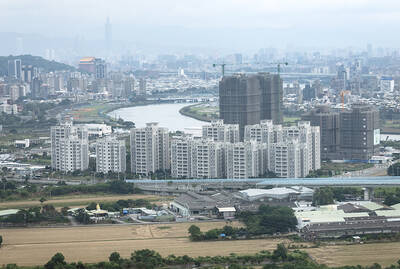
Property transactions in the nation’s six special municipalities plunged last month, as a lengthy Lunar New Year holiday combined with ongoing credit tightening dampened housing market activity, data compiled by local land administration offices released on Monday showed. The six cities recorded a total of 10,480 property transfers last month, down 42.5 percent from January and marking the second-lowest monthly level on record, the data showed. “The sharp drop largely reflected seasonal factors and tighter credit conditions,” Evertrust Rehouse Co (永慶房屋) deputy research manager Chen Chin-ping (陳金萍) said. The nine-day Lunar New Year holiday fell in February this year, reducing


 RSS
RSS