


Taiwan’s global competitiveness climbed one notch to 14th place this year, although the overall scores remain unchanged, in line with the nation’s lackluster economic performance, a World Economic Forum (WEF) report said yesterday.
The WEF annual report assessed the competitiveness of 138 economies based on 114 indicators grouped in three sub-indices.
Taiwan scored 5.28 this year, the same as last year, after achieving small gains in financial market development and technological readiness ratings, the report said.
However, the nation posted modest declines in infrastructure, market size and other evaluation areas, the report said.
Policy instability poses the biggest hurdle for doing business in Taiwan, followed by insufficient innovation capability and inefficient government bureaucracy, the report said.
Other problems include tax regulations, restrictive labor regulations, tax rates and access to financing, the report said.
By contrast, companies have little or no concern about corruption, crime and theft, or poor public health in Taiwan, according to the report.
“Taiwan is an innovation powerhouse and should endeavor to maintain the status by training and attracting talents at the core of the innovation ecosystem,” WEF researcher Thierry Geiger said.
Innovation is crucial for the nation’s export-oriented economy and the government can take steps to encourage entrepreneurship, Geiger said.
This year, Taiwan ranked fourth in the Asia-Pacific region behind Singapore, Hong Kong and Japan, but ahead of China and South Korea, the report showed.
In this year’s report the WEF called Taiwan “Chinese Taipei,” rather than “Taiwan, China,” for the first time since the organization first released the annual competitiveness report in 2006.
While most Asian countries stalled or retreated in the rankings, India achieved significant improvement from 55th to 39th, the report showed.
Switzerland remained the most competitive nation for an eighth consecutive year, ahead of Singapore and the US in the WEF rankings, while the Netherlands overtook Germany to take the fourth spot.
The report voiced concerns that declining openness is threatening growth and prosperity, while monetary stimulus measures, such as quantitative easing, are not enough to sustain growth.
“Near-zero or negative interest rates have left little further scope for traditional monetary policy and delivered mixed results in spurring growth,” the report said.
An increasingly important element of competitiveness is creating an enabling environment for innovation, it said.
Innovation has to go hand-in-hand with openness and economic integration, it added.
The National Development Council is coordinating public and private funds to encourage industrial upgrades and innovation. The Financial Supervisory Commission is urging local lenders to help support innovation.
This and other measures aim to mitigate the pain caused by China’s economic rebalancing on local manufacturers, as Beijing is cutting dependence on exports from Taiwan.
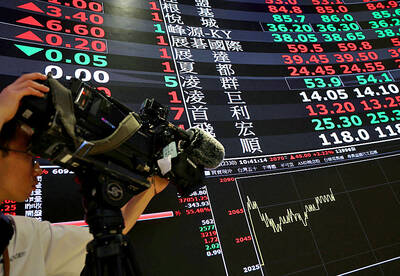
After several years flying high as Asia’s best Nvidia Corp proxy, Taiwan Semiconductor Manufacturing Co (TSMC, 台積電) is increasingly vying with other artificial intelligence (AI) stocks for investor attention. Stock traders are chasing a wider array of beneficiaries as mainstream usage of AI creates demand for hardware beyond the most-advanced chips TSMC makes for Nvidia. Subthemes from the deepening memory crunch to advances in robotics are also luring bids. At the same time, investment caps on single stocks are pushing funds to diversify, while retail investors long familiar with TSMC through its US depositary receipts are being offered a broader set of

UNDER MICROSCOPE: Taiwan detained three people who allegedly conspired to buy servers in Taiwan and export them using fraudulent documentation, prosecutors said Nvidia Corp chief executive officer Jensen Huang (黃仁勳) on Saturday urged Super Micro Computer Inc to tighten up on compliance after Taiwan detained three people this week for allegedly making fraudulent declarations about artificial intelligence (AI) servers made by its US partner. The development marked the nation’s first crackdown on semiconductor smuggling, which grew after the US slapped restrictions on exports of high-end chips such as Nvidia AI accelerators to China. Nvidia is “rigorous” in explaining regulations to all of its partners, Huang told reporters after arriving in Taipei. “Ultimately Super Micro has to run their own company,” he said in response to
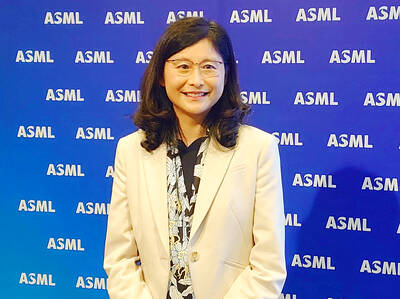
Netherlands-based semiconductor equipment supplier ASML Holding NV yesterday said that it is planning to hire an additional 1,000 people in Taiwan this year in response to growing demand from clients. ASML had previously planned to recruit 600 people this year, but that the plan has been adjusted upward, ASML vice president and ASML Taiwan general manager Grace Wang (汪佳慧) told reporters. ASML has a workforce of more than 4,500 in Taiwan, accounting for about 10 percent of its global total, Wang said. This year’s recruitment campaign would focus on adding people in the customer support, manufacturing and supply chain domains to assist ASML
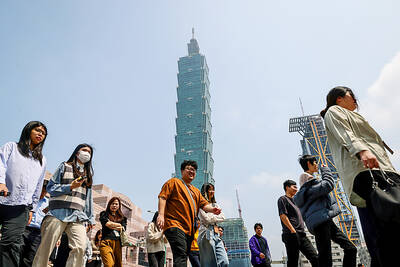
TECH RELIANCE: Growth is increasingly reflecting an unequal K-shaped distribution, where technology sectors outperform and other industries struggle, an expert said Standard Chartered Bank has significantly raised its forecast for Taiwan’s economic growth to 9.5 percent this year, up from 7.6 percent previously, citing surging artificial intelligence (AI) demand driving exports, semiconductor production and investment. The upgrade reflects a sustained AI supercycle that continues to fuel demand for advanced chips and technology infrastructure, which form the backbone of Taiwan’s exports, the bank said in a report this week. “We raise our 2026 growth forecast to reflect a much stronger-than-expected first-quarter GDP figure,” Standard Chartered senior economist for greater China and Asia Tommy Wu (胡東安) said in the report. Driven largely by a 35.3 percent


 RSS
RSS