


The prices of flat panels used in entry-level smartphones have surged 50 percent this month to an all-time high as handset vendors refocus on shipping more low-end models to offset disappointing sales of premium smartphones, market researcher TrendForce Corp (集邦科技) said in a report released yesterday.
The price hikes were greater than a monthly increase of 30 percent for advanced high-definition 5-inch and 5.5-inch smartphone panels this month, TrendForce said.
“Entry-level smartphones are making a comeback and have become a shipment driver for smartphone vendors, which are facing challenges, including offering innovative features in new premium smartphones to stimulate sales,” the Taipei-based research firm said.
One smartphone brand in particular is suffering from a setback due to serious manufacturing defects, the research firm said, apparently referring to Samsung Electronics Co’s recall of its latest flagship Galaxy Note 7 smartphone after reports of fires caused by batteries.
The research firm attributed the scant supply of low-resolution panels for the drastic price hikes.
As the supply situation is to remain little changed, TrendForce expects rising demand and limited supply of 4-inch and 4.5-inch WVGA displays to help keep prices high next quarter.
HannStar Display Corp (瀚宇彩晶) and China’s Century Technology (Shenzhen) Co Ltd (深超光電) and InfoVision Optoelectronics (Kunshan) Co Ltd (龍騰光電) are to benefit from the trend, as the three companies are the world’s largest suppliers of low-resolution smartphone panels, TrendForce said.
As those panels deliver low gross margins, most panel makers have exited the market, the research firm added.
HannStar last month saw shipments of small and medium-sized panels rise about 47 percent to 39.89 million units, compared with 27.22 million units in July, the company said in a statement.
That helped raise the company’s revenue by about 25 percent from July’s NT$1.82 billion (US$57.43 million) to last month’s NT$2.27 billion, the statement said.
Increasing demand from Chinese no-brand smartphone vendors has also aggravated supply constraints, TrendForce said.
Chinese no-brand handset vendors have turned to less advanced panels, because they cannot source enough high-definition panels to meet their needs, the research firm said.
However, TrendForce expects a downside risk for the high-definition smartphone panel segment in the first quarter of next year, as supply will increase substantially after China’s BOE Technology Group (京東方) and China Electronics Panda Crystal Technology Corp (中電熊貓) ramp up production of new 8.5G fabs next year.
An 8.5G production line can produce at least twice as many 5-inch flat panels as a 6G production line, TrendForce said, adding that most panel makers produce 5-inch panels at 6G plants.
Prices for high-definition smartphone panels are expected to decline next quarter, the research firm said.

HORMUZ ISSUE: The US president said he expected crude prices to drop at the end of the war, which he called a ‘minor excursion’ that could continue ‘for a little while’ The United Arab Emirates (UAE) and Kuwait started reducing oil production, as the near-closure of the crucial Strait of Hormuz ripples through energy markets and affects global supply. Abu Dhabi National Oil Co (ADNOC) is “managing offshore production levels to address storage requirements,” the company said in a statement, without giving details. Kuwait Petroleum Corp said it was lowering production at its oil fields and refineries after “Iranian threats against safe passage of ships through the Strait of Hormuz.” The war in the Middle East has all but closed Hormuz, the narrow waterway linking the Persian Gulf to the open seas,

Apple Inc increased iPhone production in India by about 53 percent last year and now makes a quarter of its marquee devices there, reflecting the US company’s efforts to avoid tariffs on China. The company assembled about 55 million iPhones in India last year, up from 36 million a year earlier, people familiar with the matter said, asking not to be named because the numbers aren’t public. Apple makes about 220 million to 230 million iPhones a year globally, with India’s share of the total increasing rapidly. Apple has accelerated its expansion in the world’s most populous country in recent years, bolstered

HEADWINDS: The company said it expects its computer business, as well as consumer electronics and communications segments to see revenue declines due to seasonality Pegatron Corp (和碩) yesterday said it aims to grow its artificial intelligence (AI) server revenue more than 10-fold this year from last year, driven by orders from neocloud solutions clients and large cloud service providers. The electronics manufacturing service provider said AI server revenue growth would be driven primarily by the Nvidia Corp GB300 server platform. Server shipments are expected to increase each quarter this year, with the second half likely to outperform the first half, it said. The AI server market is expected to broaden this year as more inference applications emerge, which would drive demand for system-on-chip, application-specific integrated circuits
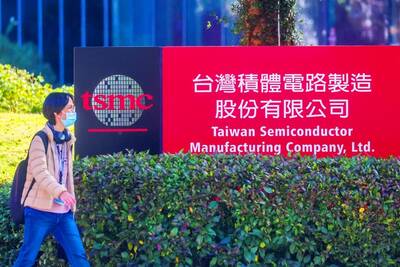
PROJECTION: TSMC said it expects strong growth this year, with revenue in US dollars projected to grow by about 30 percent, outperforming the industry Taiwan Semiconductor Manufacturing Co (TSMC, 台積電) yesterday reported consolidated sales last month reached NT$317.66 billion (US$9.98 billion), the highest ever for the month of February, driven by robust demand for chips built using the company’s advanced 3-nanometer (3nm) process. Last month’s figure was up 22.2 percent from a year earlier, but fell 20.8 percent from January, the world’s largest contract chipmaker said in a statement. For the first two months of the year, TSMC posted cumulative sales of NT$718.91 billion, up 29.9 percent from a year earlier. Analysts attributed the growth to sustained global demand for artificial intelligence (AI) products


 RSS
RSS