


Taipei – September 9, 2016 –Audience research company Nielsen announced the launch of Digital Ad Ratings in Taiwan on Sep 7th, further expanding the solution’s global footprint to provide a total view of ad campaign audiences across computer and mobile devices. Since its commercial release in 2011, Digital Ad Ratings has become the global industry standard for independent ad campaign measurement in almost 26 countries.
“Since traditional media keeps decreasing while digital media keeps growing energetically, it’s inevitable that advertisers will have more concern when considering investing and allocating their resource on internet.” said Toni Petra, Executive Vice President, Watch, Nielsen.
As the rapid growth of mobile devices, more and more advertisers keep investing on digital ad; thus, the need of measurement tool offered with the quality of justice is critical. Nielsen now introduces this persuasive method to Taiwan. DAR-Digital Ad Ratings measures the demographics, unique audience, reach, frequency and gross rating points (GRPs) for an ad campaign’s full digital audience across computers, tablets and smartphones in a way comparable to TV, enabling advertisers, media agencies and publishers to maximize their advertising reach across digital platforms.

In Taiwan’s heavily mobile market, it’s imperative that measurement reflects market needs—understanding the unduplicated reach across computers and mobile devices. With Digital Ad Ratings, marketers will be able to better plan and measure their audiences with like-for-like reach and frequency metrics across screens and have a deeper understanding of the connection between online and mobile separately and together. DAR plays as a role of a common language for clients, agencies and the media, everyone in this ecosystem can use it to communicate with each other; also, DAR actually help them more clear about what we really want.
“Nielsen has already launched Digital Ad Ratings in several countries. Key features include big data integration, cross-screen measurement, real-time feedback, and unduplicated reach. We are so glad Nielsen has expanded its Digital Ad Ratings to Taiwan; it actually provides a much clearer picture of the value of digital media to advertisers, which we believe it could help lots of marketing partners.” Toni also mentioned.
“As Nielsen possesses the thought leadership in the measurement industry, it always pushes itself to the boundary. We all know that content matters; thus, we could also expect the coming the DCR (Digital Content Ratings), which will be another powerful measurement tool in such digital era.” Toni added.
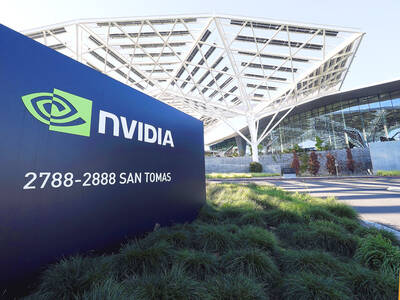
CHIP RACE: Three years of overbroad export controls drove foreign competitors to pursue their own AI chips, and ‘cost US taxpayers billions of dollars,’ Nvidia said China has figured out the US strategy for allowing it to buy Nvidia Corp’s H200s and is rejecting the artificial intelligence (AI) chip in favor of domestically developed semiconductors, White House AI adviser David Sacks said, citing news reports. US President Donald Trump on Monday said that he would allow shipments of Nvidia’s H200 chips to China, part of an administration effort backed by Sacks to challenge Chinese tech champions such as Huawei Technologies Co (華為) by bringing US competition to their home market. On Friday, Sacks signaled that he was uncertain about whether that approach would work. “They’re rejecting our chips,” Sacks

NATIONAL SECURITY: Intel’s testing of ACM tools despite US government control ‘highlights egregious gaps in US technology protection policies,’ a former official said Chipmaker Intel Corp has tested chipmaking tools this year from a toolmaker with deep roots in China and two overseas units that were targeted by US sanctions, according to two sources with direct knowledge of the matter. Intel, which fended off calls for its CEO’s resignation from US President Donald Trump in August over his alleged ties to China, got the tools from ACM Research Inc, a Fremont, California-based producer of chipmaking equipment. Two of ACM’s units, based in Shanghai and South Korea, were among a number of firms barred last year from receiving US technology over claims they have

BARRIERS: Gudeng’s chairman said it was unlikely that the US could replicate Taiwan’s science parks in Arizona, given its strict immigration policies and cultural differences Gudeng Precision Industrial Co (家登), which supplies wafer pods to the world’s major semiconductor firms, yesterday said it is in no rush to set up production in the US due to high costs. The company supplies its customers through a warehouse in Arizona jointly operated by TSS Holdings Ltd (德鑫控股), a joint holding of Gudeng and 17 Taiwanese firms in the semiconductor supply chain, including specialty plastic compounds producer Nytex Composites Co (耐特) and automated material handling system supplier Symtek Automation Asia Co (迅得). While the company has long been exploring the feasibility of setting up production in the US to address

OPTION: Uber said it could provide higher pay for batch trips, if incentives for batching is not removed entirely, as the latter would force it to pass on the costs to consumers Uber Technologies Inc yesterday warned that proposed restrictions on batching orders and minimum wages could prompt a NT$20 delivery fee increase in Taiwan, as lower efficiency would drive up costs. Uber CEO Dara Khosrowshahi made the remarks yesterday during his visit to Taiwan. He is on a multileg trip to the region, which includes stops in South Korea and Japan. His visit coincided the release last month of the Ministry of Labor’s draft bill on the delivery sector, which aims to safeguard delivery workers’ rights and improve their welfare. The ministry set the minimum pay for local food delivery drivers at


 RSS
RSS