


The absence of Pokemon Go in China is not deterring some analysts from speculating on which local companies stand to benefit from the hit mobile game and the augmented-reality (AR) experience it has helped make popular.
The base case for Chinese investors is perhaps Hong Kong-listed Lenovo Group Ltd (聯想). On July 18, the computer maker’s shares rose the most in more than three months on what analysts said was improving sentiment from Pokemon Go. Lenovo even plans to release a similar game, China’s Jiemian news Web site reported the next day.
The game became available for download in Hong Kong yesterday and analysts have suggested a few companies they expect to be buoyed by the frenzy.

Photo: Bloomberg
Ningbo GQY Video and Telecom Joint Stock Co Ltd (寧波GQY視訊), which builds wall-sized display systems, is recommended by China International Capital Corp (CICC, 中金公司), Orient Securities Ltd (東方證券) and Zheshang Securities Co Ltd (浙商證券). GQY’s shares are up 36 percent since Pokemon Go was introduced on July 6. The stock was halted on July 15 after rising by the daily limit for four consecutive days, with trading resuming on July 21. GQY bought a stake of about 3.6 percent in Meta, an augmented-reality start-up, for US$10 million in February, which is a big investment for a company that recorded a 4.9 million yuan (US$734,005) profit last year.
Meisheng Cultural and Creative Corp Ltd (美盛文化), a maker of anime costumes, is also recommended by CICC, Orient Securities and Zheshang Securities. Meisheng’s stock is up 7.5 percent since the game was released. It paid 20 million yuan for a 35 percent stake in an augmented-reality mobile game developer in November last year. Meisheng’s profit last year was 126.4 million yuan.
Beijing Toread Outdoor Products Co Ltd (探路者集團), a maker of camping equipment, is also among stocks “closely related with AR technology,” CICC’s Wei Meng and Pei Yin said. Toread is an investor in a company that makes exercise bikes that use virtual reality technology.
Other CICC picks include Lingnan Landscape Co Ltd (嶺南園林) and Palm Eco-Town Development Co Ltd (棕櫚生態城鎮發展), an urban construction and engineering company. Huawen Media Investment Corp (華聞傳媒投資集團) and Xiamen Anne Corp Ltd (廈門安妮), an internet marketer, are also among possible beneficiaries, CICC said.
Some investors might already be trading the theme in China. Since the game’s release, 13 of the 16 stocks recommended by CICC climbed an average 9 percent through Friday last week, while the Shanghai Shenzhen CSI 300 Index rose 0.6 percent.
Those gains might not last, ICBC International Holdings Ltd (工銀國際) analyst Yu Jianpeng (于健鵬) said in a telephone interview.
“Augmented reality cannot guarantee success,” Yu said. “It could be risky if their products or services were not well received after large investment.”
Pokemon Go was released in Japan on Friday last week and Nintendo Co Ltd shares rose again. Later that day, Nintendo said the financial impact from the game would be limited. The stock yesterday fell 17 percent in Tokyo as of 12:27pm in Hong Kong.

SECOND-RATE: Models distilled from US products do not perform the same as the original and undo measures that ensure the systems are neutral, the US’ cable said The US Department of State has ordered a global push to bring attention to what it said are widespread efforts by Chinese companies, including artificial intelligence (AI) start-up DeepSeek (深度求索), to steal intellectual property from US AI labs, according to a diplomatic cable. The cable, dated Friday and sent to diplomatic and consular posts around the world, instructs diplomatic staff to speak to their foreign counterparts about “concerns over adversaries’ extraction and distillation of US AI models.” Distillation is the process of training smaller AI models using output from larger, more expensive ones to lower the costs of training a powerful new
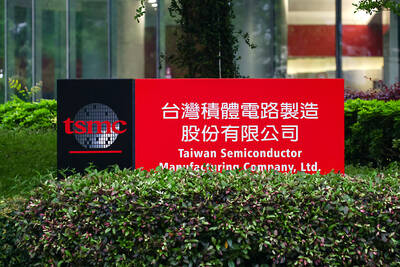
Shares of Taiwan Semiconductor Manufacturing Co (TSMC, 台積電) have repeatedly hit new highs, but an equity analyst said the stock’s valuation remains within a reasonable range and any pullback would likely be technical. The contract chipmaker’s historical price-to-earnings (P/E) ratio has ranged between 20 and 30, Cathay Futures Consultant Co (國泰證期) analyst Tsai Ming-han (蔡明翰) told Central News Agency. With market consensus projecting that TSMC would post earnings per share of about NT$100 (US$3.17) this year, supported by strong global demand for artificial intelligence (AI) applications, and the stock currently trading at a P/E ratio of below 25, Tsai said the valuation
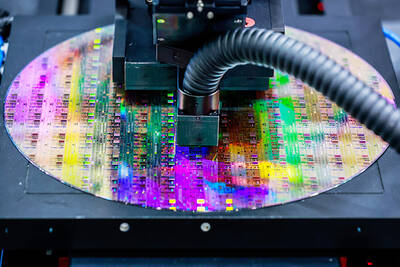
The artificial intelligence (AI) boom has triggered a seismic reshuffling of global equity markets, with Taiwan and South Korea muscling past European nations one by one. With its stock market now valued at nearly US$4.3 trillion, Taiwan surpassed the UK, Europe’s biggest market, earlier this month, data compiled by Bloomberg showed. South Korea is about US$140 billion away from doing the same. The tech-heavy Asian markets have shot past Germany and France in the past seven months. The shift is largely down to massive gains in shares of three companies that provide essential hardware for AI: Taiwan Semiconductor Manufacturing Co (TSMC, 台積電),
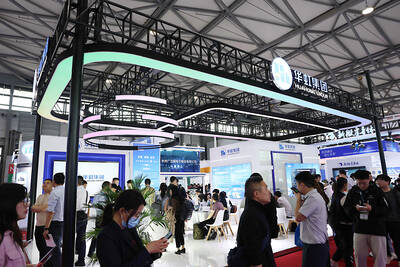
The US Department of Commerce last week ordered multiple chip equipment companies to halt shipments of certain tools to China’s second-largest chipmaker, Hua Hong Semiconductor Ltd (華虹半導體), its latest action to slow the country’s development of advanced chips, two people familiar with the matter said. The department sent letters to at least a handful of companies informing them of restrictions on tools and other materials destined for two Hua Hong facilities US officials believe make China’s most sophisticated chips, the people said. Top US chip equipment companies Lam Research Corp, Applied Materials Inc and KLA Corp, each of which has significant


 RSS
RSS