


I-Mei Foods Co (義美食品) last year ranked as Taiwan’s No. 1 indigenous fast-moving consumer goods brand for the second consecutive year, an annual study by consumer behavior research firm Kantar Worldpanel showed yesterday.
“I-Mei’s commitment to upholding product quality has earned it the trust of local households throughout successive food safety scandals in recent years, leading to its top ranking,” Kantar general manager Yvonne Wang (王曉娟) told a news conference.
I-Mei’s consumer reach points (CRP) — a measure of a brand’s penetration and the number of times shoppers purchase the brand’s products — last year rose 26 percent annually to 56 million, topping its peers, with brand penetration reaching 84 percent and purchasing frequency averaging 8.1, Kantar’s findings showed.
Uni-President Enterprises Corp (統一企業) — the nation’s largest food manufacturer, which lost its top ranking in the Kantar study at the end of 2013 — saw its ranking fall from third in 2014 to fifth last year, the study showed.
Uni-President’s CRP fell 25 percent annually to 27 million, with penetration and purchasing frequency gauged at 70 percent and 4.7 respectively, according to Kantar data.
However, while 7-Eleven — the nation’s largest convenience store chain, which is operated by a Uni-President affiliate — has numerous in-house brands, they are not considered household products and were not included in the study, Wang said.
Wang said 7-Eleven’s 7-Select brand ranked about 30th, which was comparable with hypermarket chain Costco Wholesale Corp’s Kirkland brand.
Dairy and milk producers Kuang-chuan Co (光泉食品) and Fresh Delight Taiwan (福樂鮮乳) ranked second and third, with each posting a 22 percent increase in CRP to 51 million and 29 million respectively, the report showed.
“Companies, in particular food manufacturers, should not blindly prioritize growth in Taiwan’s limited domestic market,” said I-Mei general manager Kao Chih-ming (高志明), who also urged the industry to work toward elevating quality and safety standards.
“We do not base our decisions to enter new market segments based solely on our ability to offer a lower price,” Kao said.
“We only launch new products when we have identified weaknesses among offerings by competing brands,” he added.
The study also showed that FamilyMart Collection, an in-house brand developed by the nation’s No. 2 convenience store chain, Taiwan FamilyMart Co (全家便利商店), registered a rapid 92 percent annual jump in CRP to 3.7 million.
“Sales growth and contribution have been in line with our expectations since the introduction of FamilyMart Collection from Japan in 2012,” said Huang Chun-i (黃君毅), director of Taiwan FamilyMart’s products department, who declined to provide further details on sales contribution from the brand.
“In addition to popular imports from Japan, we have been working closely with our parent company to develop products for Taiwan, such as bottled fruit juices and teas,” Huang said, adding that some of the products might be introduced into the Japanese market.
He said Taiwan FamilyMart’s expansion plans this year are focused on opening larger footprint stores with dining areas, instead of more smaller ones.


The domestic unit of the Chinese-owned, Dutch-headquartered chipmaker Nexperia BV will soon be able to produce semiconductors locally within China, according to two company sources. Nexperia is at the center of a global tug-of-war over critical semiconductor technology, with a Dutch court in February ordering a probe into alleged mismanagement at the company. The geopolitical tussle has disrupted supply chains, with some carmakers reportedly forced to cut production due to chip shortages. Local production would allow Nexperia’s domestic arm, Nexperia Semiconductors (China) Ltd (安世半導體中國), to bypass restrictions in place since October on the supply of silicon wafers — etched with tiny components to
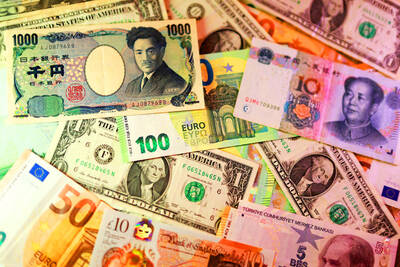
Taiwan’s foreign exchange reserves fell below the US$600 billion mark at the end of last month, with the central bank reporting a total of US$596.89 billion — a decline of US$8.6 billion from February — ending a three-month streak of increases. The central bank attributed the drop to a combination of factors such as outflows by foreign institutional investors, currency fluctuations and its own market interventions. “The large-scale outflows disrupted the balance of supply and demand in the foreign exchange market, prompting the central bank to intervene repeatedly by selling US dollars to stabilize the local currency,” Department of Foreign

Taiwan is open to joining a global liquefied natural gas (LNG) program if one is created, but on the condition that countries provide delivery even in a scenario where there is a conflict with China, an energy department official said yesterday. While Taiwan’s priority is to have enough LNG at home, the nation is open to exploring potential strategic reserves in other countries such as Japan or South Korea, Energy Administration Deputy Director-General Chen Chung-hsien (陳崇憲) said. While the LNG market does not have a global reserve for emergencies like that of oil, the concept has been raised a few times —
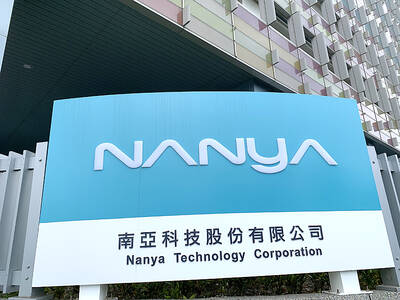
AI-FUELED DEMAND: The company has been benefiting from the skyrocketing prices for DRAM chips amid the AI frenzy, especially its core product — DDR4 DRAM chips DRAM chipmaker Nanya Technology Corp (南亞科技) yesterday reported that its revenue for the first quarter surged 582.91 percent to NT$49.09 billion (US$1.54 billion) from NT$7.19 billion a year earlier, as the supply crunch caused chip price spikes. Last quarter’s figure is the highest on record. On a quarterly basis, revenue jumped 63.14 percent from NT$30.09 billion, the company said. In January, Nanya Technology expected global DRAM supply scarcity to continue through the first half of 2028, thanks to strong demand for artificial intelligence (AI) applications. Market researcher TrendForce Corp (集邦科技) forecast prices of standard DRAM chips would rise between 58 percent and 63


 RSS
RSS