


The nation’s official manufacturing purchasing managers’ index (PMI) registered 54.9 last month, above the 50 threshold indicating improvement in the sector, the Chung-Hua Institution for Economic Research (CIER, 中華經濟研究院) said yesterday.
However, the institute said the result for last month had more to do with a low base of comparison in February than signs of a recovery, because the reading after seasonal adjustments continued to contract, although at a milder pace.
“A recovery remains elusive, even though the operating conditions showed improvement last month and beyond,” CIER president Wu Chung-shu (吳中書) told a news conference.
The Nikkei Taiwan Manufacturing PMI arrived at similar findings, as the index stood at 51.1 on the back of new orders, according to a survey compiled by London-based research body Markit.
With the exception of the food and textile sectors, firms reported improving business, raising the sub-index on new orders to 61.3 last month from 37 in February, the CIER report said.
The launch of Apple Inc’s iPhone SE models last month boosted local technology firms in Apple’s supply chain, Supply Management Institute in Taiwan (中華採購與供應管理協會) executive director Steve Lai (賴樹鑫) said.
The relatively low-priced SE series aims to fill the void ahead of the introduction of the iPhone 7 in September, Lai said, adding that consumers have given it a warm welcome so far.
However, it remains to be seen if the excitement will turn out to be short-lived, as was the case for the iPhone 6S, he said.
The US technology giant is tapping the software market by making its devices useful for professional baseball players in the analysis of moves by their rivals, Lai said.
The expanded use might not translate into new business for Taiwanese contract makers in the short term, but things might change if they take advantage of the shift in tastes, he said.
The CIER report showed that the output sub-index soared to 63.8 last month from 29.4 in February, while that for export orders rose from 42.1 to 56.6.
The business landscape might continue to brighten, as the six-month outlook sub-index registered 51.8, meaning a majority of firms are expecting better prospects, the report said.
The business upturn also extended to non-manufacturing sectors, with the non-manufacturing index climbing to 50.5 last month, from 42.9 in February, a separate CIER report said.
However, service-oriented companies have a grim outlook in light of the six-month outlook standing at 38.1, the report showed.
In particular, companies involved in property construction and brokerage remained a drag due to sluggish market demand, Wu said.
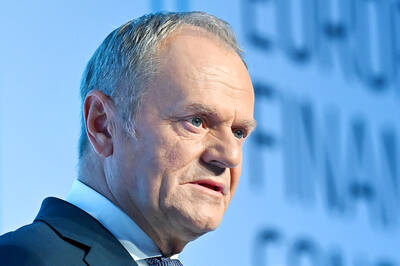
Poland is betting on a flood of investments and technology transfers from Taiwanese companies to reengineer its US$1 trillion economy. Polish Prime Minister Donald Tusk said yesterday that Poland will no longer be “just an assembly hub” as it pursues further investments from the likes of Foxconn Technology Group (富士康). The firm, whose full name is Hon Hai Precision Industry Co (鴻海精密), last month agreed to build electric vehicles (EVs) in the European Union nation and now could be a partner in a semiconductor venture, he said. The government’s aim is to boost manufacturing and the country’s high-tech chops in an era
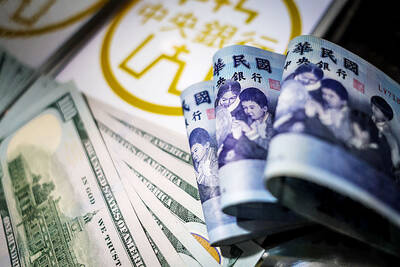
Taiwan remained the sixth-largest net creditor nation in the world last year, despite a fall of more than 10 percent in its net international investment position (NIIP) over the year, the central bank said yesterday. The NIIP is the difference between a country’s external financial assets and its external financial liabilities. Taiwan’s external financial assets hit US$3.27 trillion at the end of last year, up US$275.75 billion or 9.2 percent from a year earlier, the central bank said in its annual NIIP report. The growth largely reflected an increase in holdings of overseas marketable securities by residents in Taiwan, as well as a
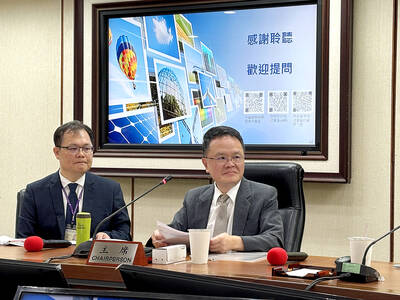
BAD FAITH LITIGATION? The two companies, owned by a California-based private equity firm, could be seeking licensing fees or a settlement payout with the suit Taiwan Intellectual Property Office (TIPO) Director-General Liao Cheng-wei (廖承威) said yesterday he suspected that two firms suing contract chipmaker Taiwan Semiconductor Manufacturing Co (TSMC, 台積電) for patent infringement are “patent trolls.” A patent troll refers to a company that buys patents not for manufacturing products, but to sue other companies for compensation, accusing them of using its patents. Patent trolls, formally called Non-Practicing Entities or Patent Assertion Entities, were responsible for more than 50 percent of lawsuits in the US last year, costing targeted businesses tens of billions of US dollars a year, according to the US-based LegalCharity Web site. Asked whether

RESTRICTION BREACH: ASML said that it denies ‘unfounded rumors regarding non-compliance with export controls concerning China,’ and enforces controls strictly US Secretary of Commerce Howard Lutnick in a series of recent meetings outlined concerns to Dutch chip-equipment giant ASML Holding NV’s senior leaders that one of its top-of-the-line machines might have made its way into China, in violation of US-led export restrictions. In the meetings, Lutnick expressed concern to ASML executives over the company’s extreme ultraviolet lithography (EUV) machines, people familiar with the talks said. EUV systems are used by firms such as Taiwan Semiconductor Manufacturing Co (台積電) to manufacture processors for the likes of Nvidia Corp and Apple Inc. ASML has never been allowed to ship them to China because of curbs


 RSS
RSS