


Central banks might accomplish what anti-nuclear activists have failed to do — forcing operators to finally decommission almost 150 plants now sitting in limbo across the globe.
In the past, many operators delayed decommissioning to allow growth in the cleanup funds. However, as the global economy weakened and central banks kept interest rates low, the principle in some of those funds shrank.
Last year in the US, seven of the 10 biggest cleanup funds lost money, falling to US$43.7 billion, a drop of 1.1 percent.
Now, with projected costs rising, owners are more likely to opt for full decommissioning before the funds decline further, industry advocates said.
“One can’t rely as much on fund growth as in the past,” International Atomic Energy Agency (IAEA) decommissioning specialist Patrick Joseph O’Sullivan said. “It’s actually pushing utilities to think about bringing forward all this work because they’re not able to rely anymore on assuming high returns on investments.”
The change in emphasis comes 30 years after the April 26, 1986, explosion at the Chernobyl reactor spread radioactive fallout across Europe. That event, followed 25 years later by a meltdown at the Fukushima Dai-ichi nuclear power plant in Japan, undercut nuclear as a power generator as low-cost options such as natural gas and renewable energies became increasingly available.
A 2005 IAEA report forecast costs to shut a 1,000 megawatt reactor would range from 150 million to 750 million euros (US$169.37 million to US$846.86 million). In the US — the nation with the most decommissioning experience — actual costs have ranged from US$307 million to US$819 million, according to the Nuclear Energy Agency.
Twenty-four US decommissioning projects with site-specific estimates would require average cleanup funds of about US$750 million per reactor, the US Nuclear Regulatory Commission reported. Those costs jive with an estimate by Exelon Corp, which operates reactors at 15 US nuclear power plants.
Exelon estimates it will take US$1 billion to decommission its two-unit plant in Zion, Illinois.
It told shareholders in February that “sustained low market prices or depressed demand” could accelerate “asset retirement obligation expense related to future decommissioning activities.”
Exelon’s cleanup fund fell 2 percent to US$10.3 billion last year.
Utilities operating in Germany including EON SE, RWE AG and Vattenfall SE have set aside funds deemed “acceptable” by regulators to cover 47.5 billion euros of estimated costs to decommission the nation’s 17 reactors. Shares of those utilities jumped in February after reports that the German government would put in an additional 17.7 billion euros to help store the radioactive waste.
There are 438 nuclear reactors in operation worldwide and less than 4 percent of the power reactors built have been fully decommissioned.
Fewer still have figured out how to store waste for the thousands of years it will remain dangerous.
About US$200 billion is to be spent worldwide in the next 20 years on decommissioning the world’s aging fleet of reactors, said US nuclear engineer Thomas LaGuardia, who is helping establish decommissioning guidelines.
Nuclear operators that have not saved sufficient decommissioning funds might opt to put plants in safe storage until their accounts bulk up, he said.
Project management and environmental remediation companies in the US and Europe could see their markets grow as utilities draw down decommissioning funds to shut aging reactors, Swedish radiation safety analyst Simon Carroll said.
“One person’s cost is another man’s income,” he said.
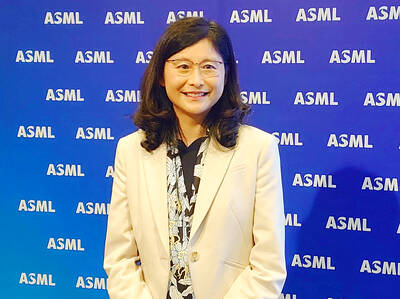
Netherlands-based semiconductor equipment supplier ASML Holding NV yesterday said that it is planning to hire an additional 1,000 people in Taiwan this year in response to growing demand from clients. ASML had previously planned to recruit 600 people this year, but that the plan has been adjusted upward, ASML vice president and ASML Taiwan general manager Grace Wang (汪佳慧) told reporters. ASML has a workforce of more than 4,500 in Taiwan, accounting for about 10 percent of its global total, Wang said. This year’s recruitment campaign would focus on adding people in the customer support, manufacturing and supply chain domains to assist ASML
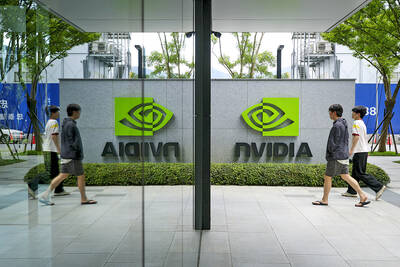
UNDER MICROSCOPE: Taiwan detained three people who allegedly conspired to buy servers in Taiwan and export them using fraudulent documentation, prosecutors said Nvidia Corp chief executive officer Jensen Huang (黃仁勳) on Saturday urged Super Micro Computer Inc to tighten up on compliance after Taiwan detained three people this week for allegedly making fraudulent declarations about artificial intelligence (AI) servers made by its US partner. The development marked the nation’s first crackdown on semiconductor smuggling, which grew after the US slapped restrictions on exports of high-end chips such as Nvidia AI accelerators to China. Nvidia is “rigorous” in explaining regulations to all of its partners, Huang told reporters after arriving in Taipei. “Ultimately Super Micro has to run their own company,” he said in response to

Nvidia Corp yesterday announced that CEO Jensen Huang (黃仁勳) would attend an employee meeting in Taipei tomorrow to celebrate the launch of the company’s Taiwan headquarters project. Huang would attend a gathering at the site of Nvidia’s planned headquarters in Beitou Shilin Technology Park (北投士林科技園區), the company said in a statement. After arriving in Taiwan on Saturday last week, Huang told reporters that he plans to meet with Quanta Computer Inc (廣達) chairman Barry Lam (林百里) and Taiwan Semiconductor Manufacturing Co (TSMC, 台積電) chairman C.C. Wei (魏哲家), and would attend the groundbreaking ceremony for Nvidia’s Taiwan headquarters tomorrow. Nvidia has not yet applied

Huawei Technologies Co (華為) said it has come up with a new pathway to shorten its gap with industry leader Taiwan Semiconductor Manufacturing Co (TSMC, 台積電), potentially achieving a breakthrough in making advanced semiconductors without cutting-edge equipment. Right now there is about a five-year gap between what TSMC is capable of and what Huawei, together with its manufacturing partner Semiconductor Manufacturing International Corp (中芯), can produce. Huawei is to start making 1.4-nanometer chips by 2031 with its own “LogicFolding” technology, Huawei semiconductor chief He Tingbo (何庭波) said in a rare public appearance during a chip conference yesterday, while TSMC has


 RSS
RSS