


Warnings are stacking up fast after China’s eye-popping steel rally. Fitch Ratings Inc said prices lifted in part by heightened speculation are destined to slump, while a bank in Singapore flagged the risk of a boom-bust cycle reminiscent of China’s equity market.
The rapid advance is not sustainable as mills are expected to bring back idled capacity, raising supply, Fitch said in a report released yesterday.
Price gains have been driven by a seasonal recovery in activity that has been exacerbated by increased speculation in the futures market, according to analyst Laura Zhai.
Steel prices have surged this year, with rebar up 47 percent, after policymakers in China talked up growth and added stimulus, helping to lift property prices and ignite a speculative frenzy. The gains have helped to restore mills’ profitability, boosting their incentive to increase output. Singapore-based Oversea-Chinese Banking Corp (OCBC) yesterday warned that there might be parallels between the sudden jump in steel trading and last year’s performance in equities, citing the potential for a boom-bust scenario.
“The rapid increase in Chinese steel prices so far this year is not sustainable, as it is largely due to a seasonal pickup in construction and elevated speculation in the steel futures market,” Fitch said. “With prices now surging, many of the suspended plants have resumed production.”
SURGING FUTURES
Futures for rebar extended gains in after-hours trade on Friday, rallying as much as 6.2 percent to 2,781 yuan (US$428.15) per metric tonne on the Shanghai Futures Exchange (SHFE), before trading 0.4 percent higher yesterday. The price of the product used to strengthen concrete advanced for an 11th week through Friday last week, adding 14 percent.
Steel output in the world’s largest supplier might see a further increase this month as more furnaces are fired up, according to Fitch. Production in March rose 2.9 percent to a record 70.65 million tonnes from a year earlier, according to figures from China’s National Bureau of Statistics.
To cool the spike in trading, the SHFE last week increased transaction fees, while the Dalian Commodity Exchange, which has an iron ore contract, raised margin requirements. The bourse in Dalian also tightened rules on what it called abnormal trading, which now includes frequent submission and withdrawal of orders.
REBAR HOLDINGS
The surge in prices, which also included hot-rolled coil, has unfolded against a backdrop of lower-than-usual inventories after mills cut output last year. China’s rebar inventory shrank 7.3 percent last week to 4.32 million tonnes as of Friday last week, according to Shanghai Steelhome Information Technology Co (上海鋼之家信息科技). This time last year, it was at 6.66 million tonnes.
Goldman Sachs Group Inc on Friday said that while rebar has been “leading the charge” in commodities this year, there is not yet a sustainable shift in the fundamentals. It also forecast losses in iron ore, used to make steel, seeing a drop to US$35 a tonne by year’s end. The benchmark price for 62 percent content ore delivered to Qingdao was at US$66.33 a dry tonne on Friday after sinking 5.9 percent, according to Metal Bulletin Ltd.
“The recent broad-based rally in commodity futures was the result of two factors, including increasing belief that China will continue to rely on infrastructure and property sectors to support the growth as well as ample liquidity,” OCBC said.
The risk of a correction cannot be ruled out, it warned.
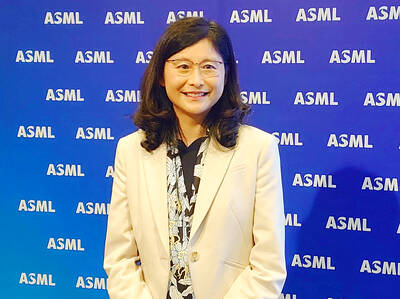
Netherlands-based semiconductor equipment supplier ASML Holding NV yesterday said that it is planning to hire an additional 1,000 people in Taiwan this year in response to growing demand from clients. ASML had previously planned to recruit 600 people this year, but that the plan has been adjusted upward, ASML vice president and ASML Taiwan general manager Grace Wang (汪佳慧) told reporters. ASML has a workforce of more than 4,500 in Taiwan, accounting for about 10 percent of its global total, Wang said. This year’s recruitment campaign would focus on adding people in the customer support, manufacturing and supply chain domains to assist ASML
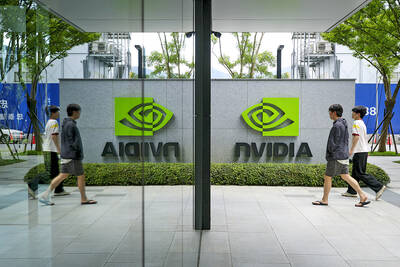
UNDER MICROSCOPE: Taiwan detained three people who allegedly conspired to buy servers in Taiwan and export them using fraudulent documentation, prosecutors said Nvidia Corp chief executive officer Jensen Huang (黃仁勳) on Saturday urged Super Micro Computer Inc to tighten up on compliance after Taiwan detained three people this week for allegedly making fraudulent declarations about artificial intelligence (AI) servers made by its US partner. The development marked the nation’s first crackdown on semiconductor smuggling, which grew after the US slapped restrictions on exports of high-end chips such as Nvidia AI accelerators to China. Nvidia is “rigorous” in explaining regulations to all of its partners, Huang told reporters after arriving in Taipei. “Ultimately Super Micro has to run their own company,” he said in response to

Nvidia Corp yesterday announced that CEO Jensen Huang (黃仁勳) would attend an employee meeting in Taipei tomorrow to celebrate the launch of the company’s Taiwan headquarters project. Huang would attend a gathering at the site of Nvidia’s planned headquarters in Beitou Shilin Technology Park (北投士林科技園區), the company said in a statement. After arriving in Taiwan on Saturday last week, Huang told reporters that he plans to meet with Quanta Computer Inc (廣達) chairman Barry Lam (林百里) and Taiwan Semiconductor Manufacturing Co (TSMC, 台積電) chairman C.C. Wei (魏哲家), and would attend the groundbreaking ceremony for Nvidia’s Taiwan headquarters tomorrow. Nvidia has not yet applied

Huawei Technologies Co (華為) said it has come up with a new pathway to shorten its gap with industry leader Taiwan Semiconductor Manufacturing Co (TSMC, 台積電), potentially achieving a breakthrough in making advanced semiconductors without cutting-edge equipment. Right now there is about a five-year gap between what TSMC is capable of and what Huawei, together with its manufacturing partner Semiconductor Manufacturing International Corp (中芯), can produce. Huawei is to start making 1.4-nanometer chips by 2031 with its own “LogicFolding” technology, Huawei semiconductor chief He Tingbo (何庭波) said in a rare public appearance during a chip conference yesterday, while TSMC has


 RSS
RSS