


CTBC Financial Holding Co (中信金控) yesterday said it had clinched a NT$6.1 billion (US$189 million) deal to fully acquire Royal Bank of Scotland Group PLC’s (RBS) Malaysian unit, accelerating its expansion into other Asian markets.
The deal came just two weeks after CTBC announced on March 29 it was buying a 35.6 percent stake in Thailand-based LH Financial Group PLC for NT$15.4 billion.
The government has been pushing local lenders to make overseas acquisitions amid fierce competition at home. Cathay Financial Holding Co (國泰金控) in January acquired a 20 percent stake in the Philippines’ Rizal Commercial Banking Corp and a 40 percent stake in Indonesia’s PT Bank Mayapada International through its life insurance unit, Cathay Life Insurance Co (國泰人壽), while Fubon Financial Holding Co (富邦金控) purchased a 48 percent stake in South Korea’s Hyundai Life Insurance Co in December last year.
The latest investment by CTBC makes the company the first local financial services provider to expand to Malaysia, the company said.
“This will be another breakthrough made by the company in expanding to Asia,” CTBC Financial senior vice president Rachael Kao (高麗雪) told a media briefing at the Taiwan Stock Exchange yesterday.
Upon the completion of the transaction, “CTBC will be the first local financial services provider to secure a license in Malaysia,” Kao said.
CTBC’s offer to purchase the British lender’s assets is to be conducted by its subsidiaries CTBC Bank (中信銀行) and Taiwan Life Insurance Co (台灣人壽保險), which will hold 51 percent and 49 percent stakes in Malaysia business respectively.
Acquiring the Malaysian unit allows “CTBC Bank to obtain a full banking license to provide extensive financial services for customers in Malaysia, where the government strictly controls foreign financial services providers,” Kao said.
In order to accelerate its expansion to other Asian markets to boost its business, the bank has been aggressively seeking to upgrade its representative office in Kuala Lumpur to a banking unit since its inception in November last year, Kao said.
In addition to the Malaysia unit, CTBC also owns two subsidiaries of RBS in Kuala Lumpur and Penang, where Taiwanese companies have built industry clusters, she said.
CTBC Bank’s board yesterday also agreed to invest NT$3.99 billion in an offshore banking unit operated by RBS’ Malaysia unit, representing a 93.5 percent discount based on its US$132.5 million of assets.
Commenting on speculation that CTBC intends to take over the controversial Taipei Dome build-operate-transfer project from Farglory Group (遠雄集團), Kao said the board did not discuss the matter during yesterday’s meeting.
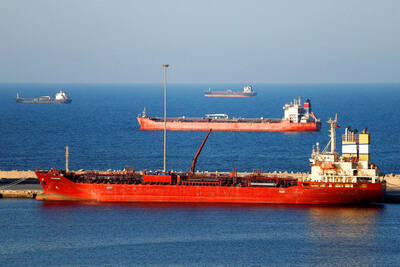
HORMUZ ISSUE: The US president said he expected crude prices to drop at the end of the war, which he called a ‘minor excursion’ that could continue ‘for a little while’ The United Arab Emirates (UAE) and Kuwait started reducing oil production, as the near-closure of the crucial Strait of Hormuz ripples through energy markets and affects global supply. Abu Dhabi National Oil Co (ADNOC) is “managing offshore production levels to address storage requirements,” the company said in a statement, without giving details. Kuwait Petroleum Corp said it was lowering production at its oil fields and refineries after “Iranian threats against safe passage of ships through the Strait of Hormuz.” The war in the Middle East has all but closed Hormuz, the narrow waterway linking the Persian Gulf to the open seas,
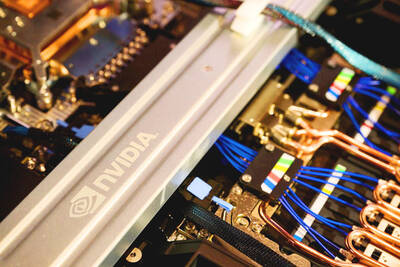
RATIONING: The proposal would give the Trump administration ample leverage to negotiate investments in the US as it decides how many chips to give each country US officials are debating a new regulatory framework for exporting artificial intelligence (AI) chips and are considering requiring foreign nations to invest in US AI data centers or security guarantees as a condition for granting exports of 200,000 chips or more, according to a document seen by Reuters. The rules are not yet final and could change. They would be the first attempt to regulate the flow of AI chips to US allies and partners since US President Donald Trump’s administration said it rescinded its predecessor’s so-called AI diffusion rules. Those rules sought to keep a significant amount of AI

Apple Inc increased iPhone production in India by about 53 percent last year and now makes a quarter of its marquee devices there, reflecting the US company’s efforts to avoid tariffs on China. The company assembled about 55 million iPhones in India last year, up from 36 million a year earlier, people familiar with the matter said, asking not to be named because the numbers aren’t public. Apple makes about 220 million to 230 million iPhones a year globally, with India’s share of the total increasing rapidly. Apple has accelerated its expansion in the world’s most populous country in recent years, bolstered

A new worry has been rippling across the stock market lately: Entire businesses, not just their employees, might be thrown out of work. While most economists say fears of an artificial intelligence (AI) job apocalypse are overblown, seismic shifts have happened in the past after big tech breakthroughs. The IT revolution of the 1990s led to a surge in productivity that sped up the US economy for several years. It also rendered companies or even industries largely redundant — from travel agents and stockbrokers to classified advertising and newspapers, or video rental stores. Economists expect AI would deliver higher productivity,


 RSS
RSS