


Sharp Corp’s banks are ready to push back the deadline for most of the company’s ¥510 billion (US$4.51 billion) in loans and credit lines beyond Thursday, people with knowledge of the matter said, giving the electronics maker more time to reach a renegotiated deal to be acquired by Hon Hai Precision Industry Co (鴻海精密), known as Foxconn Technology Group (富士康) outside Taiwan.
The extension might be as long as one month, said the people, who asked not to be identified as the decision has not been publicly announced.
Hon Hai chairman Terry Gou (郭台銘) last month agreed to buy Sharp for more than ¥600 billion, but has held off on signing a final agreement while his advisers scrutinize the company’s finances.
While the wrangling has raised the risk of the deal falling apart, extra time from Sharp’s lenders would reduce the likelihood it would miss loan payments and face a dire situation, such as liquidation.
Hon Hai is seeking to cut the amount it is to pay for equity in Sharp to about ¥389 billion, one person said.
The Taiwanese company would probably still pay about ¥100 billion for preferred shares that the banks own, although the payment might be delayed, the person said.
Sharp, along with the banks, is aiming for its directors to endorse a final proposal by Thursday, one person said, adding that the board could meet for a vote earlier if a deal is presented.
At the same time, an extension by the banks would give Sharp more time to negotiate a final agreement next month.
Sharp spokesman Toyodo Uemura, Mizuho Financial Group spokeswoman Masako Shiono and Mitsubishi UFJ Financial Group spokesman Taiki Kitaura declined to comment.
Hon Hai did not respond to an e-mailed request for comment.
Sharp and Hon Hai are set to approve the revised bailout plan at their board meetings on Wednesday and sign the acquisition agreement the following day, the Nikkei Shimbun reported yesterday.
Hon Hai is to put down a ¥100 billion deposit upon signing the agreement, while cutting the amount it is to pay for Sharp’s equity by ¥100 billion, the report said.
Hon Hai also plans to help Sharp pay back the ¥510 billion in loans at an interest rate no higher than 0.6 percent and push back the timing to buy preferred shares owned by Mizuho and Mitsubishi UFJ’s lending units by three years, the report said, citing unidentified sources.
The banks have also agreed to give Sharp a new credit line of ¥300 billion, the report said.
It has been one month since Sharp’s board backed Hon Hai’s bailout over a competing offer from Innovation Network Corp of Japan (INCJ).
Since then, Gou has put the brakes on the deal while he seeks more clarity on Sharp’s performance in this quarter, people familiar with the matter have said.
A reduction in the value of Hon Hai’s offer would put it closer to the bid from INCJ.
The Japanese government-backed investment fund had offered about ¥300 billion for Sharp, all of which would have been put into the company through the purchase of additional shares.
Sharp has not gone back to INCJ to seek another bid, the people said.
On Friday, Sharp said its annual earnings probably missed forecasts on a deterioration of demand in China.
The company had said it would have operating profit of ¥10 billion in the financial year ending this month, while the average of analyst estimates is for a loss of ¥23.9 billion.

SECOND-RATE: Models distilled from US products do not perform the same as the original and undo measures that ensure the systems are neutral, the US’ cable said The US Department of State has ordered a global push to bring attention to what it said are widespread efforts by Chinese companies, including artificial intelligence (AI) start-up DeepSeek (深度求索), to steal intellectual property from US AI labs, according to a diplomatic cable. The cable, dated Friday and sent to diplomatic and consular posts around the world, instructs diplomatic staff to speak to their foreign counterparts about “concerns over adversaries’ extraction and distillation of US AI models.” Distillation is the process of training smaller AI models using output from larger, more expensive ones to lower the costs of training a powerful new

Singapore-based ride-hailing and delivery giant Grab Holdings’ planned acquisition of Foodpanda’s Taiwan operations has yet to enter the formal review stage, as regulators await supplementary documents, the Fair Trade Commission (FTC) said yesterday. Acting FTC Chairman Chen Chih-min (陳志民) told the legislature’s Economics Committee that although Grab submitted its application on March 27, the case has not been officially accepted because required materials remain incomplete. Once the filing is finalized, the FTC would launch a formal probe into the deal, focusing on issues such as cross-shareholding and potential restrictions on market competition, Chen told lawmakers. Grab last month announced that it would acquire
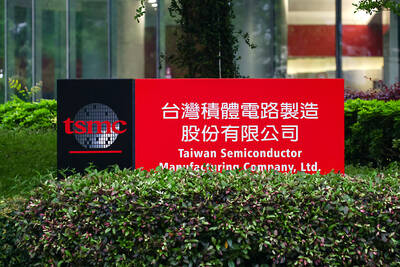
Shares of Taiwan Semiconductor Manufacturing Co (TSMC, 台積電) have repeatedly hit new highs, but an equity analyst said the stock’s valuation remains within a reasonable range and any pullback would likely be technical. The contract chipmaker’s historical price-to-earnings (P/E) ratio has ranged between 20 and 30, Cathay Futures Consultant Co (國泰證期) analyst Tsai Ming-han (蔡明翰) told Central News Agency. With market consensus projecting that TSMC would post earnings per share of about NT$100 (US$3.17) this year, supported by strong global demand for artificial intelligence (AI) applications, and the stock currently trading at a P/E ratio of below 25, Tsai said the valuation
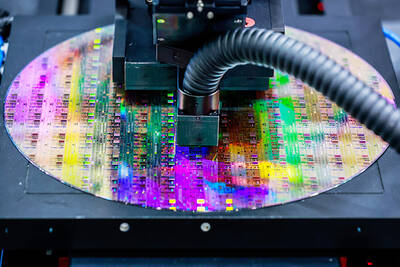
The artificial intelligence (AI) boom has triggered a seismic reshuffling of global equity markets, with Taiwan and South Korea muscling past European nations one by one. With its stock market now valued at nearly US$4.3 trillion, Taiwan surpassed the UK, Europe’s biggest market, earlier this month, data compiled by Bloomberg showed. South Korea is about US$140 billion away from doing the same. The tech-heavy Asian markets have shot past Germany and France in the past seven months. The shift is largely down to massive gains in shares of three companies that provide essential hardware for AI: Taiwan Semiconductor Manufacturing Co (TSMC, 台積電),


 RSS
RSS